
Comprehensive Guide to Choosing a Drainage System
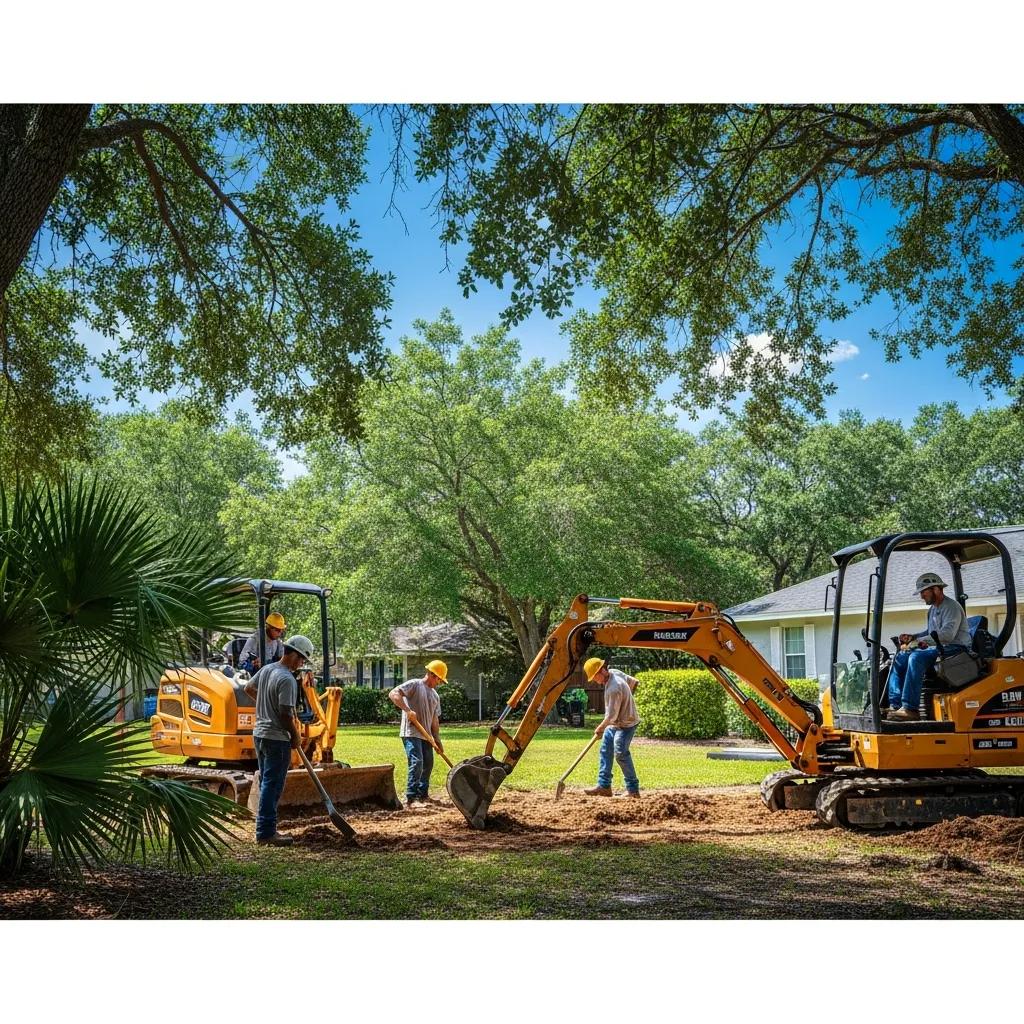
Installing Drainage Systems the Right Way in Jacksonville, FL — Expert Solutions from Arc Excavation
Good drainage is one of the simplest ways to protect your property—especially here in Jacksonville, where heavy rain and the occasional tropical storm can overwhelm yards and foundations. Read on to learn why professional installation matters, what drainage options work best for local conditions, and how to keep systems performing year after year. We’ll also outline the step-by-step approach Arc Excavation uses to deliver durable, code-compliant drainage solutions.
These challenges are central to urban resilience research and the evolving best practices in flood management.
Nature-Based Solutions for Climate-Resilient Urban Flood Management
Urban flooding is a growing challenge for cities worldwide, driven by climate change and rapid development. Traditional grey infrastructure alone often falls short, which is why Nature-based Solutions (NbS) are receiving more attention as sustainable complements. This review looks at how NbS can strengthen urban flood resilience by working with natural processes rather than against them.
Toward climate-resilient cities: A review of nature-based solutions for urban flood management, M Mabrouk, 2025
Why professional drainage installation matters in Jacksonville, FL
Jacksonville’s climate—marked by heavy seasonal rains and periodic storms—makes proper drainage solutions essential. Incorrectly installed systems can allow ponding, accelerate erosion, and damage foundations. Hiring experienced professionals reduces those risks and ensures your drainage performs as intended through seasonal extremes.
Research from other regions with intense rainfall highlights the value of well-planned local drainage solutions.
Local Drainage Systems for Private Properties: Addressing Heavy Rains
In spring 2023, unusually heavy rains exposed how vulnerable many settlements are to excess surface water. Sites with poor slopes and low-permeability soils—compounded by nearby buildings and roads—kept water on the surface and raised groundwater levels. The study recommends combined local drainage systems designed to appropriate standards to relieve long-term surface retention and groundwater rise.
Principles of calculations and arrangement of local drainage systems in private building territories, 2023
What can go wrong without proper drainage in Jacksonville?
Poor drainage in our humid, subtropical climate can produce several costly and unhealthy problems:
- Foundation damage: Standing water erodes soil around foundations, which can lead to cracks and structural issues.
- Soil erosion: Runoff can wash away topsoil, harming lawns and gardens and leaving landscaping unstable.
- Mold and mildew: Persistent moisture creates conditions for mold growth, which affects indoor air quality and health.
Recognizing these risks makes it clear why a properly engineered drainage plan is a smart investment.
How proper drainage protects homes and landscapes
A well-designed drainage system moves water away from vulnerable areas, protecting your foundation and preserving plantings. It prevents pooling that damages turf, reduces erosion, and helps keep your yard usable after storms—plus it helps maintain your property’s value over time.
Drainage solutions Arc Excavation installs in Jacksonville
We offer targeted drainage options chosen for Jacksonville conditions so your solution is efficient, durable, and low-maintenance.
How French drains work and when to choose them

French drains use a perforated pipe set in a gravel-filled trench to collect and redirect groundwater and surface runoff. They’re an excellent fit for yards with poor natural drainage, areas that regularly pool, or properties where water threatens a foundation. Properly installed, they quietly move water away and reduce long-term moisture problems.
Studies of residential stormwater solutions reinforce the value of well-designed in-property systems like French drains.
Residential Stormwater Management: French Drain Driveway Solutions
Stormwater runoff can carry pollutants from homes into streets and local waterways, harming ecosystems and public health. Many driveways and front yards offer untapped area to intercept that runoff. Modular French drain approaches allow property owners to capture and hold more stormwater on-site—reducing the volume that reaches municipal systems and nearby waterways.
Designing a Modular French Drain Driveway: Addressing the Impact of Stormwater Runoff from Residential Communities, 2021
Catch basins and surface drainage options for yards
Catch basins collect visible surface water and funnel it into underground piping, which prevents standing water in low spots. Surface solutions such as shallow swales and lined trenches guide flow across the landscape to safe discharge points. These components often work together to create a complete, reliable system.
Why grading and excavation matter to drainage performance
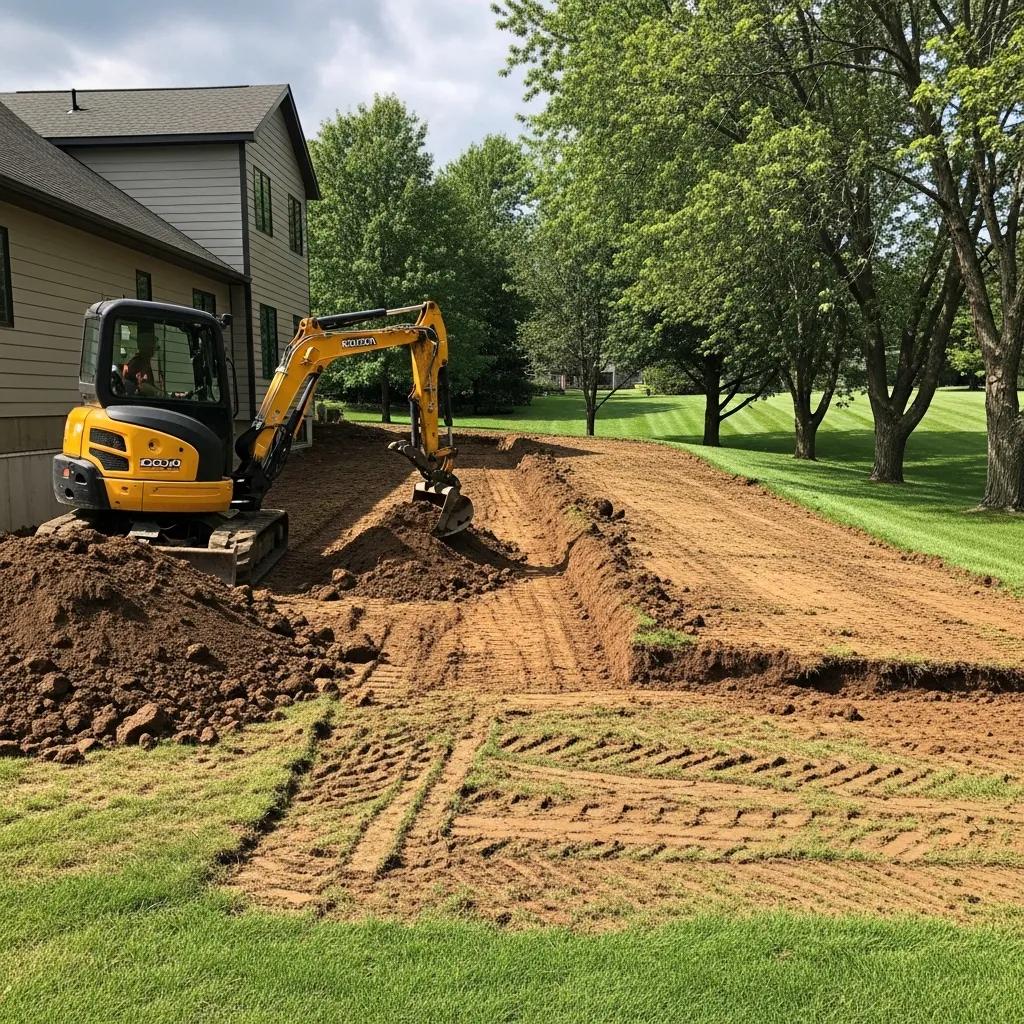
Proper grading and excavation set the foundation for any drainage solution. By shaping the land and creating the right channels, we make sure water moves away from structures instead of toward them.
Why correct slope and trenching are critical
A minimum slope of 2% (about 1/4 inch per foot) away from foundations is recommended to keep water moving. Trenches provide a secure path for drainage pipes so water is carried to the nearest safe outlet. Without correct slope and trenching, runoff can stagnate and cause long-term damage.
Equipment and techniques Arc Excavation uses
We use industry-standard equipment and modern techniques—like laser-guided grading and heavy-duty trenchers—to deliver precise slopes and efficient installs. Those tools reduce rework, speed the job, and improve the long-term performance of your drainage system.
How to maintain and repair drainage systems for reliable performance
Routine care keeps drainage working as designed. Regular checks and cleaning prevent clogs and ensure water flows freely when heavy rains arrive.
DIY maintenance tips and mistakes to avoid
Homeowners can extend the life of a drainage system with a few simple habits:
- Inspect regularly: Look for debris, pooled water, or signs of erosion in gutters, catch basins, and low spots.
- Keep components clear: Remove leaves and sediment from catch basins and surface drains to prevent blockages.
- Don’t ignore warning signs: Repeated pooling, soggy areas, or new erosion usually mean it’s time for professional help.
Following these steps reduces the chances of costly repairs later.
When to call a pro for cleaning or repairs
If you see persistent pooling, unpleasant odors, sinking spots, or ongoing erosion, schedule a professional inspection. Experts can find hidden blockages, damaged piping, or design problems that DIY fixes won’t address.
Arc Excavation’s step-by-step approach to installing drainage systems
Our installation process is methodical and transparent so you know what to expect from start to finish.
How consultation and design address Jacksonville’s needs
We start with an on-site consultation to assess soil, slope, vegetation, and existing drainage. From there we design a tailored plan that accounts for seasonal rainfall patterns, local code requirements, and the best long-term solution for your property.
Key installation and site restoration steps
The installation follows a clear sequence:
- Excavation: We dig trenches and shape grades to the design specifications.
- Installation: Pipes, gravel, catch basins, and surface features are installed with attention to durability and flow.
- Site restoration: We restore turf and landscaping where possible and leave the site clean—so your yard looks like it did before, only drier.
That careful approach helps ensure each system performs reliably for years.
How to request a free quote and start your drainage project
Getting started is simple. We offer free, no-obligation quotes so you can understand options and costs before committing.
What information we need for an accurate quote
To prepare a precise estimate, please provide:
- Property details: Size, layout, and any relevant site plans or photos.
- Specific drainage issues: Locations of pooling, erosion, or leaks you’ve noticed.
- Contact information: Your name and best way to reach you for follow-up.
How Arc Excavation supports customers through the project
From the initial visit to the final walkthrough, we communicate clearly and keep you updated at every step. Our goal is to deliver a solution that solves the problem and gives you confidence in the result.
| Drainage Solution | Description | Benefits |
|---|---|---|
| French Drains | Perforated pipes set in gravel-filled trenches | Redirects subsurface water, prevents standing water near foundations |
| Catch Basins | Surface inlets that collect runoff | Reduces pooling and channels water to underground drains |
| Yard Grading | Reshaping land to direct flow away from structures | Encourages proper drainage and prevents erosion |
Properly installed drainage protects your home and landscape from Jacksonville’s heavy rains. Knowing the options and working with an experienced team lets you choose a solution that fits your property and budget. Arc Excavation is ready to help—starting with a free quote and a clear plan to keep your property dry.
Frequently Asked Questions
What are the signs that my drainage system needs maintenance?
Look for persistent water pooling, slow-moving gutters or downspouts, new or widening erosion channels, foul odors, or more pests around wet areas. These signs usually point to clogs, broken piping, or design issues that need attention.
How often should I have my drainage system inspected?
Inspect drainage systems at least once a year—ideally before the rainy season. If you live in a flood-prone area or experience frequent storms, check more often and always after major weather events.
Can I install a drainage system myself, or should I hire a professional?
Simple tasks like clearing debris can be DIY, but systems that affect foundations or require permitting are best handled by professionals. Trained installers ensure correct slopes, proper materials, and compliance with local codes—saving time and preventing costly mistakes.
What are the costs associated with installing a drainage system?
Costs vary with property size, solution type, and installation complexity. A comprehensive drainage system typically ranges from $1,500 to $5,000. We recommend requesting a detailed quote for an accurate estimate tailored to your site.
What maintenance tasks can I perform on my drainage system?
Keep gutters and downspouts clear, remove leaves from catch basins, check for debris in French drain outlets, and monitor low spots after storms. Scheduling professional cleanings every few years helps maintain peak performance.
How do weather conditions affect drainage system performance?
Heavy rain can overload undersized systems, causing flooding and erosion. Long dry spells may compact soil and reduce permeability. Seasonal cycles and extreme events can stress components, so regular checks and timely upgrades help keep systems functioning.
Conclusion
Good drainage is essential for protecting Jacksonville properties from water damage. With the right design, quality installation, and routine maintenance, you can prevent foundation problems, erosion, and moisture-related health issues. Arc Excavation provides practical, durable drainage solutions tailored to local conditions—contact us today for a free quote and a plan that keeps your property dry and protected.