
Discover the Benefits of Porcelain Pavers vs. Concrete

Porcelain Pavers vs Concrete: Ultimate Jacksonville Hardscape Guide
Porcelain pavers are dense, kiln-fired outdoor tiles built for long-term performance—and more homeowners and businesses are choosing them over traditional concrete for patios, pool decks, driveways, and commercial hardscapes. This guide explains what porcelain pavers are, how their manufacturing and material properties translate into real advantages in Jacksonville’s hot, humid, coastal climate, and why many property owners are rethinking concrete as the default. If you’ve battled staining, color fade, or ongoing repair with concrete surfaces, porcelain offers a low‑absorption, fade‑resistant alternative that cuts lifetime maintenance. Below we compare durability, upkeep, installation complexity, and local cost/ROI, outline aesthetic and safety benefits for pool and high‑traffic areas, and explain how professional installation influences long‑term performance. Read on for practical comparisons, installation steps, and targeted guidance for homeowners and commercial managers evaluating porcelain versus concrete in Jacksonville and Central Florida.
What Are Porcelain Pavers and Why Are They Becoming Popular?
Porcelain pavers are large‑format tiles fired at very high temperatures from refined clays and minerals, producing a vitrified, non‑porous surface with low water absorption and strong mechanical properties. That manufacturing process yields a stable, stain‑resistant surface that holds color and resists moisture-driven deterioration—one reason designers and contractors specify porcelain for outdoor hardscapes. Homeowners like the wide aesthetic range—stone, slate, and wood looks with consistent color—and the practical benefits: good slip resistance and minimal upkeep. Understanding how they’re made and how they behave in humid, coastal climates helps explain porcelain’s growing share over concrete in both residential and commercial projects.
How Are Porcelain Pavers Made and What Makes Them Durable?
Porcelain pavers are formed by compacting fine clays and minerals and firing them to vitrification, which creates a dense microstructure with extremely low porosity and high abrasion resistance. That vitrified body cuts water absorption to fractions of a percent, reducing risks like moisture-driven spalling or salt-related damage—important in Jacksonville’s coastal zones. Manufacturers also specify density, surface texture, and finishes to meet slip‑resistance and color‑stability targets, so you can choose products that match your performance needs. Together, these production traits give porcelain superior surface hardness, wear resistance, and long‑term dimensional stability versus many standard concrete mixes.
What Features Make Porcelain Well‑Suited to Florida’s Climate?
Porcelain’s non‑porous surface blocks water uptake, helping prevent common humid‑climate issues like efflorescence and biological staining. UV‑stable pigments and glazed or textured finishes reduce color fade under strong sunlight, and the smooth, hygienic surface limits mold and mildew on pool decks and shaded patios—improving both appearance and safety. Lighter tones and textured finishes can also help moderate surface heat for barefoot comfort around pools, which makes porcelain attractive for Jacksonville summers. Overall, porcelain performs particularly well in coastal, high‑UV conditions where long‑term looks and low maintenance matter.
How Do Porcelain Pavers Stack Up Against Concrete for Durability and Maintenance?
Porcelain pavers generally outperform concrete across several durability and maintenance measures because of their low water absorption, stable pigments, and dense fired body—but they depend on precise installation to deliver those benefits. Side‑by‑side, porcelain offers better stain resistance, less frequent cleaning, and stronger surface wear characteristics; concrete can still be a practical, lower‑upfront option for simple, budget‑driven jobs. The table below highlights key technical differences to help homeowners compare trade‑offs.
| Attribute | Porcelain Pavers | Concrete Pavers |
|---|---|---|
| Water absorption | Very low (typically | Medium to high (depends on mix) |
| Stain resistance | High — easier to clean | Moderate — often needs sealing |
| Color retention | Excellent — UV‑stable | Variable — may fade or show efflorescence |
| Surface wear | High abrasion resistance | Lower — surface can weather and roughen |
| Maintenance frequency | Low | Higher — periodic sealing/repairs common |
What Durability Benefits Do Porcelain Pavers Offer Over Concrete?
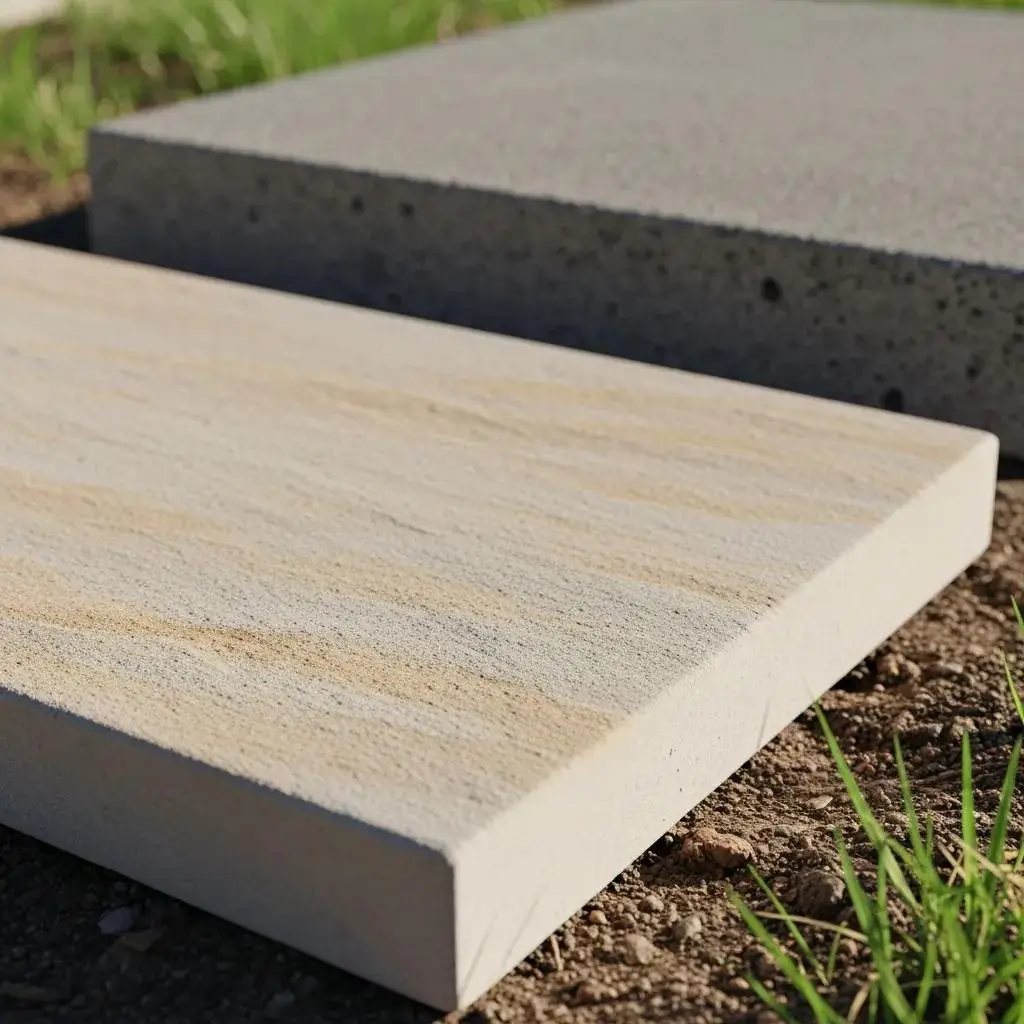
Their low porosity and vitrified structure make porcelain less prone to water‑related deterioration and staining, which translates to fewer repairs and a longer visual life in humid, coastal environments. High abrasion resistance and color‑fast pigments keep surfaces looking good under foot traffic and sunlight, reducing the need for surface treatments common with concrete. Porcelain’s resistance to oil and common stains also simplifies cleaning around pools and outdoor kitchens. Those material strengths add up to real longevity: fewer replacements, less surface remediation, and a preserved aesthetic that supports property value over time.
Why Are Porcelain Pavers Considered Lower Maintenance Than Concrete?
Because porcelain resists water penetration and staining, routine care is usually sweeping and occasional pressure washing rather than frequent sealing or chemical treatments. The uniform surface leaves fewer spots for organic growth, which cuts down on mold and mildew cleanup around pools and shaded areas. Joint materials still need periodic inspection and occasional replenishment, but overall lifecycle maintenance tends to be lower for porcelain. For many owners, higher upfront material cost is balanced by reduced labor and repair expenses over the years.
How Do Costs Compare Between Porcelain and Concrete Pavers in Jacksonville?
Porcelain pavers generally cost more per square foot than typical concrete pavers, and installed prices can be higher because they require precision cutting, specialized tools, and careful base and drainage work. Jacksonville‑specific factors—site access, soil conditions, and coastal drainage needs—also influence labor and equipment requirements and therefore final price. When you factor in lifecycle costs and ROI, porcelain often looks favorable because of lower maintenance and fewer replacements, plus potential property‑value upside. The table below shows a generalized cost comparison for local projects.
| Cost Type | Porcelain Typical | Concrete Typical |
|---|---|---|
| Initial material cost | Higher per sq ft | Lower per sq ft |
| Installation labor cost | Higher (precision & specialty tools) | Moderate |
| Maintenance cost (annual) | Lower | Higher (sealing/repairs) |
| Lifetime cost/ROI | Competitive over decades | Can be higher due to repairs |
How Does the Initial Investment for Porcelain Compare to Concrete?
Porcelain’s upfront price reflects premium materials and skilled labor for exact base prep, cutting, and jointing, which typically pushes initial costs above many concrete options. Site variables—drainage, substrate removal, and salt‑exposure mitigation—can raise costs further in Jacksonville. That said, specifying slip‑resistant finishes and light‑reflective tones for pool areas adds long‑term value. Given this complexity, get detailed contractor quotes so you know what’s included and can avoid surprises.
What Long‑Term Value and ROI Can I Expect from Porcelain Pavers?
Across a 20–30 year horizon, porcelain’s lower maintenance needs, better appearance retention, and fewer replacement cycles often yield favorable lifecycle ROI compared with concrete. A well‑maintained porcelain surface can boost curb appeal and resale value—especially when it reproduces high‑end stone or wood looks. Exact ROI depends on property type and market conditions, but conservative estimates show maintenance and replacement savings can offset higher upfront costs within a decade for many installations. For most owners, total cost of ownership matters more than initial price alone.
How Do Porcelain Pavers Improve Aesthetics and Safety Outdoors?
Porcelain offers design flexibility—large slabs, realistic stone and wood visuals, and a range of textures and edge profiles—that elevates outdoor spaces while delivering safety benefits like engineered slip resistance and lower surface heat options. Designers use porcelain to create cohesive outdoor rooms that mimic natural materials without the maintenance. For pool decks and busy commercial areas, textured finishes and controlled friction meet safety needs while keeping a premium look. That mix of design and performance makes porcelain a strong choice for homeowners and businesses seeking durable, attractive surfaces.
What Aesthetic Options Do Porcelain Pavers Offer Compared to Concrete?
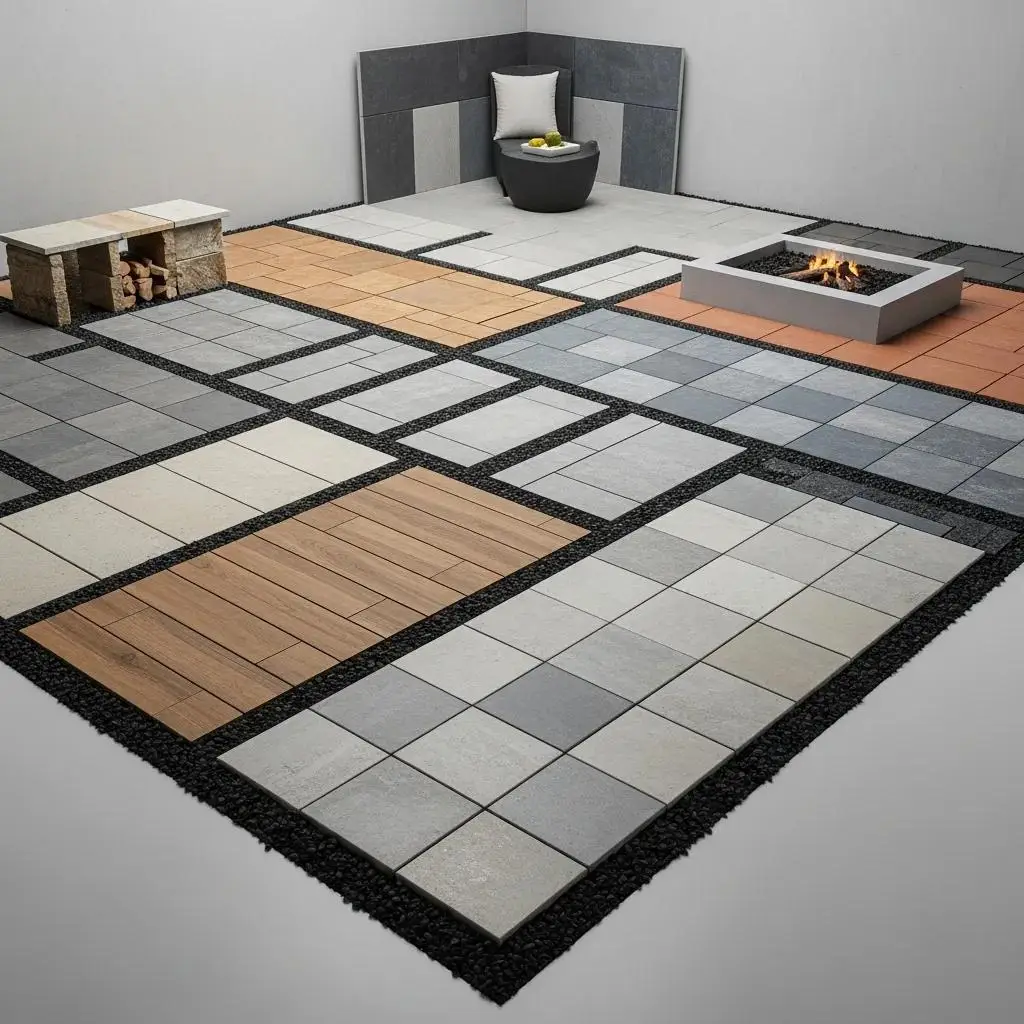
Porcelain can convincingly reproduce marble, granite, travertine, and wood grain at large slab sizes, allowing cleaner layouts with fewer visible joints than small concrete pavers. Finishes range from matte to textured with calibrated edges for modern patterns and smooth transitions from indoor tile to outdoor paving. High‑definition surface printing and color stability keep the look consistent over time, avoiding the patchy fade that can affect concrete. These options let property owners achieve high‑end aesthetics with predictable long‑term performance.
How Do Porcelain Pavers Improve Safety on Pool Decks and Busy Walkways?
Textured porcelain and certified slip‑resistance ratings lower slip risks around pools and on ramps, and the material’s low porosity discourages algae and slippery growth. Choosing lighter tones and reflective finishes reduces surface heat for barefoot comfort, while the dense body resists oil and chemical staining from sunscreens and pool products. In commercial settings, porcelain’s consistent friction and durability make it easier to maintain ADA‑compliant surfaces and provide reliable user experiences.
What Problems with Concrete Pavers Does Porcelain Help Solve?
Concrete pavers can show porosity‑related staining, efflorescence, color fade, and cracking from freeze/thaw or settlement; porcelain addresses many of these issues with a non‑porous surface, stable pigments, and installations focused on precision to reduce load stress. Looking at problems and solutions explains why many owners replace worn concrete with porcelain when they want lower upkeep and longer visual life. Skilled installers also use drainage and edge restraints to limit movement and cracking—key to getting porcelain’s full advantages.
Why Do Concrete Pavers Often Crack and Stain?
Concrete’s greater porosity and variable mixes can absorb oils, salts, and water, which leads to efflorescence, visible staining, and surface weakening over time. Poor base prep or inadequate drainage lets movement and point loads cause cracking and settling. Coastal salt and humidity in Jacksonville accelerate these processes, creating recurring maintenance needs—sealing, cleaning, and occasional replacement. Those failure modes push many property owners to seek materials with lower absorption and harder surfaces.
How Does Proper Porcelain Installation Address Concrete’s Weaknesses?
Porcelain’s non‑porous surface limits stain uptake, and when combined with precision cutting, consistent jointing, and a well‑compacted base, the finished surface resists movement and staining. Good drainage—proper slope, subsurface drains, and sturdy edge restraints—keeps water from pooling and reduces long‑term settlement. Because these outcomes require specialty cutting tools, careful handling, and experienced base compaction, professional installation is strongly recommended to achieve porcelain’s promised performance.
Why Choose ARC Excavation Inc. for Porcelain Paver Installation in Jacksonville?
ARC Excavation Inc. is a local excavation and hardscaping contractor serving Jacksonville and Central Florida with full‑service site preparation and professional paver installation for patios, driveways, walkways, and pool decks. We emphasize craftsmanship, thorough site prep (grading, drainage, base compaction), and quality materials from trusted suppliers to deliver durable results. ARC offers free, no‑obligation quotes and clear communication so property owners understand scope, cost drivers, and timelines. For Jacksonville projects where coastal exposure, drainage, and longevity matter, our local experience and financing options help simplify decisions and reduce risk.
What Is ARC Excavation’s Installation Process for Porcelain Pavers?
Our process starts with a site evaluation and drainage plan that considers local soils and coastal runoff, followed by careful demolition or surface prep to the correct depth. We compact an engineered aggregate base and grade for positive drainage, then set pavers with precise cutting and jointing matched to the chosen porcelain format. Edge restraints and appropriate joint materials control lateral movement, and a final quality inspection confirms alignment, slope, and surface friction. That step‑by‑step approach minimizes cracking risk and preserves porcelain’s low‑maintenance benefits.
How Does ARC’s Local Knowledge Help Your Porcelain Paver Project?
ARC’s local experience includes a practical understanding of Jacksonville’s UV exposure, humidity, and salt effects—and how those factors shape material selection, drainage details, and finish choices. That knowledge shortens design iterations, reduces costly rework, and helps match product specs to site conditions and intended use (pool deck versus driveway). Our supplier relationships and full service—from underground utility coordination to final paver installation—help homeowners and businesses get durable, code‑compliant results with predictable outcomes.
Where Are Porcelain Pavers Used in Jacksonville and Central Florida?
Porcelain pavers are popular for residential patios, pool decks, upscale driveways, and commercial plazas where clean appearance and long‑term durability matter. Large formats and consistent finishes fit modern landscape designs and integrate smoothly with outdoor kitchens, steps, and coping. In commercial settings, porcelain supports low‑maintenance plazas and hospitality areas that face heavy foot traffic and frequent cleaning. Below are common application types and the benefits porcelain brings to each.
Common applications for porcelain pavers
- Residential patios and pool decks: Durable, low‑maintenance surfaces with safe, textured finishes.
- Driveways: High‑strength formats suitable for light vehicle loads with strong curb appeal.
- Commercial plazas and walkways: Consistent appearance, easy cleaning, and long‑term color stability.
These use cases show how porcelain’s mix of aesthetics and performance delivers value across property types and naturally leads to both residential and commercial upgrades.
How Do Porcelain Pavers Transform Patios and Driveways at Home?
Porcelain elevates patios and driveways with high‑fidelity looks—stone, slate, or wood—without the ongoing staining and sealing cycles of concrete or some natural stones. Around pools and family areas, porcelain’s low‑absorption surface reduces algae and mildew issues, and textured finishes improve slip resistance. Large slabs mean fewer visible joints and simpler maintenance, while consistent color and wear help outdoor living areas look newer for longer. Those practical gains pair nicely with the visual upgrade.
What Commercial Benefits Does Porcelain Provide in Central Florida?
For commercial properties, porcelain pavers offer durable, low‑maintenance surfaces that stand up to heavy pedestrian traffic and frequent cleaning—ideal for retail courtyards, hotel pool decks, and outdoor dining zones. Stable colors and uniform textures reduce visible wear, easing cleaning and maintenance schedules. When heavier duty is needed, porcelain can be specified in thicker formats and supported with engineered bases to handle light vehicular loads, balancing design and operational needs.
Frequently Asked Questions
What Environmental Benefits Come with Porcelain Pavers?
Porcelain can be an eco‑friendly choice because its low water absorption and long lifespan reduce the need for frequent replacements and ongoing maintenance, which lowers material waste over time. Many manufacturers also follow sustainable practices—recycling raw materials and improving firing efficiency—making porcelain a responsible option for environmentally minded homeowners and businesses.
Can Porcelain Pavers Be Used Indoors?
Yes. Porcelain pavers work well both indoors and outdoors. Their durability, low maintenance, and visual range make them suitable for high‑traffic interior areas like kitchens, entryways, and living rooms. Using the same porcelain inside and out creates a seamless transition and a cohesive design flow.
How Do I Choose the Right Porcelain Paver for My Project?
Choose based on intended use, aesthetic preference, and site conditions. For wet areas like pool decks, prioritize slip‑resistant ratings and textured finishes. Consider color and grain that complement your landscape, and consult professionals to confirm base preparation and drainage requirements so the pavers perform long term.
What Maintenance Do Porcelain Pavers Need?
Porcelain needs very little maintenance: regular sweeping to clear debris and occasional pressure washing to remove dirt or stains are usually enough. Inspect joints and drainage annually and top up joint material as needed. Unlike concrete, porcelain generally doesn’t require sealing or harsh cleaners.
Are There Any Limitations to Porcelain Pavers?
Porcelain has a higher upfront cost than many concrete options and needs precise installation to avoid cracking, so skilled installers are recommended. In some finishes, porcelain can be slippery when wet—so textured or anti‑slip options are wise for pool areas. Knowing these limits helps you make the right product and installation choices.
How Do Porcelain Pavers Hold Up in Extreme Weather?
Porcelain is engineered to resist heat, cold, and humidity. Low water absorption minimizes freeze‑thaw risk, and UV‑stable pigments reduce color fading in sunny climates. Its dense structure resists cracking and deterioration, making porcelain a reliable choice for Jacksonville’s coastal environment and other varied weather conditions.
Which Is Better: Porcelain or Concrete Pavers?
Porcelain usually wins for durability, stain resistance, and low maintenance—making it a top pick for pool decks and highly visible outdoor living areas. Concrete can be the right choice when upfront budget rules or when a specific interlocking look is desired. Base your decision on long‑term performance needs and the site’s conditions.
Are Porcelain Pavers More Expensive Than Concrete?
Yes—porcelain typically carries a higher upfront cost for materials and installation because of precision cutting and base requirements. However, lower maintenance and replacement frequency can lead to a lower lifetime cost in many situations. Get local quotes to compare true installed prices.
How Long Do Porcelain Pavers Last Compared to Concrete?
With proper installation and care, porcelain pavers commonly last 20+ years while maintaining appearance and structural integrity longer than many concrete pavers, which may need sealing, repairs, or replacement depending on exposure and load. Correct installation extends the lifespan of either hardscaping services.
Do Porcelain Pavers Crack Easily?
Porcelain is strong but can crack if installed improperly or subjected to point loads. Correct base compaction, jointing, and edge restraint are essential to prevent cracking—so professional installation reduces risk and preserves porcelain’s advantages.
How Do I Maintain Porcelain Pavers for Longevity?
Keep porcelain looking its best by sweeping regularly, doing occasional low‑pressure washing, and checking joints and drainage once a year. Avoid abrasive or strongly acidic cleaners that can harm joint materials. These simple steps keep porcelain hygienic and visually consistent with much less effort than many drainage solutions.
If you’re ready to move forward, ARC Excavation Inc. offers local expertise for porcelain paver projects across Jacksonville and Central Florida—site prep, drainage solutions, and professional installation. We provide free, no‑obligation quotes and clear communication so you can evaluate installed cost and expected ROI before you commit. To discuss a project, call us at (904) 820-0060 or use the contact form on our website to request a free quote; ARC’s local drainage solutions and full‑service offering help ensure your porcelain paver installation meets climate, drainage, and performance expectations.
Conclusion
Choosing porcelain pavers instead of concrete delivers clear benefits in durability, maintenance, and long‑term appearance—advantages that suit Jacksonville’s climate. Low absorption and strong stain resistance mean lasting beauty and less upkeep, which can enhance property value over time. If you want to elevate your outdoor space, professional installation is the best way to secure those results. Contact ARC Excavation Inc. for a free quote and expert guidance on your porcelain paver project.