Efficient Land Clearing Services for Your Property Needs
Excavation vs. Grading vs. Land Clearing — Which One Do You Really Need?
Before starting a project, know how excavation, grading, and land clearing differ. Each is a distinct stage of site preparation that affects schedule, budget, and outcome. This guide explains foundations (excavation), surface shaping (grading), and vegetation removal (land clearing), plus equipment and typical clearing costs.
Key Takeaways
- Excavation, grading, and land clearing are distinct site-prep services.
- Excavation removes soil and rock for foundations and utilities.
- Grading reshapes land to control drainage and stability.
- Land clearing removes trees, brush, and debris so work can proceed.
- Choose services based on project scale, soil, and budget.
- Excavation uses excavators, bulldozers, and backhoes.
- Grading uses graders, compactors, and scrapers for a stable finish.
- Clearing costs vary with acreage, vegetation, and access.
- Contractors use mechanical, manual, or mixed clearing methods.
What Is the Difference Between Excavation, Grading, and Land Clearing?
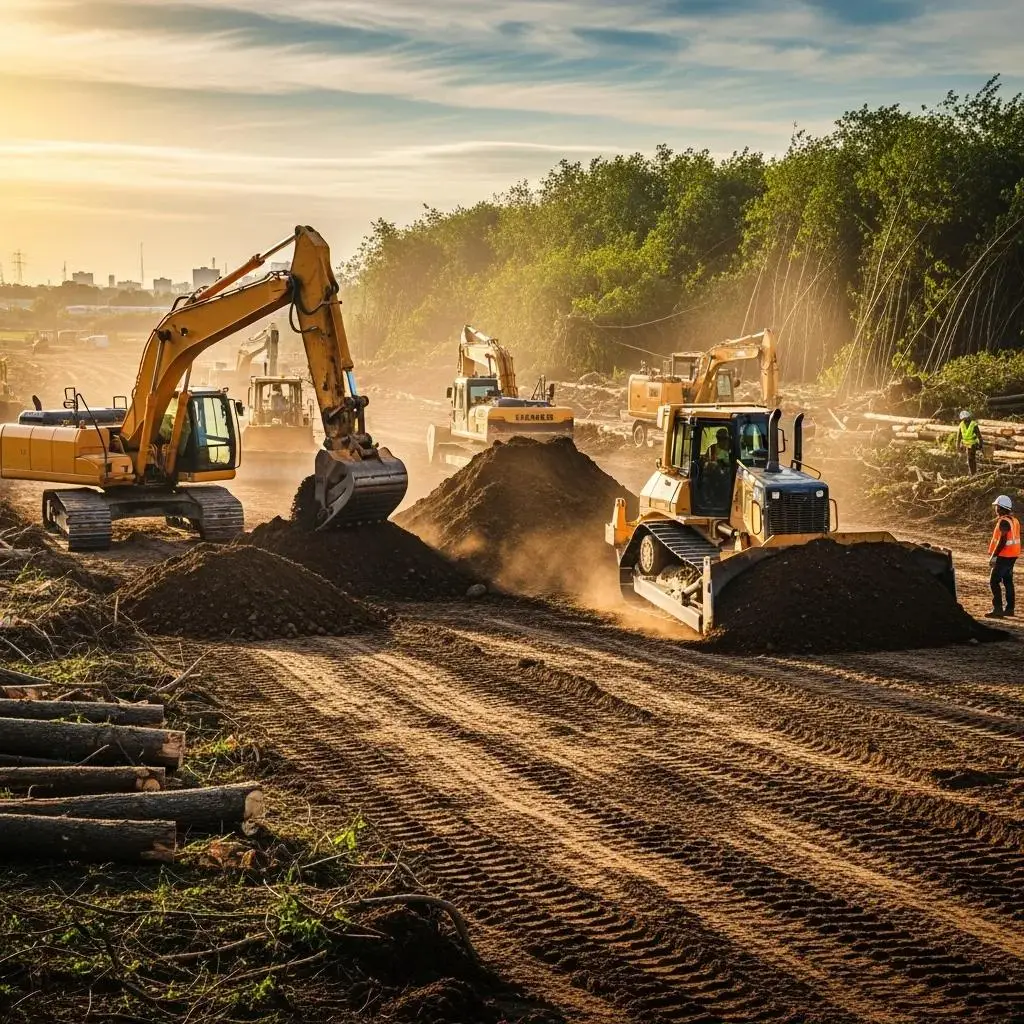
Each service has a clear purpose: excavation removes earth for footings and trenches; grading shapes surfaces for drainage and stability; land clearing removes vegetation and debris so equipment can operate safely. Identifying the needed service helps plan the correct sequence.
How Does Excavation Prepare Your Site?
Excavation removes material to reach design elevations and form stable foundations. Heavy machines dig, trim, and move large volumes of earth; done properly, excavation protects structural integrity and avoids costly fixes later.
What Role Does Grading Play in Land Preparation?
Grading controls water flow and erosion by creating slopes, filling low spots, and compacting surfaces. Proper grading improves access, reduces standing water, and supports long-term stability.
How To Choose the Right Service for Your Project Needs?
Start with a site assessment: what you will build, area size, soil type, and budget. Match the work to the outcome and sequence tasks appropriately (typically clearing, then excavation, then grading).
Which Factors Influence Choosing Excavation or Grading?
Key factors are project size, soil composition, and topography. Large projects often need deeper excavation; smaller jobs may need only grading. Unstable or rocky soils increase excavation needs and costs.
When Is Land Clearing Necessary Before Other Services?
Clear the site first when vegetation or debris blocks access or risks equipment. Removing trees, stumps, and brush prevents delays and hazards during excavation and grading.
What Are the Common Equipment Types Used in Excavation and Grading?
Knowing common machines helps set timelines and expectations. Each tool serves a purpose, from digging to moving to finishing the surface; plan equipment by task and site constraints.
What Excavation Machinery Is Essential for Site Preparation?
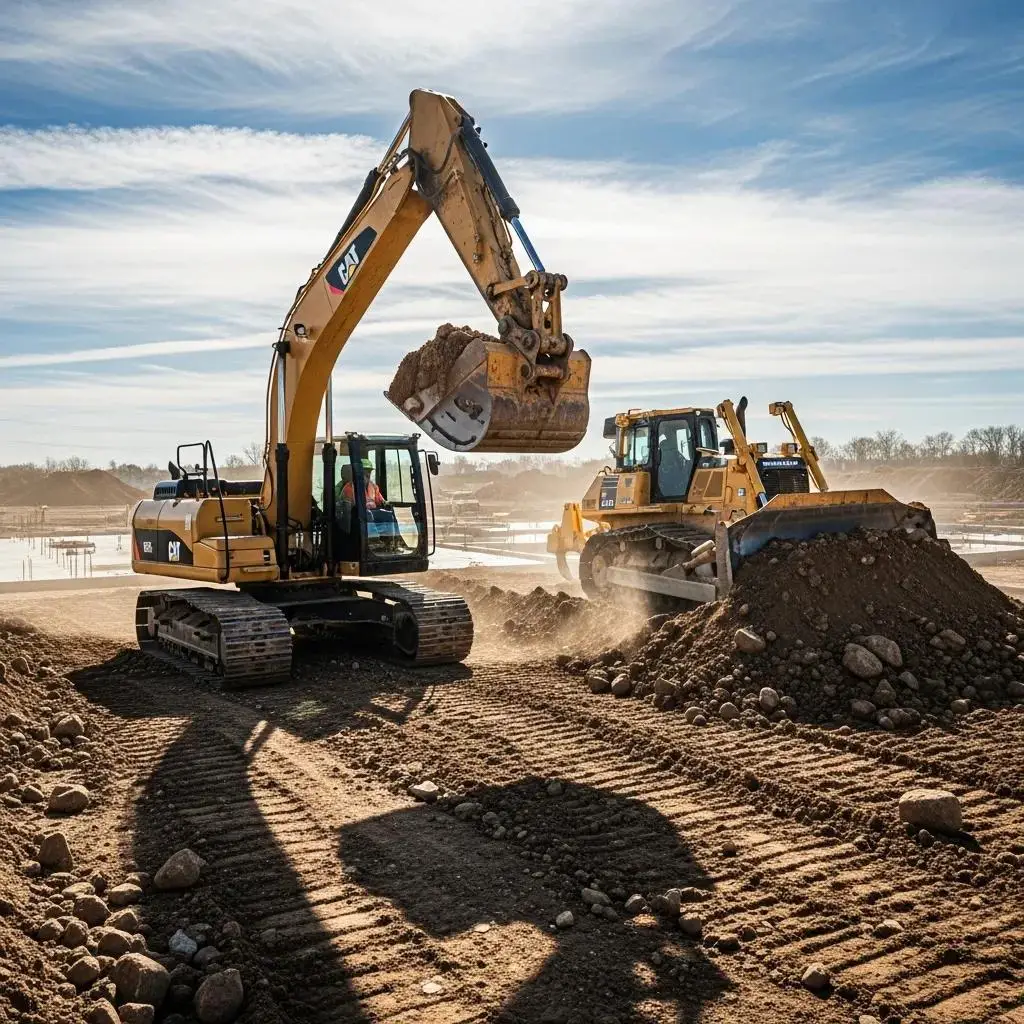
Typical excavation equipment includes excavators for digging, bulldozers for pushing and spreading, and backhoes for versatile trenching. The right machine speeds work and reduces rework.
Industry references underscore the importance of choosing suitable heavy equipment for large excavation projects.
Heavy Equipment for Construction Excavation
Overview of heavy equipment commonly used on large excavation projects.
Means Heavy Construction Handbook: A Practical Guide to Estimating and Accounting Methods; Operations/Equipment Requirements; Hazardous Site …, 1993
Which Grading Equipment Types Improve Land Leveling?
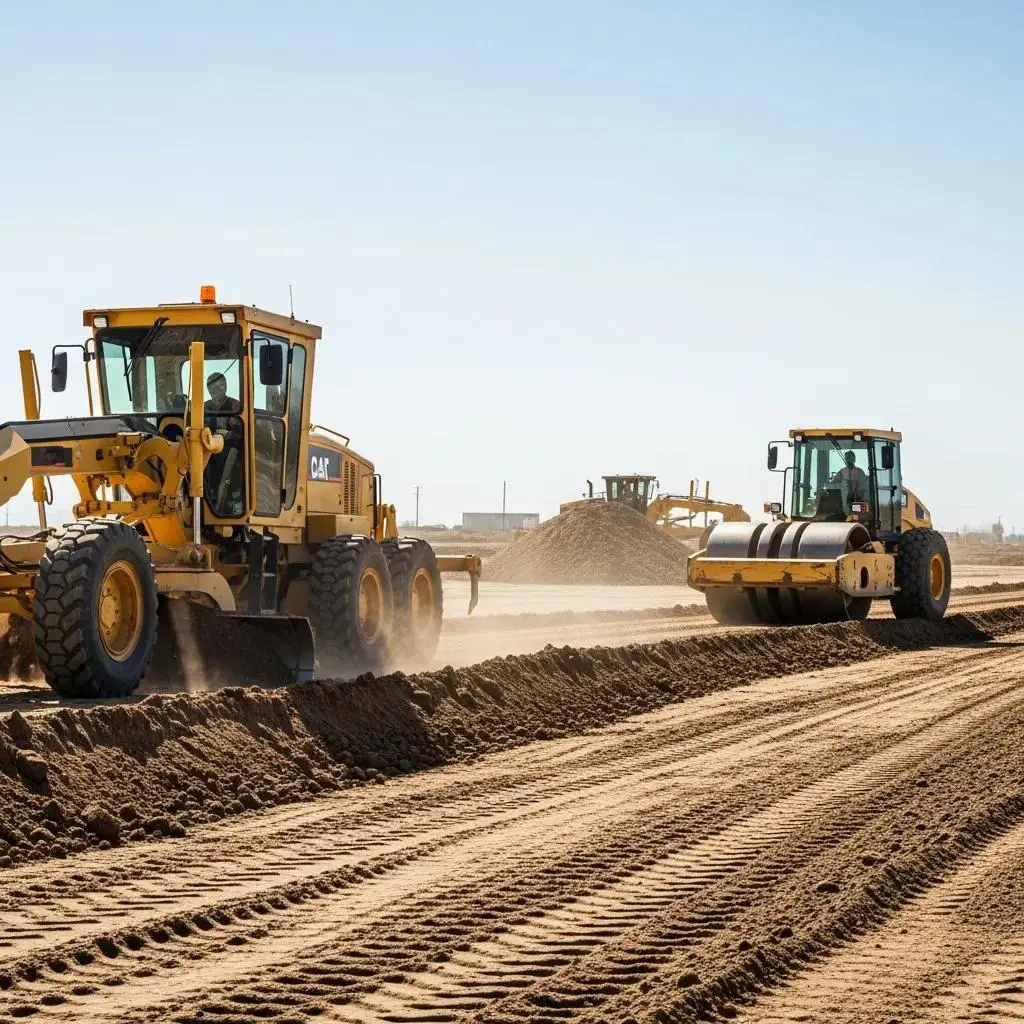
Graders form precise slopes, compactors densify soils, and scrapers move large earth volumes. Combined, they create the flat, stable base needed for foundations, driveways, and landscaping.
What Are Typical Costs and Methods for Land Clearing Services?
Understanding costs and methods helps budget and choose an approach. Costs depend on lot size, vegetation density, and site access for crews and machinery.
Which Land Clearing Methods Are Most Effective?
Mechanical clearing uses heavy machines for speed on dense sites. Manual clearing uses hand crews for selective, sensitive work. Contractors often combine both to balance speed, precision, and cost.
How Do Land Clearing Costs Vary by Project Size?
Costs vary widely: small residential clears may cost a few thousand dollars; larger parcels can be substantially more depending on access and vegetation. Confirm what’s included—stump removal, hauling, and permits affect the final price.
| Service Type | Cost Range | Method |
|---|---|---|
| Mechanical Clearing | $2,000 – $10,000 | Heavy machinery |
| Manual Clearing | $1,500 – $5,000 | Hand tools |
| Mixed Methods | $3,000 – $12,000 | Combination of both |
This table summarizes typical approaches and price ranges so you can compare options for your site.
Frequently Asked Questions
What are the environmental considerations when performing land clearing?
Consider wildlife, erosion control, and runoff. Use selective clearing when possible, protect stream buffers, replant native species, and secure permits to reduce ecological impact.
How long does the excavation process typically take?
Timing depends on project size and site conditions. Small residential digs can take days; larger commercial work may take weeks. Weather, soil, and equipment availability affect schedules.
Can excavation and grading be done simultaneously?
They can be coordinated, but sequencing matters: reach required excavation depths before final grading to avoid rework.
What safety measures should be taken during excavation and grading?
Prioritize PPE, mark site boundaries, post warnings, inspect equipment, train operators, and follow trenching and shoring standards. Keep an emergency plan and first-aid resources on site.
What types of soil are most challenging for excavation?
Clay retains water and can be unstable; rock needs breakers; sandy soils risk collapse without shoring. A soil survey helps choose equipment and methods to reduce delays.
How can I prepare my site for land clearing?
Walk the site to note obstacles and sensitive areas. Obtain permits, mark boundaries, plan erosion control, and arrange utility locates. Hiring a professional helps ensure compliance with local rules.
Conclusion
Knowing the differences among excavation, grading, and land clearing helps you plan, avoid surprises, and get accurate quotes. Assess your site, sequence work properly, and consult professionals for a tailored plan and estimate.
Check out our Youtube Video: https://youtu.be/sza_vqpP0gc?si=LFU1dN-rZkQ9G9p4
Check out our Google Business Profile: https://maps.app.goo.gl/8cxdowXPLb9qkvnA9