
Essential Land Clearing Services for Your Project

Jacksonville Land Clearing & Site Preparation — What You Need to Know
Land clearing removes vegetation, debris, and obstacles so land becomes safe and buildable for construction, farming, or landscape work. This guide walks through how clearing links with site preparation to deliver a usable lot, cut hazards, and meet local permitting rules in the Jacksonville area. You’ll find clear explanations of common clearing techniques, how clearing transitions into grading and utility trenching, the main cost drivers per acre, Florida-specific permitting notes, and why hiring experienced contractors pays off. We also include practical lists and comparison tools so you can plan with fewer surprises — from forestry mulching and stump grinding to grading, drainage, and evaluating licensed contractor quotes.
What Are Land Clearing Services and Why They Matter
Land clearing removes trees, brush, stumps, and surface debris so a site becomes safe, accessible, and ready for construction or agricultural use. Contractors combine mechanical removal, mulching, and debris management to turn overgrown parcels into stable work areas ready for excavation and foundations. The main benefits are lower risk to crews and equipment, better access for construction traffic, and a clean base for accurate grading that reduces erosion and drainage issues later. Knowing these outcomes helps property owners pick the right clearing approach and stay compliant with rules that protect wetlands and infrastructure.
Land clearing is important for several practical reasons:
- It removes physical hazards that threaten crews and heavy equipment.
- It exposes soil contours so grading and foundation excavation are accurate.
- It lowers wildfire and pest risk by removing dense undergrowth.
- It creates access routes for construction vehicles, utilities, and material deliveries.
Those points explain why clearing is usually the first step in site development and lead naturally into the processes that prepare a lot for foundations and utilities.
Arc Excavation is a licensed, insured excavation contractor based in Jacksonville, FL. We offer local land clearing and site preparation for both residential and commercial projects. Our experience with sandy soils, coastal drainage, and regional permitting helps smooth the handoff from clearing to grading while keeping safety and efficiency front of mind. If you’d like a site assessment or an on-site quote, Arc Excavation can review access limitations and recommend the best clearing method for your property.
How Land Clearing Sets Up a Site for Construction
Clearing prepares a site through a sequence of assessment, vegetation removal, grubbing, debris handling, and rough grading that exposes native soil and creates a safe work surface. An initial survey identifies trees, wetlands, slopes, and access points so crews choose the right machines — mulchers, excavators, bulldozers — to limit unnecessary soil disturbance. Grubbing removes root systems that interfere with footings and trenches, while staged chip placement and debris removal help control erosion and build temporary access roads. Proper clearing also includes erosion controls like silt fencing and temporary swales so exposed soils don’t wash into neighboring properties, keeping the site stable for the next construction phases.
Those outcomes directly affect foundation and drainage work by providing clear, graded locations to stake building footprints and route utilities. Prioritizing erosion control during clearing reduces costly rework during grading and sets the stage for accurate compaction testing and final grading before permits are closed out.
Land Clearing Services Offered by Arc Excavation

Clearing methods differ by project goals, environmental limits, and budget. Common approaches include forestry mulching, mechanical clearing, selective tree removal, stump grinding, and small-structure demolition. Each method balances speed, cost, and environmental impact: mulching recycles biomass on-site and suppresses regrowth, while haul-off clearing produces a bare lot ready for grading. Knowing the differences helps you pick the solution that fits your schedule, tolerance for site disturbance, and downstream site-prep needs.
Common land clearing service types — quick descriptions:
- Forestry Mulching : A high-speed mulching head shreds trees and brush into chips that remain on-site as protective ground cover.
- Mechanical/Traditional Clearing : Bulldozers and excavators cut, pile, and haul vegetation and stumps off-site for disposal.
- Selective Tree Removal : Targeted cutting preserves desirable trees while removing hazardous or obstructive specimens.
- Stump Grinding & Removal : Specialized equipment grinds or extracts stumps to clear root zones for foundations and eliminate trip hazards.
Use the comparison below to weigh common clearing approaches.
The table contrasts methods, typical use cases, advantages, trade-offs, and general cost expectations to help homeowners and developers make informed choices.
| Service Type | Typical Use Case | Pros | Cons | Typical Cost Range (general) |
|---|---|---|---|---|
| Forestry Mulching | Clearing brush and small-to-medium trees while leaving organic ground cover | Fast, provides mulch for erosion control, lowers hauling costs | Mulch layer may need removal for final grading | Moderate |
| Traditional Clearing (haul-off) | Full-lot prep for development that requires bare soil | Clean site, simplifies grading and compaction testing | Higher hauling/disposal costs and a longer timeline | Higher |
| Selective Tree Removal | Preservation-focused projects or utility corridors | Protects canopy and landscape value | More labor-intensive and typically slower | Variable |
| Stump Grinding | Prepare site where stumps interfere with footings or landscaping | Removes trip hazards and root decay quickly | Chips remain on-site unless removed on request | Moderate |
In short: forestry mulching is efficient for vegetation control and erosion protection, while traditional haul-off clearing suits projects that need a fully bare site before grading. Your final choice depends on goals, site limits, and permitted work methods in Jacksonville.
Arc Excavation supplies the licenses, insurance, and equipment for these services, serving homeowners and commercial clients across Jacksonville and nearby Yulee. Our crew focuses on safe practices and smooth transitions from clearing to grading to reduce downtime before foundation work begins.
Forestry Mulching vs. Traditional Clearing — A Practical Comparison
Forestry mulching shreds vegetation and returns organic material to the ground; traditional clearing cuts and hauls trees, brush, and stumps off-site to produce a bare lot. Mulching lowers hauling costs, limits regrowth, and leaves a protective chip layer that reduces erosion, though it can complicate final grading if chips must be removed. Traditional clearing delivers an immediately clean surface that simplifies grading and compaction testing but increases disposal costs and truck traffic. In Jacksonville’s coastal, sandy soils, mulching can help protect soil structure and limit dust during dry periods, while haul-off clearing is often the better choice when full compaction testing or soil import/export is required.
Recommended use cases:
- Forestry mulching : Brush-heavy lots, conservation-minded projects, roadside clearing where speed and erosion control matter.
- Traditional clearing : Full-lot redevelopment, sites needing immediate bare-earth grading, or projects with strict finish-grade specs.
This comparison highlights the trade-offs so you can pick a method that matches budget, environmental priorities, and downstream excavation needs.
How Site Preparation Fits with Land Clearing
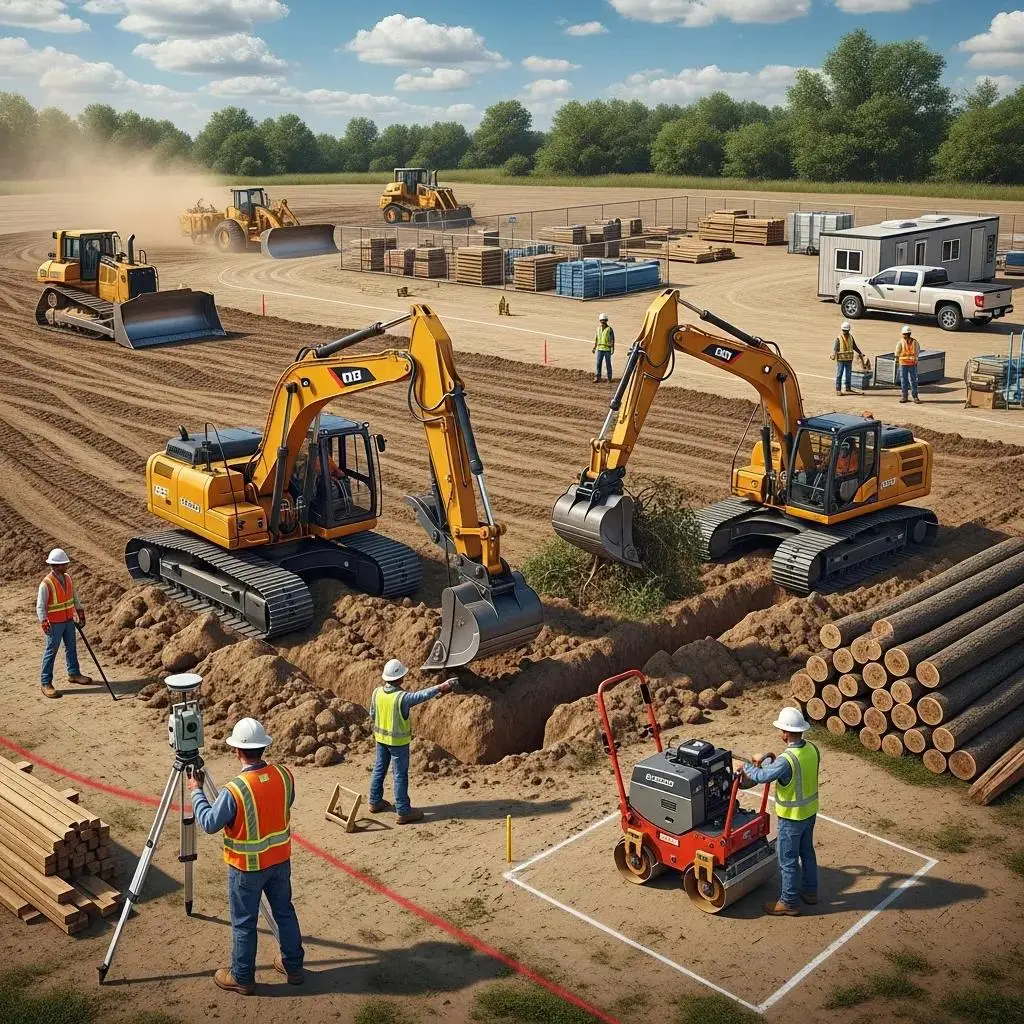
Site preparation follows clearing and includes survey staking, foundation excavation, grading , drainage work, and utility trenching to produce a construction-ready base that meets engineering and permit requirements. Planning the work together ensures clearing protects trees you want to keep, locates utilities, and installs erosion controls before heavy grading starts. Coordinating clearing and grading reduces rework, cuts the number of heavy-equipment mobilizations, and helps control material-handling and compaction costs. It also ensures inspections and compaction testing happen at the right milestones so foundation work proceeds on schedule.
The table below maps common site-prep tasks to purpose, equipment, and typical time estimates so you can see how clearing dovetails with the next steps.
| Task | Purpose in Construction Sequence | Equipment Typically Used | Time Estimate |
|---|---|---|---|
| Surveying & Staking | Establish building footprint and control points | Survey equipment, GPS, marking flags | 1–3 days |
| Excavation for Foundations | Create footing trenches and pad cuts | Excavator, backhoe, skid steer | 1–7 days |
| Rough & Final Grading | Achieve design elevations and drainage slope | Bulldozer, grader, compactors | 2–10 days |
| Drainage & Utility Trenching | Install storm lines, sewer, water, and electrical | Trencher, excavator, conduit equipment | 2–8 days |
| Compaction & Testing | Ensure soil meets bearing requirements | Rollers, plate compactors, testing lab | 1–3 days |
Coordinating clearing crews with grading teams shortens schedules and improves site results, increasing the likelihood that foundations and utilities are installed correctly the first time.
Key integration steps include pre-clearing surveys to protect critical features, staged clearing that keeps erosion control intact, and scheduling compaction testing after final grading so contractors can proceed with an approved subgrade.
Key Steps in Site Preparation
Site prep starts with surveying and staking to mark building envelopes and control points so excavation and grading follow engineered plans. Then, any structures are demolished and trees marked for protection or removal. Next comes excavation for foundations and utility trenches to set below-grade infrastructure. Rough grading shapes drainage, compaction and testing confirm load-bearing capacity, and final grading smooths the pad for construction — with erosion-control measures maintained throughout. Coordinating inspections at surveying, excavation, and compaction milestones prevents schedule slips and keeps permits in good standing.
These tasks require a mix of machines — excavators, skid steers, graders, and compactors — and benefit from sequential planning so clearing does not disturb survey benchmarks. When utilities are installed, trenches are backfilled and compacted in lifts to preserve soil stability, which ties site preparation to the long-term performance of foundations and paved areas.
What Drives Land Clearing Costs Per Acre?
Per-acre clearing costs vary because of vegetation density, terrain and slope, access and haul distance, wetlands or protected species, permit needs, and disposal methods. Each factor increases labor and equipment time: dense hardwoods and large trees raise stump removal costs, steep slopes increase machine hours and safety measures, and wetlands can require mitigation or environmental specialists. Knowing these drivers helps you compare estimates and plan cost-saving options such as choosing mulching over haul-off where allowed or improving access to reduce mobilization time.
Economic choices — including the historical use of fire in clearing — have long shaped land-prep strategies and costs.
Land Clearing Methods: Fire vs. Zero-Burning Costs
Fire has been used historically because it can be fast and low-cost, and it returns nutrients in ash. But the financial advantage of burning versus zero-burning methods varies widely depending on soil fertility, vegetation density, labor and equipment costs, and the expense of fire management and training. Studies show the economic case for fire isn’t universal — it depends on many local factors and regulatory constraints.
Fire use: is it really the cheaper land preparation method for large-scale plantations?, 2007
Major cost drivers include:
- Vegetation type and density
- Site accessibility and distance to disposal points
- Soil conditions and slope
- Presence of wetlands, waterways, or protected trees
- Permitting, inspection fees, and required mitigation
These variables mean two similarly sized lots can produce very different estimates. That’s why site visits are essential for accurate quotes.
The table below breaks down common cost factors and how they typically affect pricing so you can plan a per-acre budget.
| Factor | How It Impacts Cost | Typical Range / Example Impact |
|---|---|---|
| Vegetation Density | More trees and heavy brush = more machine hours and stump work | Multiplies base rate by 1.5–3x |
| Accessibility | Narrow or difficult access increases labor time and equipment setup | Adds 10–50% to mobilization |
| Wetlands / Environmental Constraints | Requires permits, buffers, or mitigation planning | Can double costs; may require specialists |
| Debris Disposal | Hauling off-site raises disposal and trucking fees | Adds fixed hauling costs per truckload |
| Acreage & Scale | Larger contiguous acres reduce per-acre mobilization costs | Per-acre cost typically decreases with scale |
The takeaway: site specifics matter. Always insist on a site visit and a clear, line-item estimate to avoid change orders once work begins.
How Vegetation Density & Accessibility Change Pricing
Vegetation density and access are often the biggest factors in a clearing estimate. Dense brush and large trees take longer to cut, require heavier machines, and may need stump extraction. For example, a typical residential lot with 20–30 saplings and dense understory is much cheaper to clear than a wooded acre of mature hardwoods with complex root systems. Accessibility compounds cost: narrow entrances, long setbacks from the road, or restricted truck routes can force extra labor, smaller equipment, or longer setup times. Ways to reduce cost include choosing forestry mulching to avoid hauling, building temporary access lanes before major clearing, or scheduling work in drier months to prevent machines from bogging down in soft sand.
Those trade-offs affect labor estimates and whether extra permits or erosion controls are needed, so transparent, line-item quotes and clear assumptions are essential to limit surprises.
What Permits Might You Need in Florida?
Permitting for clearing in Florida depends on site location, project scope, and sensitive resources. Common triggers include land-disturbance thresholds, tree-removal rules, proximity to wetlands or surface waters, and local burning restrictions. Property owners should check city and county planning departments — Jacksonville/Duval County often requires land-disturbance or grading permits and erosion-control plans for projects over certain acreages. If wetlands or protected habitats are present, state permits or mitigation plans may be needed, which can lengthen timelines and add specialized costs.
Today’s permitting rules build on decades of state and local planning initiatives in Florida.
Florida Land Clearing Regulations & Planning Acts
In the 1970s Florida adopted comprehensive planning and land-management laws that shaped how local governments handle land use and environmental protection. Acts from that era established state roles for areas of critical concern and introduced comprehensive planning frameworks that still influence permitting and development reviews today.
Coastal land management in Florida, 1980
Typical permits and next steps:
- Land disturbance / grading permit from your county or city
- Tree removal permits or compliance with local tree preservation rules
- Environmental permits when wetlands or waterways could be affected
- Burning permits or local restrictions for vegetation disposal
In short, Florida’s land use and environmental laws create a layered permitting process that applies to most clearing and development work.
Florida Land Use & Environmental Permitting
Florida’s land use and environmental regulations — including relevant federal laws — establish when planning and permits are required and how agencies manage impacts to carrying capacity, water resources, and protected habitats.
Regulating for Sustainability: The Legality of Carrying Capacity-Based Environmental and Land Use Permitting Decisions, 2010
Start early by contacting local planning or environmental staff so permit triggers are identified before work begins. Early engagement lowers the risk of stop-work orders and costly rework from unexpected restrictions.
How Local & State Rules Affect Your Project
Regulations determine what clearing methods are allowed, required mitigation, timelines, and costs by protecting water resources, endangered species, and public safety. Constraints can include buffer zones, erosion-control installations, and post-clearing restoration. In some cases, wetlands make traditional clearing illegal without a mitigation plan, or mature tree protections require selective removal and replanting. Regulatory impacts include permit review delays, higher fees for environmental assessments, and extra labor for compliant erosion controls. Hiring a contractor familiar with Jacksonville and Duval County processes helps anticipate requirements, prepare complete permit packages, and sequence inspections efficiently.
Knowing regulatory impacts early helps owners choose clearing methods that balance cost, schedule, and compliance while avoiding fines and project delays.
Why Choose Professional Land Clearing Services
Professional land clearing delivers safety, efficiency, regulatory compliance, and proper debris handling that DIY projects rarely achieve. Trained crews reduce liability, protect trees you want to keep, and integrate erosion control and grading for long-term site performance. Pros bring the right heavy equipment — mulchers, excavators, and grinders — and the experience to sequence clearing, grading, and drainage so the site is ready for foundations with fewer surprises. They also coordinate inspections and document mitigation actions for permit compliance, which reduces the administrative load on property owners.
Benefits include:
- Safer job sites thanks to trained crews and industry-standard safety procedures.
- Time and cost savings from efficient equipment use and staging.
- Regulatory compliance and clear documentation for permits and inspections.
- Better long-term results through correct erosion control and grading practices.
Those advantages often translate into fewer change orders, lower risk of construction delays, and a more predictable schedule from clearing to foundation work.
Arc Excavation is a licensed and insured Jacksonville excavation contractor that offers integrated clearing-to-site-prep workflows — clearing, grading, drainage installation, and utility coordination. Our local experience with regional permitting and coastal soil conditions helps clients avoid common pitfalls and keeps projects moving toward construction readiness.
How Professional Clearing Boosts Property Value and Safety
Professional clearing turns unsafe or unusable parcels into buildable lots with clear access and defined boundaries, improving curb appeal and marketability. Safety improves by removing hazard trees, reducing fire fuel, eliminating pest habitats in dense brush, and stabilizing soils to prevent erosion that could harm future structures. Pros also grade sites to planned elevations and fix drainage paths, which prevents standing water and lowers long-term maintenance risks. These outcomes — documented site readiness and reduced safety risks — increase buyer confidence and can raise appraisal value when the lot is marketed.
That mix of tangible safety improvements and documented compliance is why many owners hire licensed contractors instead of attempting DIY clearing that can miss critical erosion-control and permitting requirements.
Additional Resources & Contact Information
For local estimates, site visits, or questions about permitting and integrated site work in Jacksonville, Arc Excavation can provide assessments and quotes. We’re a licensed and insured excavation contractor serving Jacksonville and surrounding areas, offering land clearing, grading, drainage solutions, and utility coordination. Contact details are available to schedule evaluations and discuss project needs by phone or email.
Frequently Asked Questions
What is the typical timeline for land clearing projects?
Timelines vary by lot size, vegetation density, and the chosen method. Small residential lots often take a few days to a week; larger or more complex sites can take several weeks. Permit review and environmental assessments can extend schedules. Talk with a professional contractor for a project-specific estimate.
How can I prepare my property for a land clearing service?
Clear personal items and structures that could block access, mark trees or areas you want to save, and share those markings with your contractor. Check local permit requirements, and make sure access routes for heavy machinery are clear. Having permits in place before work starts helps avoid delays.
Are there environmental considerations to keep in mind during land clearing?
Yes. In Florida, assess wetlands, protected species, and tree-preservation ordinances before clearing. Avoid disturbing sensitive areas and use erosion controls to prevent runoff. Hiring a contractor familiar with local rules helps ensure compliance. Forestry mulching is often a more environmentally friendly option because it recycles biomass on-site and reduces hauling.
What equipment is typically used in land clearing?
Common equipment includes bulldozers for pushing and grading, excavators for digging and stump removal, mulchers for shredding vegetation, and stump grinders to eliminate roots. The specific machines depend on the clearing method, site conditions, and project goals. A professional contractor will recommend the right equipment for efficiency and safety.
How do I choose the right land clearing method for my project?
Choose based on project goals, budget, and environmental constraints. Forestry mulching preserves soil structure and controls regrowth; traditional clearing is better for full-site preparation. Consider vegetation density, the need for immediate access, and local regulations. Consulting a professional contractor will help you pick the best approach.
What should I expect in terms of debris disposal after land clearing?
Disposal depends on the method and local rules. Traditional clearing usually hauls debris off-site for disposal, which adds cost. Forestry mulching leaves shredded material on-site as ground cover, which helps with erosion control. Discuss debris management with your contractor to understand costs and regulatory requirements.
Why Professional Land Clearing in Jacksonville Boosts Site Preparation
Hiring professional land clearing services in Jacksonville gives you a safer, more efficient, and compliant path to construction readiness. With local knowledge and the right equipment, contractors like Arc Excavation streamline site prep, reduce risk, and improve project outcomes. Understanding clearing methods and planning ahead saves time and protects property value. For a tailored assessment and quote, contact our team today.