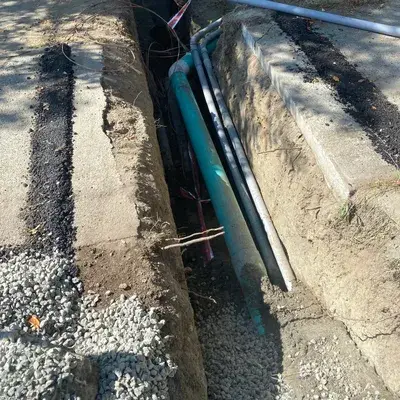
Affordable Jacksonville trenching solutions for precise underground utility installation. Minimize disruption, ensure compliance, and provide easy access for repairs. Trust our cost-effective underground utilities expertise and satisfied customers.
Sewer Lines
Excavation and installation of sewer lines, including sanitary sewer mains, storm sewer lines, and sewer service connections, for proper wastewater disposal. We are the leading provider of underground utility excavation.
Water Drainage Systems / French drains
Excavation and installation of water drainage systems, including Stormwater drains, culverts, and catch basins, to manage the flow of rainwater and prevent flooding.
Electrical Lines
Excavation and installation of underground electrical lines, including power distribution lines, cables, and conduits, for supplying electricity to buildings and infrastructure.
Water Lines
Excavate and install water lines, including water mains and service lines, to provide water supply to residential, commercial, and industrial properties.
Utility Repairs and Maintenance
Repair, replacement, and maintenance of existing utility infrastructure, such as water lines, sewer lines, water drainage system, gas lines, and electrical cables.
What you need to know
Underground Utility Installation
ARC Excavation is licensed, insured, and bonded Contractors that handle any type of underground utility service you need.
Underground Utility Installation
Efficient and Precise Installation: Trenching allows for precise and accurate installation of utility lines and systems. It ensures that the lines are placed at the appropriate depth and alignment, minimizing the risk of damage or future repairs.
Minimal Disruption: Trenching minimizes disruption to existing landscapes, structures, and surfaces. It provides a focused and controlled area for excavation, reducing the impact on surrounding areas and minimizing the need for extensive restoration work.
Cost-Effective: Trenching can be a cost-effective method for utility installation compared to alternative techniques like directional drilling. It requires less specialized equipment and can often be completed more quickly, saving both time and money.
Versatility: Trenching can be used for a wide range of utility installations, including water lines, sewer lines, gas lines, electrical lines, and more. This versatility makes it a suitable choice for various projects and applications.
Compliance with Regulations: Trenching allows for compliance with local regulations and building codes regarding utility installation. It ensures that the lines are placed at the required depth and meets safety standards.
Easy Access for Repairs and Maintenance: Trenching provides easy access to utility lines for future repairs, maintenance, or upgrades. This accessibility can significantly reduce the time and effort required for any future work on the utility systems.
Long-Term Reliability: Properly executed trenching ensures the long-term reliability of utility systems. It minimizes the risk of damage, leaks, or failures that can occur with less precise installation methods, providing peace of mind for your customers.
Professional Expertise: Highlight your company’s expertise and experience in trenching services. Showcase any certifications, licenses, or industry affiliations that demonstrate your commitment to quality and safety in your work.
Customer Satisfaction: Emphasize the importance of customer satisfaction and the positive feedback you have received from past clients. Provide testimonials or case studies that showcase successful trenching projects and the benefits they provided to your customers.
Environmental Considerations: If your trenching methods incorporate environmentally friendly practices, such as minimizing disruption to natural habitats or implementing erosion control measures, highlight these factors. Increasingly, customers appreciate environmentally conscious approaches to construction and utility installations.
Importance of using Licensed contractor
Choosing a certified contractor for the installation of your underground utilities offers numerous advantages and peace of mind. Certified contractors bring professional expertise and specialized knowledge to the table. They are well-versed in industry best practices, ensuring that your utility installation is executed efficiently, accurately, and to the highest standards.
Certification demonstrates a commitment to safety and compliance. Certified contractors are knowledgeable about local regulations and building codes, ensuring that your project meets all necessary requirements. By working with a certified contractor, you can trust that your underground utilities will be installed correctly, minimizing the risk of future issues and ensuring long-term reliability.
Certified contractors have undergone rigorous training and have years of experience in their field. Their expertise allows them to handle complex projects, troubleshoot potential challenges, and provide innovative solutions tailored to your specific needs.
Additionally, certified contractors often have access to the latest tools, equipment, and technologies, enabling them to perform the job more efficiently and effectively. This can translate to cost savings for you in terms of reduced labor time and potential rework.
By choosing a certified contractor, you protect your investment. You can have confidence that the work is being performed by qualified professionals who are dedicated to delivering high-quality results. Look for certifications, licenses, and industry affiliations when selecting a contractor to ensure you receive the best service for your underground utility installation needs.
Contact ARC Excavation for Expert Trenching & Utility Installation
Inadequate instructions can lead to confusion and delays in finding a solution. To address this, please provide specific details about the issue you're facing, and we'll assist you in resolving it promptly.
What services do commercial underground contractors offer?
Commercial underground contractors offer a range of services including trenching, sewer line installation, water drainage systems, and utility installation, ensuring efficient and compliant solutions for various infrastructure projects.
How to choose the right underground contractor?
Choosing the right underground contractor involves assessing their experience, licensing, and insurance, as well as reviewing past projects and customer testimonials to ensure they meet your specific excavation needs efficiently and safely.
What is the process of arc excavation?
The process of ARC Excavation involves assessing the site, planning the excavation, obtaining necessary permits, and then executing the trenching and installation of underground utilities with precision to ensure minimal disruption and compliance with regulations.
What are the benefits of trenching services?
The benefits of trenching services include efficient installation of underground utilities, minimal disruption to the surrounding area, compliance with regulations, and enhanced accessibility for future repairs, making it a cost-effective solution for both residential and commercial projects.
How does arc excavation minimize disruption?
ARC Excavation minimizes disruption by employing advanced trenching techniques and efficient planning, which reduce the impact on surrounding areas and ensure compliance with local regulations, allowing for quick, effective installation while maintaining accessibility for residents and businesses.
What projects require commercial underground contractors?
Commercial underground contractors are required for projects involving trenching, sewer line installation, water drainage systems, and other infrastructure developments that necessitate specialized expertise in underground utility installation and compliance with regulations.
What safety measures are taken during excavation?
Safety measures taken during excavation include site assessments, proper shoring techniques, use of protective gear, and adherence to local regulations to prevent accidents and ensure the well-being of workers and the public.
How to assess excavation service quality?
Assessing excavation service quality involves evaluating the contractor's experience, safety record, equipment condition, and customer reviews. Additionally, ensure they comply with local regulations and provide clear communication throughout the project.
What equipment is used in arc excavation?
The equipment used in ARC Excavation includes trenchers, backhoes, excavators, and compactors, all designed to efficiently handle trenching and underground utility installation while ensuring compliance and minimizing disruption to the surrounding area.
What permits are needed for underground work?
The permits needed for underground work typically include excavation permits, utility permits, and sometimes environmental permits, depending on the project's scope and location. It is essential to check with local authorities for specific requirements.
How long does an excavation project take?
The duration of an excavation project varies based on factors such as project size, soil conditions, and scope of work. Typically, projects can take anywhere from a few days to several weeks to complete.
What are common challenges in underground utility installation?
Common challenges in underground utility installation include navigating existing infrastructure, ensuring compliance with regulations, managing soil conditions, and minimizing disruption to surrounding areas. Proper planning and expertise are essential to overcoming these obstacles efficiently.
How to ensure compliance in excavation projects?
Ensuring compliance in excavation projects involves adhering to local regulations, obtaining necessary permits, and conducting thorough site assessments. Engaging with experienced professionals like ARC Excavation can help navigate these requirements effectively.
What factors affect excavation costs?
The factors that affect excavation costs include project size, soil type, depth of excavation, site accessibility, and any necessary permits or utility considerations. These elements can significantly influence the overall pricing and timeline of the excavation project.
What is the role of underground contractors in construction?
The role of underground contractors in construction is to install and maintain essential underground utilities, such as water, sewer, and drainage systems, ensuring proper infrastructure development and compliance with safety regulations.
How to find reliable underground utility services?
Finding reliable underground utility services involves researching local companies, checking customer reviews, and verifying their licenses and experience. Additionally, seek recommendations from trusted sources to ensure quality and compliance in their work.
What technologies are used in modern excavation?
Modern excavation utilizes advanced technologies such as GPS for precise site mapping, hydro excavation for safe digging, and drones for aerial surveys, enhancing efficiency and safety in trenching and utility installation projects.
What are the environmental impacts of excavation?
The environmental impacts of excavation include soil erosion, disruption of local ecosystems, potential contamination of groundwater, and increased sedimentation in nearby water bodies. These effects can harm wildlife and degrade natural habitats if not managed properly.
How to prepare a site for excavation?
Preparing a site for excavation involves clearing the area of debris, marking utility lines, and ensuring proper drainage. Additionally, obtaining necessary permits and conducting soil tests can help ensure a safe and efficient excavation process.
What are the signs of poor excavation work?
The signs of poor excavation work include uneven surfaces, excessive soil erosion, improper drainage, and visible cracks or settling in surrounding structures. These issues can lead to costly repairs and safety hazards if not addressed promptly.
How to maintain underground utilities after installation?
Maintaining underground utilities after installation involves regular inspections, monitoring for leaks or blockages, and ensuring proper drainage. Additionally, avoid heavy traffic or construction above these utilities to prevent damage and ensure longevity.
What training do underground contractors undergo?
Underground contractors undergo specialized training that includes safety protocols, equipment operation, trenching techniques, and compliance with local regulations. This training ensures they can efficiently and safely install utility systems while minimizing disruption to the surrounding area.
What is the difference between trenching and excavation?
The difference between trenching and excavation lies in their scope and purpose. Trenching involves digging narrow, deep channels primarily for utility installations, while excavation refers to broader earth removal for various construction projects.
How to handle unexpected underground obstacles?
Handling unexpected underground obstacles involves assessing the situation promptly, adjusting excavation plans as needed, and consulting with experienced professionals to ensure compliance and safety while minimizing project delays.
What are the latest trends in excavation services?
The latest trends in excavation services include the adoption of advanced technology such as GPS and drones for precision digging, increased use of eco-friendly practices, and a focus on safety and compliance to enhance efficiency and minimize environmental impact.
How to evaluate contractor bids for excavation?
Evaluating contractor bids for excavation involves comparing costs, timelines, and the scope of work outlined in each bid. Ensure that all bids include similar details to facilitate a fair assessment and consider the contractor's reputation and experience in the industry.
What is the importance of soil testing?
The importance of soil testing lies in its ability to assess soil health, identify nutrient deficiencies, and determine the suitability for construction or agricultural projects. This ensures proper planning and minimizes risks associated with underground utility installations.
How to communicate effectively with excavation contractors?
Effective communication with excavation contractors involves clearly outlining your project goals, discussing timelines and budgets, and asking questions about their methods and compliance. This ensures alignment and minimizes potential disruptions during the excavation process.
What are the best practices for excavation safety?
The best practices for excavation safety include conducting thorough site assessments, maintaining proper shoring and shielding, ensuring all workers are trained in safety protocols, and using appropriate personal protective equipment. Regular inspections and clear communication are also essential.
underground utility and excavation contractor, arc excavation, sewer excavation jacksonville, arc, underground utilities contractor near me, utility trenching services, arc underground, commercial underground contractors jacksonville, underground utility trenching, difficult access drilling jacksonville, utilities trenching sunnyvale, who provides the best trenching and underground utility services in monterey, difficult access drilling mayport, stormwater trenching solutions monterey
Comprehensive Guide to Underground Utility Services
Understanding underground utility services is crucial for property owners and developers. This guide provides an in-depth look at the various services offered by ARC Excavation, including the installation and maintenance of essential utility lines. By familiarizing yourself with these services, you can make informed decisions for your projects, ensuring compliance with regulations and minimizing disruptions.
From sewer lines to electrical installations, each service plays a vital role in infrastructure development. This comprehensive guide will help you navigate the complexities of underground utilities, highlighting the benefits of professional services and the importance of using licensed contractors for optimal safety and reliability.
Benefits of Professional Underground Utility Services
Engaging professional underground utility services offers numerous benefits, including enhanced safety, compliance with local regulations, and high-quality workmanship. Licensed contractors, like those at ARC Excavation, bring expertise and experience that ensure installations are performed correctly, reducing the risk of future issues.
Moreover, professional services can save time and money in the long run by preventing costly repairs due to improper installations. With access to the latest tools and techniques, licensed contractors can efficiently handle various utility projects, ensuring that your infrastructure is built to last.
Common Challenges in Utility Installation
Utility installation can present several challenges, including navigating existing infrastructure, managing soil conditions, and adhering to regulatory requirements. Understanding these challenges is essential for effective project planning and execution. ARC Excavation is well-equipped to tackle these issues, ensuring that installations are completed smoothly and efficiently.
For instance, unexpected soil conditions may require specialized equipment or techniques, while existing utilities must be carefully considered to avoid damage. By choosing a knowledgeable contractor, you can mitigate these challenges and ensure a successful installation process.
Why Choose ARC Excavation for Your Utility Needs
Choosing ARC Excavation for your underground utility needs means opting for quality, reliability, and expertise. With years of experience in the industry, ARC Excavation has established a reputation for delivering exceptional service and ensuring customer satisfaction. Their commitment to safety and compliance sets them apart from competitors.
Additionally, ARC Excavation utilizes advanced technology and best practices in all their projects. This commitment to innovation not only enhances the efficiency of their services but also guarantees that your utility installations are completed to the highest standards, providing peace of mind for your investment.