
Benefits of Professional Commercial Excavation Services
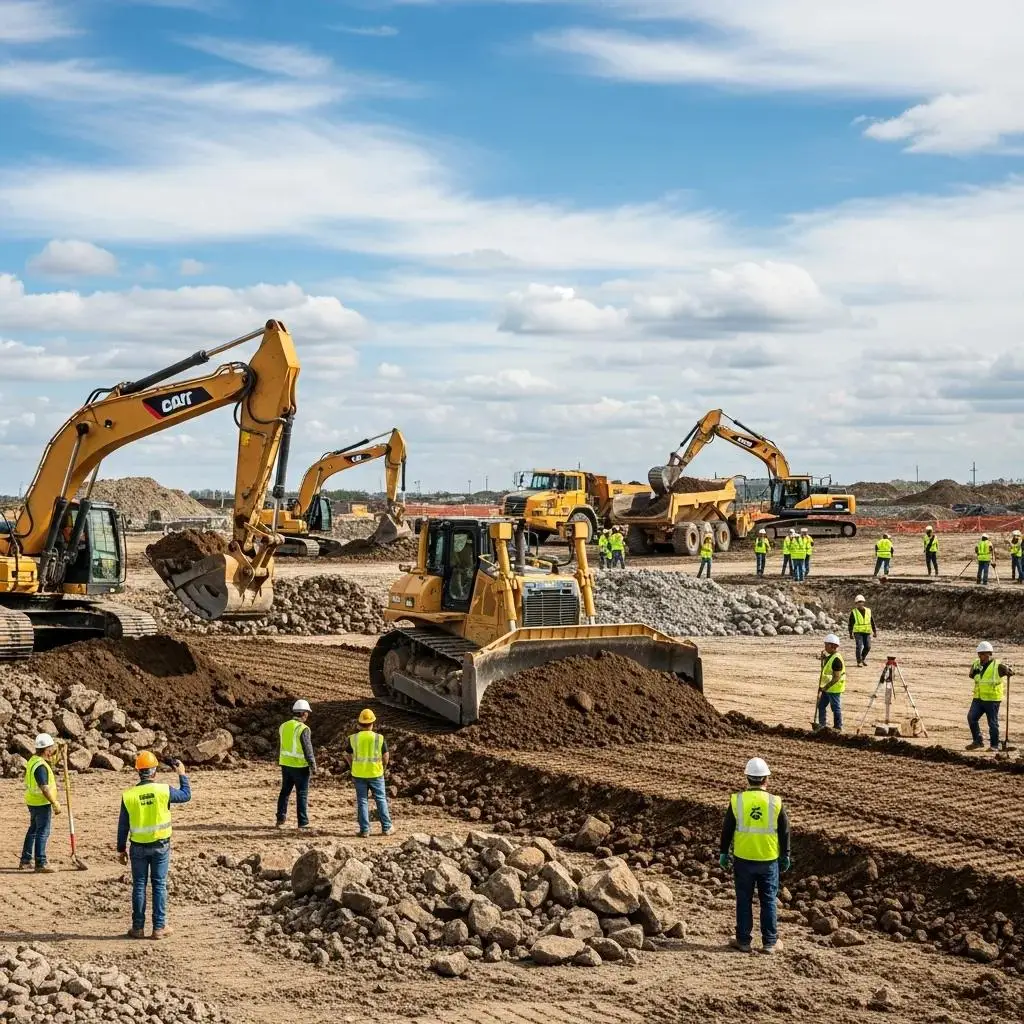
Commercial Excavation Experts: Efficient Site Prep & Infrastructure
Commercial excavation covers the planning and heavy work that turns raw land into a buildable, code-compliant site — earthmoving, grading, trenching, drainage, and demolition. Hiring experienced contractors delivers dependable project readiness: a site built to engineering specs, local regulations, and durability standards that protect your schedule and budget. This piece breaks down how professional excavation improves safety, cuts rework, and protects assets with smart site preparation, modern drainage, efficient earthwork, regulatory compliance, and sustainable practices. You’ll learn the main benefits of hiring trained crews, how clearing and compaction support stable structures, why drainage choices affect property value, and how professional management saves time and money. The sections that follow cover contractor advantages, site-prep essentials, drainage strategy, cost drivers, safety and compliance, and environmental and specialty services for commercial projects.
What Are the Key Advantages of Hiring Professional Commercial Excavation Contractors?
Experienced commercial excavation teams bring technical know-how, the right equipment, permitting support, and safety systems that lower risk and speed construction readiness. Contractors turn geotechnical reports into practical excavation plans, choose the correct machines, and schedule work to avoid clashes and rework — producing reliable subgrades for foundations and pavements. The top benefits are improved safety and compliance, faster delivery, lower life-cycle costs, and access to integrated services that a single-purpose vendor can’t provide. Knowing these advantages helps owners prioritize pre-construction investments and pick contractors who protect long-term value.
Here are the most important contractor benefits and why they matter to timelines and budgets.
- Expert Planning and Risk Reduction: Pros find subsurface risks early and plan mitigations that prevent expensive surprises.
- Right Equipment and Better Efficiency: Proper machines and skilled operators shorten excavation time and reduce downtime.
- Safety and Regulatory Compliance: Trained crews follow OSHA-aligned procedures that lower incident risk.
- Integrated Services to Minimize Rework: Coordinated grading, utilities, and drainage cut handoffs and corrective work.
These benefits produce measurable results: fewer schedule delays, smaller contingency reserves, and predictable sequencing that helps other trades stay on track.
How Does Expertise and Experience Enhance Project Outcomes?

True expertise in commercial excavation blends geotechnical insight, smart sequencing, and correct equipment selection to create stable, buildable subgrades. Contractors interpret soil reports, spot signs of unsuitable material, and adjust excavation depths, shoring, or imported fill to meet engineering tolerances. Skilled operators and project managers sequence clearing, rough grading, utility trenching, and compaction so each step protects the next and reduces costly rework. That mix of technical knowledge and field experience leads to fewer change orders, consistent foundation-bearing capacity, and smoother constructability for the design team.
Experienced crews also enforce on-site quality control with daily inspections and testing — confirming compaction and materials meet specs and preventing downstream failures. Detecting issues early lets teams act quickly to stay on schedule and on budget. In short, expertise turns geotechnical uncertainty into documented, controlled outcomes that support long-term performance.
Foundation soils play a central role in structural stability, which is why accurate subgrade characterization matters.
Geotechnical Subgrade Characterization for Pavement Stability
Foundation soils (subgrades) have a major influence on pavement stability. This study highlights how geological factors, often overlooked in design and construction, can drive recurring pavement failure — using a North‑central Nigeria highway as a case study focused on subgrade conditions.
Geophysical, geotechnical and mineralogical characterization of subgrades: implication for pavement stability and machine learning prediction: a case study, DO Obasaju, 2025
What Safety and Compliance Benefits Do Professionals Provide?
Professional contractors develop site-specific safety plans that meet regulations and reduce injury and downtime. Those plans typically include competent-person inspections, trench-protection methods (shoring, sloping, benching), confined-space controls, and documented daily checks to keep excavations stable. Trained crews maintain safety gear and follow procedures that eliminate many common causes of site incidents, protecting workers and preserving project timelines.
A proactive compliance approach also keeps permitting on schedule and streamlines inspection coordination, lowering the risk of regulatory stops. By keeping records and using prescribed protection methods, professionals limit liability and improve interactions with inspectors and stakeholders. That disciplined safety focus protects the project’s reputation and avoids the costly consequences of accidents or enforcement actions.
How Does Professional Site Preparation Improve Commercial Project Success?
Professional site preparation creates a reliable platform by combining land clearing, grading, soil testing, and compaction to meet engineering requirements and reduce future maintenance. Site prep converts raw acreage into a controlled work area, addressing obstacles, drainage paths, and load-bearing needs before foundations or pavements go in. Done correctly, these tasks prevent settlement, uneven pavement, and water damage that cause delays and expensive repairs. Site preparation establishes the geometric, structural, and hydrologic baseline every following trade depends on.
The table below links common site-prep tasks to their attributes and long-term impacts, showing how upfront work protects both structure and budget.
| Site Preparation Task | Attribute | Long-term Impact |
|---|---|---|
| Land clearing | Removes vegetation and obstacles | Improves access and staging; reduces early hazards |
| Grading and leveling | Sets slope and surface geometry | Prevents ponding and protects foundations and pavements |
| Soil testing and compaction | Confirms bearing capacity and density | Boosts foundation stability and lowers settlement risk |
This mapping makes clear: accurate site preparation reduces repair needs and supports durable infrastructure — a cost-effective investment for commercial projects.
What Are the Benefits of Commercial Land Clearing for Property Value and Accessibility?
Commercial land clearing removes trees, brush, and debris to create safe, usable acreage for staging, access roads, and emergency routes. Proper clearing considers permits and protected vegetation, balancing development with environmental and regulatory limits. Clearing also eliminates hidden hazards — root systems and buried debris — that can compromise grading and utility work, improving efficiency for subsequent trades. By expanding usable area and enabling planned circulation, clearing supports functional site layouts that increase property marketability.
Managing ecological and permitting risks during clearing preserves schedules and community relationships. Selective clearing can keep useful tree lines for stormwater control or aesthetics. Proper documentation helps owners show compliance with local planning rules, reducing the chance of fines or restoration orders that erode project value.
How Do Grading and Leveling Prevent Structural and Drainage Issues?
Grading and leveling establish surface contours and subgrade profiles that move water away from buildings and provide even support for pavements and curbs. Engineers specify positive slopes, swales, and drainage gradients to avoid water pooling at foundations and to reduce hydrostatic pressure. Accurate grading protects pavement layers from differential settlement and frost heave in vulnerable soils, extending service life and cutting maintenance cycles. When grading is coordinated with engineered drainage, the combined system preserves subgrade integrity and prevents soil movement that can undermine foundations.
Local soil conditions and floodplain constraints guide grading decisions so finished grades match regional realities and stormwater plans. Properly executed grading lowers long-term repair costs and keeps site assets usable.
Why Are Advanced Drainage Solutions Essential for Commercial Properties?
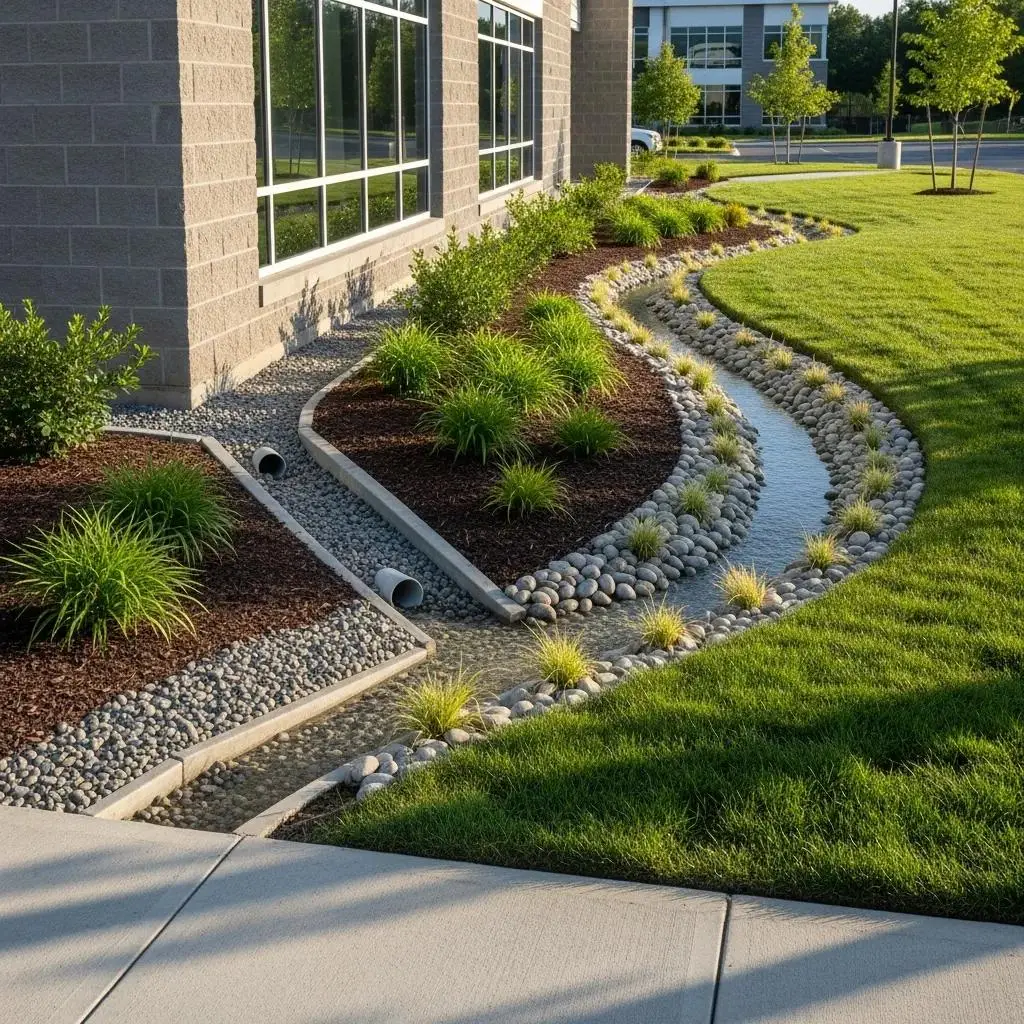
Advanced drainage solutions control surface and groundwater to prevent flooding, erosion, and structural harm that reduce property function and value. Good systems route runoff to approved discharge points, manage infiltration, and protect slopes and pavement from saturation-related failures. Drainage options — surface conveyance, subsurface collection, and detention/retention — suit different property types and budgets. Investing in tailored drainage design lowers long-term repair costs and reduces liability from site flooding.
Below is a comparative table outlining common drainage systems by installation complexity, maintenance needs, and their primary protection benefits.
| Drainage System | Installation Complexity | Maintenance Needs | Benefit |
|---|---|---|---|
| French drain (subsurface) | Moderate | Low to moderate (inspection) | Diverts groundwater away from foundations |
| Swale (surface) | Low | Low (vegetation upkeep) | Controls runoff and reduces erosion |
| Stormwater detention/retention system | High | Moderate to high (outlet checks) | Manages peak flows and supports compliance |
This comparison highlights tradeoffs: subsurface systems protect foundations, swales offer economical conveyance, and detention systems address peak-flow regulations. Designing for extreme events preserves assets and can lower insurance and repair costs over time.
Professionals design and install these systems to match site hydrology and future demands. For example, contractors may pair French drains with catch basins and swales to build layered defenses for both shallow and deep water movement. Arc Excavation’s drainage and stormwater services illustrate how coordinated excavation and drainage protect commercial properties — many owners request a professional estimate to evaluate the best long-term solution.
Commercial drainage systems have evolved to meet growing demands for effective surface water management and site protection.
Commercial Drainage Infrastructure Solutions
Historically, drainage for many sites relied on separate sewer networks or discharged surface runoff to foul sewers. Modern practice separates and treats surface water to limit contamination and protect downstream systems.
Drainage infrastructure for industrial and commercial premises, estates and business parks, LH Kim, 2021
How Do Drainage Systems Prevent Flooding and Erosion?
Drainage systems prevent flooding by collecting and conveying runoff away from buildings and paved surfaces to authorized discharge points, while erosion controls stabilize soils and reduce sediment movement. Surface measures like swales and channels slow flow and promote sheet dispersion; subsurface solutions like French drains relieve hydrostatic pressure and lower groundwater near foundations. Appropriately sized catch basins and pipes handle peak events and route flows into detention structures when needed. Combining components reduces velocity, prevents gullying, and preserves landscapes and engineered surfaces. For more information, check out our drainage solutions.
Adding erosion-control fabric, riprap, or vegetation at discharge points dissipates energy so slopes and downstream areas don’t erode. These layered measures keep grades stable and prevent progressive failures that lead to costly repairs and ongoing maintenance.
What Are the Long-Term Property Protection Benefits of Proper Drainage?
Proper drainage protects foundations, pavements, landscaping, and utility corridors, cutting repair frequency and lifecycle costs. By controlling water exposure, owners avoid foundation settlement, pavement edge failures, and saturated soils that invite invasive plants or mosquito breeding. Insurers and lenders may view well-documented drainage systems as risk‑reducing features that support asset value and financing. Routine maintenance further extends system performance and preserves the initial capital outlay.
Over time, the savings from avoided emergency repairs, less downtime, and stabilized ground conditions often exceed the upfront cost of professionally designed drainage. Owners who prioritize drainage enjoy more reliable operations and a lower total cost of ownership.
What Are the Cost and Efficiency Benefits of Professional Commercial Excavation?
Professional excavation reduces cost uncertainty by cutting rework, avoiding schedule-driven premiums, and matching equipment and crew sizes to the job for efficient earthmoving. Contractors translate design intent into consistent field results through quality control, sequencing, and equipment selection that reduce machine hours and labor overruns. This efficiency lowers direct costs per cubic yard and trims indirect costs tied to delays, change orders, and extended supervision. Predictable excavation also accelerates downstream trades, multiplying savings across the schedule.
The table below compares common excavation tasks by time impact, risk, and rework likelihood to show how professional execution affects cost and schedule.
| Task / Service | Time Impact | Risk (likelihood of issues) | Rework Likelihood |
|---|---|---|---|
| Improper grading | High | Elevated (drainage failure) | High |
| Inadequate compaction | High | Elevated (settlement) | High |
| Accurate utility trenching | Low | Low (proper marking) | Low |
| Coordinated demolition | Moderate | Moderate (hidden hazards) | Low to moderate |
How Does Professional Excavation Reduce Project Delays and Rework?
Professional teams reduce delays through thorough pre-construction surveys, confirmed utility locates, and sequencing aligned with the critical path. Crews and machines are scheduled to match phases, preventing idle time and avoidable remobilizations. Quality control — compaction testing and daily inspections — catches issues early so corrective action doesn’t ripple through the schedule. This disciplined approach minimizes stoppages and lowers the chance of expensive corrective campaigns that derail timelines.
Close coordination with permitting authorities and stakeholders further cuts administrative delays. When excavation meets specifications, concrete pours, pavement installs, and utility tie-ins proceed on schedule, protecting contractor relationships and contract value.
In What Ways Does Expert Excavation Lead to Long-Term Cost Savings?
Expert excavation delivers long-term savings through durable installations that need less maintenance, fewer emergency repairs, and preserved property value. Correct subgrade preparation and drainage prevent settlement and pavement distress, eliminating repeated patching and structural fixes. Avoiding utility strikes and ensuring trenches are properly backfilled and compacted reduces future repair costs. Over time, the upfront investment in quality earthwork and system integration returns value through fewer interventions, lower life-cycle expenses, and stronger resale outcomes.
Owners and investors should include avoided repair costs, reduced downtime, and extended service life when comparing bids — the lowest initial price often leads to higher lifetime costs.
How Do Professional Excavation Services Ensure Safety and Regulatory Compliance?
Professional excavation firms embed regulatory knowledge into planning, assign competent persons for inspections, and document protection systems and training to ensure compliance. Contractors apply applicable standards to shoring, sloping, and protective systems and keep records that show regulatory adherence. Regular safety briefings, competency checks, and inspection logs reduce incidents and support quick responses to regulatory inquiries. A compliance-first culture minimizes stoppages, protects workers, and keeps projects moving.
Safety-focused planning also preserves excavation stability for follow-on trades and includes traffic control and site access measures to protect workers and the public. Clear documentation and visible safety systems build trust with inspectors and clients, smoothing approvals and handovers.
What Are OSHA Regulations Relevant to Commercial Excavation?
Key OSHA rules cover trench protection, the competent-person role, and excavation access and egress — setting minimum protections for excavation work. Trench protections (sloping, shoring, shielding) must match soil type and depth, and a competent person must perform daily inspections and approve protective systems. OSHA also requires safe entry and exit and training for hazard recognition and emergency response. Following these standards lowers incident rates and reduces the risk of enforcement actions that delay work.
Knowing and following OSHA excavation rules is essential for safety and for avoiding legal and operational problems on site.
OSHA Compliance for Safe Excavation
Chapter 7 provides practical guidance on OSHA compliance and hazard control, reviewing excavation standards in 29 CFR 1926 with actionable notes and tips for safe implementation.
Excavation Safety: A Guide to OSHA Compliance and Injury Prevention, 1926
Meeting these requirements means keeping documentation, training staff, and bringing in engineering input for deep or unstable excavations. Proactive implementation prevents unsafe conditions and shows a contractor’s commitment to compliant performance.
How Do Safety Protocols Protect Workers and Project Integrity?
Safety protocols — daily briefings, personal protective equipment, traffic control, and emergency planning — create predictable, controlled work environments that reduce accidents and protect schedules. Protective systems prevent trench collapses, while confined-space procedures and utility locating reduce strike risk and hazardous exposures. A reporting culture and quick mitigation ensure small issues don’t become work-stopping incidents. These practices preserve crews, protect assets, and uphold contractual commitments.
When safety is part of planning, projects run with fewer interruptions, higher productivity, and stronger reputations with owners and regulators — which supports on-time, on-budget delivery.
What Environmental and Specialized Benefits Do Professional Excavation Services Offer?
Professional excavators use sustainable practices and offer specialized services — demolition and hardscaping among them — that add value while limiting environmental impact. Sustainable techniques include erosion and sediment controls, minimizing disturbance, material reuse, and fuel-efficient equipment to cut emissions. Offering demolition, road restoration, and driveway installation lets owners work with a single contractor across phases, reducing mobilizations and shortening schedules. These capabilities help meet permitting conditions, corporate sustainability goals, and project objectives.
Bundling excavation with demolition and hardscaping also simplifies liability and logistics, lowers disposal costs, and improves coordination on complex site changes. The result is a more predictable outcome with less environmental and administrative overhead.
How Does Sustainable Excavation Minimize Environmental Impact?
Sustainable excavation reduces sediment run-off, cuts waste, and lowers energy use through erosion controls, on-site material reuse, and efficient equipment practices. Measures like silt fences, staged clearing, topsoil segregation, and reuse of clean fill reduce landfill disposal and preserve site ecology where feasible. Properly maintained, fuel-efficient equipment and plans to limit idle time reduce fuel use and emissions on multi-day projects. These practices support permitting and deliver measurable environmental benefits.
Owners pursuing sustainability gain documented controls and reuse strategies that demonstrate stewardship and can streamline regulatory approvals and community acceptance.
What Are the Advantages of Commercial Demolition and Hardscaping Services?
Combining demolition and hardscaping with excavation creates scheduling efficiencies, fewer mobilizations, and single-provider accountability for critical transitions. Demolition by excavation professionals allows fast clearance and separation of recyclables, cutting disposal costs and speeding site prep. Hardscaping — driveways, retaining walls, curb restorations — adds durable, usable value and finishes the site with consistent workmanship. This integrated approach shortens timelines, reduces coordination burden, and clarifies responsibility for final site condition.
Why Choose Arc Excavation: Serving commercial clients in Jacksonville, Arc Excavation delivers the integrated services outlined here — site preparation, land clearing, grading, drainage, underground utilities, road restoration, new driveways, and demolition. Arc Excavation focuses on experience, comprehensive offerings, quality workmanship, licensed and insured operations, and owner-friendly options like free estimates and financing. Owners seeking coordinated excavation and specialty services often request a professional estimate to define scope, cost, and the best systems for long-term value.
Frequently Asked Questions
What types of projects benefit most from professional excavation services?
Professional excavation is especially valuable for large commercial projects — office parks, retail centers, industrial sites — that need comprehensive site preparation, grading, and drainage work. Complex projects with multiple trades and regulatory needs also benefit from experienced excavators who ensure the site is construction-ready and compliant. In short, any project that requires precision, efficiency, and durable site systems gains from hiring professionals.
How can I assess the quality of an excavation contractor?
Evaluate experience, reputation, and project history. Look for commercial excavation references, client testimonials, and verified past work. Confirm licensing, insurance, and safety records. Ask for detailed proposals that explain project approach, equipment, testing, and timelines. Finally, assess communication and responsiveness — clear, timely communication often indicates a contractor who will manage issues proactively.
What should I expect during the excavation process?
Expect staged work: site assessment, planning, and execution. The contractor starts with a thorough evaluation — soil conditions, utilities, access — then develops an excavation plan and schedule. Once work begins, you’ll see land clearing, grading, trenching, and compaction. Throughout, the contractor follows safety protocols and reports progress so the project stays aligned with budget and schedule.
What are the environmental considerations in excavation projects?
Environmental priorities include preventing erosion, protecting habitats, and managing stormwater. Contractors should implement erosion controls (silt fences, sediment basins), respect local protections for species and habitats, and practice material reuse and emissions reduction. Prioritizing these factors helps projects remain efficient and responsible.
How do excavation services impact project timelines?
Excavation sets the stage for all following trades, so efficiency here directly affects the overall schedule. Skilled teams use planning and sequencing to avoid surprises, confirm utilities, and limit rework. When site prep is done right, downstream work proceeds without interruption, keeping the whole project on schedule.
What are the common challenges faced during excavation?
Common challenges include unexpected subsurface conditions (rock, contamination), weather delays (heavy rain, extreme temperatures), and utility coordination to avoid strikes. Clear planning and stakeholder communication help mitigate these risks. Experienced contractors bring the tools and judgment to handle surprises while keeping projects on track.
Conclusion
Hiring professional commercial excavation services gives you a prepared, compliant site built to engineering and safety standards — a foundation for project success. With experienced planning, the right equipment, and integrated services, contractors reduce risk, cut long-term costs, and protect property value. Understanding these benefits helps owners make informed choices that align with project goals. For a smoother excavation experience and a clear scope and estimate, reach out for a professional assessment today.