
Why Proper Drainage Is Essential for Florida Commercial Properties

Key Benefits of Proper Drainage for Florida Commercial Properties
Proper drainage blends site grading, surface conveyance, and subsurface systems to control runoff and groundwater so parking areas, landscaping, and building foundations don’t sit in water or wash away. In Florida—where heavy seasonal rains, a high water table, and frequent tropical storms are the norm—well-designed commercial drainage protects property value, reduces liability, and keeps sites aligned with changing stormwater rules. Below we explain the Florida-specific factors that make drainage design and maintenance non-negotiable, outline the financial and operational risks of inadequate systems, and compare commonly used commercial solutions like trench drains, French drains, catch basins, and retention ponds. You’ll also find practical guidance on permitting and O&M planning under recent statewide rule updates, plus inspection schedules and cost-aware maintenance tasks tailored for retail centers, warehouses, office parks, and HOAs. Together, these sections show how intentional stormwater management lowers long-term costs and keeps customers, employees, and neighbors safer.
ARC Excavation Inc. is a Jacksonville-based excavation contractor specializing in commercial drainage solutions, site work, hardscaping, and underground utilities. As a local partner, we deliver practical, cost-conscious drainage installs and repairs using the right equipment and a safety-focused crew. Florida property owners can hire ARC for site assessments and quotes on trench drains, French drains, catch basins, and retention-pond work. Our local experience helps translate engineering needs into buildable solutions and manageable downstream operations.
What unique drainage challenges do Florida commercial properties face?
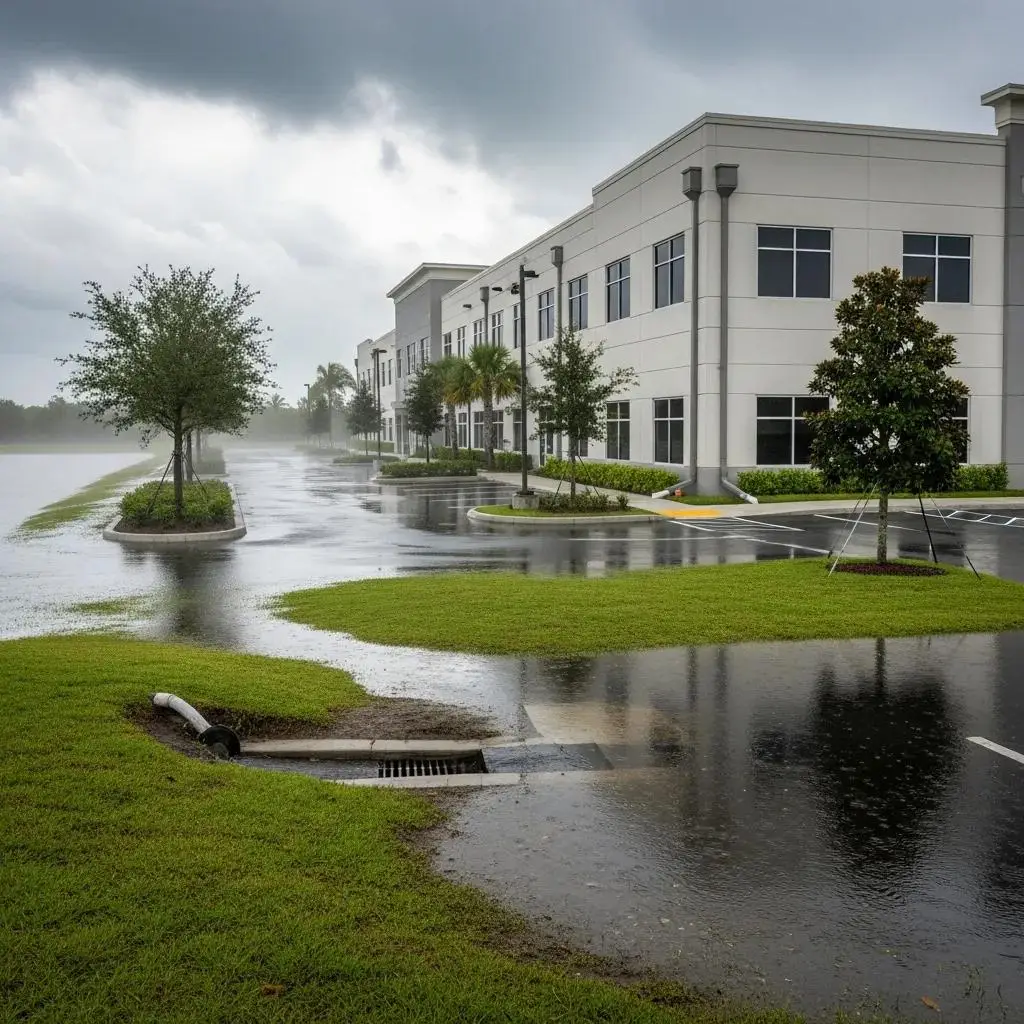
Florida’s flat terrain, high groundwater, and coastal influences create constraints that shape commercial drainage choices. Low slopes slow runoff and encourage ponding; saturated soils limit how deep you can install subsurface systems; and sea-level rise and tidal influence reduce available outfall gradients. Effective drainage plans account for both surface conveyance and subsurface flow so paved areas stay intact and erosion is controlled—key steps toward resilient, code-compliant sites.
How do Florida’s climate and topography change drainage design?
Florida sees short, intense storms during the wet season, and regional differences—from the Panhandle to South Florida—affect runoff volumes and peaks. Because the land is so flat, even modest rain can cause ponding across parking lots and loading areas, so designers rely on engineered conveyance rather than natural slope. High groundwater reduces the depth available for infiltration systems and may require sump pumps, raised structures, or pipe-based subsurface drains to move water to permitted outfalls. These conditions push designers to choose robust capacity, redundancy, and materials that tolerate frequent wetting and drying.
Why must drainage planning account for heavy rain and hurricane season?
Designs must address typical storms and the higher likelihood of extreme rainfall from tropical systems. That means larger conveyance, emergency overflow paths, and redundancy to avoid catastrophic flooding. Commercial sites should have routed overflows to protect entrances, utilities, and egress. Resilience measures—protected low points, check valves on outfalls, and above-grade power for pumps—reduce post-storm downtime. Planning for these events lowers repair costs and helps businesses reopen faster after hurricanes and severe storms, protecting revenue and reputation.
- Florida’s wet season runs roughly June through September and produces most annual rain.
- Coastal and low-lying areas see higher groundwater and tidal impacts that reduce drainage gradients.
- Intense convective storms can generate rapid runoff that overwhelms undersized systems without backup routing.
These facts underscore why site-specific analysis and resilience-focused design are essential in Florida.
What are the costs and risks of poor drainage for Florida commercial buildings?
Poor drainage triggers a chain of financial, structural, operational, and regulatory problems that often exceed the cost of preventive work. Standing water damages pavements, speeds pothole formation, and increases hydrostatic pressure on foundations. Uncontrolled runoff causes erosion, landscape loss, and sediment in storm systems. Operationally, ponding reduces usable parking, delays deliveries, and raises slip-and-fall risk; it can also lead to regulatory enforcement or fines when O&M obligations aren’t met. Looking at these risks side-by-side shows that investing in proper drainage typically delivers measurable lifecycle savings and lower insurance exposure.
How does poor drainage cause structural damage and erosion?
Persistent saturation raises hydrostatic pressure on below-grade walls and foundations, leading to cracking, settlement, and expensive underpinning or slab repairs over time. Concentrated runoff at curbs, swales, and outlets strips topsoil and undermines pavements and landscaped areas, creating safety hazards and repeated repair cycles. Repair costs vary with severity, but industry estimates show localized foundation and pavement fixes can climb into the tens of thousands when drainage is neglected. Early detection and conveyance corrections prevent progressive failures and stabilize long-term capital spending.
What operational and safety hazards result from inadequate drainage?
Insufficient drainage increases slip-and-fall incidents at entries and sidewalks, risks inventory damage during deliveries, and can force temporary closures when access is unsafe. Ponding can damage vehicles and produce customer complaints, and repeated water intrusion leads to indoor air-quality problems, mold remediation, and insurance claims. Discharges that carry sediment or pollutants may also trigger inspections, fines, and mandated cleanup. Proactive drainage work keeps operations moving, protects people and property, and decreases the chance of costly liability claims.
| Consequence | Impact Type | Short-term Cost (Estimate) | Long-term Cost (Estimate) | Likelihood in Florida |
|---|---|---|---|---|
| Foundation damage | Structural repairs and risk to building envelope | $5,000–$50,000 | $20,000–$150,000+ | High in saturated sites |
| Erosion and landscaping loss | Aesthetic and soil stability impacts | $1,000–$10,000 | $5,000–$40,000 | Medium–High on slopes/outlets |
| Business interruption | Lost revenue, delivery delays | $1,000–$30,000 | Variable based on downtime | Medium–High during storms |
This table links common drainage failures to immediate repair costs and longer-term liabilities, reinforcing the return on investing early in drainage.
Which commercial drainage solutions work best for Florida properties?
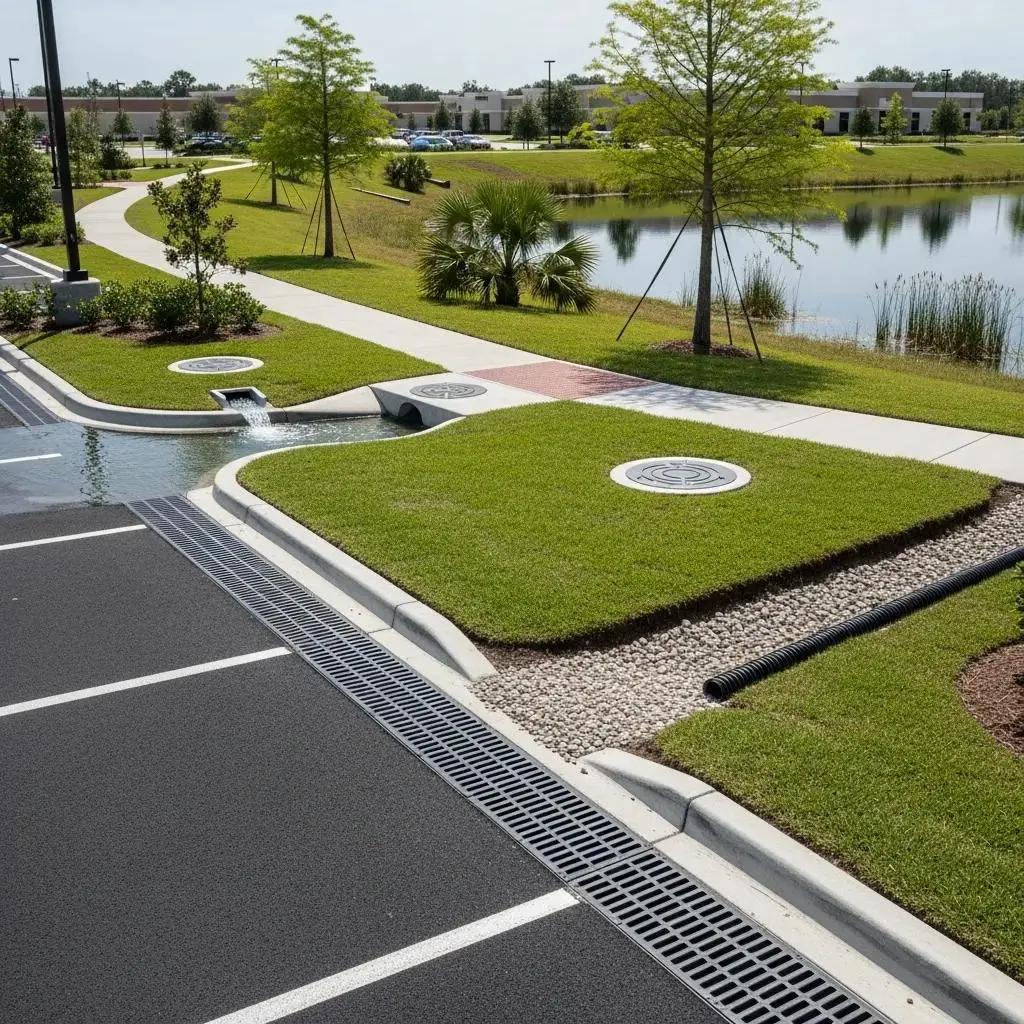
Choosing the right drainage system depends on surface loading, groundwater depth, space constraints, and regulatory needs—while keeping maintenance practical. Common Florida solutions include trench drains for surface conveyance, French drains for subsurface collection, catch basins as concentrated inlets, and retention/detention ponds for volume control and water quality. Each component has a role in a site-wide stormwater plan; success depends on integrating grading, outfalls, and underground piping.
How do French drains and trench drains prevent flooding and water damage?
French drains are gravel-and-pipe subsurface systems that intercept shallow groundwater and move it away from foundations, lowering hydrostatic pressure and soil saturation. Trench drains are surface channels with grates that gather sheet flow across pavements and route it to storm piping or detention areas—ideal for parking lots, loading docks, and plazas. In Florida, both need the right bedding and outlet design: French drains may need adjustments where groundwater is near grade, and trench drains must be sized for peak runoff and guarded against clogging. ARC Excavation Inc. installs and repairs both systems and can recommend the best fit for your site.
| Drainage System | Best Use Case | Installation Complexity | Typical Cost Range (Commercial) | Maintenance Needs |
|---|---|---|---|---|
| French drain | Subsurface water control near foundations | Medium | $5,000–$25,000 | Periodic inspection, outlet clearance |
| Trench drain | Surface runoff from parking lots and entries | Medium–High | $8,000–$40,000 | Regular grate cleaning, sediment removal |
| Catch basin | Localized inlet for concentrated flow | Low–Medium | $1,000–$6,000 | Quarterly debris removal |
| Retention pond | Volume control and water quality in larger sites | High | $20,000–$200,000+ | Vegetation management, sediment dredging |
What role do catch basins and retention/detention ponds play?
Catch basins collect concentrated surface flow and trap coarse sediment before routing water into underground piping. Retention ponds (permanent water) and detention ponds (temporary storage with controlled release) manage volume, reduce peak discharges, and let sediment settle—providing some pollutant removal ahead of permitted outfalls. On tight commercial sites, ponds require trade-offs between land use and regulatory credit; where space is limited, underground detention or oversized piping may be preferred. ARC installs and repairs catch basins and builds site-appropriate retention solutions with access for maintenance and sediment control.
- Catch basins collect localized runoff and reduce downstream clogging.
- Detention ponds attenuate peak flows and minimize downstream flooding.
- Retention ponds store water for treatment and ecological benefit on larger developments.
Combining inlet structures with volume-control features produces more reliable stormwater performance for commercial properties.
How do Florida’s stormwater regulations shape commercial drainage projects?
Florida’s regulatory framework covers stormwater design, water-quality protections, and increasingly prescriptive O&M expectations; statewide updates effective June 2024 emphasize formal O&M plans and inspection schedules for commercial stormwater facilities. Compliance usually requires engineered plans showing peak attenuation, any required water-quality treatment, and a documented maintenance strategy to sustain performance. Permitting and inspection timelines vary by county or city, so owners and contractors must align designs with local rules while meeting state expectations for long-term operations.
What are the key Florida Department of Environmental Protection requirements?
The Florida Department of Environmental Protection (FDEP) requires stormwater projects to avoid undue impacts to surface waters and to use best management practices during construction and operation. Recent rule changes place more emphasis on documented O&M plans, routine inspection records, and corrective-action procedures for commercial facilities. Permit submissions commonly include engineered drainage plans, peak-flow and storage calculations, construction sediment controls, and an O&M manual that names responsible parties and inspection intervals. Preparing these documents up front reduces delays and eases post-construction compliance.
How can businesses navigate local permitting and inspections?
Follow a clear, step-by-step approach: (1) perform a site assessment to identify regulatory triggers and outfall constraints; (2) hire an engineer to produce permit-ready plans and calculations; (3) submit to the local permitting authority with erosion-control and construction details; and (4) implement an O&M program that documents inspections and repairs. Small retrofits can take weeks to permit; larger developments may take months. Common delays stem from incomplete documentation, wrong outfall assumptions, or missing O&M schedules. Working with experienced contractors and engaging local reviewers early shortens review cycles and reduces rework.
- Conduct a site assessment to document existing drainage, soil, and outfall conditions.
- Engage civil engineering services to prepare permit-ready drainage calculations and plans.
- Submit permit application with erosion-control, water-quality, and O&M documentation.
- Implement construction with sediment controls and final as-built documentation for acceptance.
Following this process helps owners avoid common permitting delays and supports efficient inspections and approvals.
Why choose ARC Excavation Inc. for commercial drainage in Florida?
ARC Excavation Inc. brings hands-on Florida experience in commercial drainage, site work, and underground utilities, delivering solutions that meet safety and regulatory needs without unnecessary cost. Our crew uses specialized excavation and trenching equipment built for heavy commercial surfaces and tight footprints, enabling efficient installs of French drains, trench drains, catch basins, and retention systems. We focus on clear scopes, safety protocols, and coordination with engineers and permitting authorities so work performs well and passes inspections. For owners who want measurable improvements in runoff control and lower lifecycle costs, working with a local contractor familiar with Florida conditions speeds the path from assessment to long-term performance.
What expertise and equipment does ARC Excavation Inc. bring?
ARC’s capabilities include commercial-scale excavation, trenching, grading, and underground utility installation using equipment suited to heavy loads and tight commercial sites. We coordinate with design professionals to install engineered drainage, follow strict safety procedures, and schedule work to minimize tenant and customer disruption. Our builds emphasize durable materials, maintenance access, and sequencing that protects ongoing operations. Local knowledge helps us anticipate groundwater and permitting constraints common across Florida.
How has ARC Excavation Inc. protected Florida commercial properties?
ARC has completed projects that eliminated chronic parking-lot ponding, replaced failed inlets, and built detention elements that met permit conditions—resulting in less pooling, restored access, and documented compliance. Typical outcomes include reduced downtime, fewer seasonal repairs, and improved runoff routing that prevents erosion and foundation pressure. Property owners report fewer operational interruptions after comprehensive drainage repairs combining grading, inlet upgrades, and subsurface piping. For quotes or site assessments, ARC provides practical evaluations and construction plans tailored to each site’s constraints.
- ARC delivers cost-conscious drainage installations that prioritize long-term performance.
- Our team collaborates with engineers and owners to align construction with permit and O&M requirements.
- We emphasize safety, efficiency, and minimizing operational disruption during construction.
These points summarize how ARC supports owners from design through construction and into post-construction operability.
How can commercial property owners maintain drainage systems for long-term performance?
Long-term performance starts with a documented O&M program that schedules inspections, cleaning, and repairs to prevent sediment buildup, clogging, and structural decline. Regular maintenance preserves conveyance capacity, avoids fines, and reduces lifecycle costs tied to emergency fixes. A practical program blends owner duties (daily visual checks and reporting) with contractor services (quarterly basin cleaning, annual pond inspections) and keeps inspection logs to meet regulatory expectations. Proactive care is the most cost-effective way to protect drainage infrastructure and maintain business continuity during Florida’s wet season.
What routine inspections and repairs are essential for Florida drainage systems?
Routine work should include quarterly catch-basin and grate inspections and cleaning, monthly visual checks of critical outfalls and pump stations during the wet season, and annual sediment surveys for retention/detention ponds with dredging as needed. Trench drains and surface inlets need frequent debris removal before storms, and subsurface French drains should be monitored for persistent saturation or failing outlets. Recording each inspection, repair, and sediment removal builds an auditable O&M trail that meets regulatory expectations and speeds resolution when official inspections identify issues.
| Maintenance Task | Frequency | Responsible Party | Estimated Cost (Typical) |
|---|---|---|---|
| Inspect catch basins and clean grates | Quarterly | Facilities team or contractor | $100–$300 per visit |
| Clear trench drains and remove sediment | Monthly during wet season | Contractor | $200–$800 per cleaning |
| Inspect retention/detention ponds; remove sediment | Annually | Contractor with heavy equipment | $1,000–$20,000 depending on volume |
How does proper maintenance prevent future flooding and regulatory issues?
Regular upkeep keeps designed conveyance and storage capacity intact, preventing the gradual loss of system performance that leads to flooding and expensive repairs. Keeping inlets clear, removing sediment, and documenting inspections lowers the risk of enforcement actions tied to O&M failures and demonstrates proactive stewardship during audits. A basic O&M plan should list inspection schedules, responsible parties, performance criteria, and corrective actions; maintaining records supports compliance and reduces lifecycle costs through early intervention. If you need help building an O&M program or scheduling recurring maintenance, ARC offers site assessments and maintenance planning aligned with Florida regulatory expectations and commercial operations.
- Scheduled inspections reduce emergency repairs and extend system life.
- Documented maintenance satisfies inspection and O&M plan requirements.
- Contractor-supported maintenance is cost-effective for complex or heavy-equipment tasks.
For a site assessment, maintenance plan, or repair and installation quote, commercial property owners can contact ARC Excavation Inc. through the company’s official channels to request a site visit, estimate, or ongoing maintenance agreement that fits their operational schedule.
Frequently Asked Questions
What are the signs that a commercial property in Florida needs drainage improvements?
Look for persistent standing water after rain, erosion near foundations or landscaping, and cracks in pavement or walls. Frequent tenant or customer complaints about flooding, or repeated water damage during storms, are clear signals. Regular inspections catch these issues early so you can take targeted action before small problems become big repairs.
How can property owners assess their drainage needs effectively?
Start with a thorough site evaluation: review topography, soil conditions, and existing drainage systems. Bring in a civil engineer or drainage specialist for a technical assessment, and observe actual flow patterns during storms. Historical rainfall data and a professional site survey together produce actionable recommendations tailored to your property.
What are the long-term benefits of investing in proper drainage systems?
Proper drainage reduces maintenance and repair costs, protects property value, and improves safety for tenants and customers. It minimizes structural damage, erosion, and flooding risk, helps avoid regulatory fines, and supports uninterrupted operations. In short, good drainage protects your asset and lowers total lifecycle cost.
How do local regulations affect drainage design in Florida?
Local rules influence design requirements for stormwater management, water quality, and maintenance. They can dictate system capacity, acceptable practices, and required documentation. Work closely with engineers and local permitting authorities to ensure designs meet both state and municipal standards—requirements can vary by county or city.
What role does vegetation play in maintaining drainage systems?
Vegetation stabilizes soil, reduces erosion, and helps absorb water. Plants can filter pollutants from runoff and guide water toward designated drainage areas. Regular landscape maintenance—trimming, debris removal, and thoughtful planting—prevents vegetation from blocking inlets or contributing to clogging.
What are common maintenance tasks for commercial drainage systems?
Common tasks include regular inspections of catch basins, trench drains, and ponds; cleaning grates and removing sediment; and scheduling quarterly or seasonal checks. Annual pond assessments and vegetation management are important for larger systems. Keep records of all activities to support compliance and avoid costly failures.
How can property owners ensure compliance with stormwater regulations?
Create a clear O&M plan that lists inspection intervals, maintenance tasks, and accountable parties. Engage local regulators early to clarify requirements, document all maintenance activity, and take prompt corrective action when issues arise. Staying current with rule changes and best practices also reduces the risk of penalties.
Conclusion
Effective drainage is essential for Florida commercial properties to prevent flooding, structural damage, and regulatory headaches. By recognizing the state’s unique climate and site constraints, owners can make informed choices that protect asset value and keep operations running smoothly. Regular maintenance and a documented O&M program preserve long-term performance and compliance. For site-specific advice or a tailored drainage solution, contact ARC Excavation Inc. today.