
Stunning Patios: Explore Natural Stone Paver Options Today

Top Natural Stone Paver Options for Stunning Jacksonville Patios
Natural stone pavers combine enduring strength with distinctive aesthetics, making them a premier choice for patios that balance beauty and performance. This guide explains the principal natural stone paver options—bluestone, flagstone, limestone, granite, sandstone, and travertine—and how each performs in Jacksonville’s heat, humidity, and storm patterns. You’ll learn how stone characteristics (porosity, slip resistance, color stability) influence design, installation, maintenance, and long-term value. We’ll also cover professional installation best practices, cost drivers specific to Jacksonville, maintenance routines, and eco-friendly permeable choices that support stormwater management. Sections include a stone-by-stone comparison, pattern and palette guidance, a step-by-step installation process, cost and value analysis, maintenance checklists, and sustainable options—plus a focused explanation of why ARC Excavation Inc. is your trusted local partner for natural stone patios. Throughout, keywords such as natural stone paver options, bluestone patio pavers, and natural stone paver cost Jacksonville are integrated to help you find practical, local guidance.
What Are the Best Natural Stone Pavers for Durable and Beautiful Patios?
Natural stone pavers differ by mineral composition, porosity, hardness, and slip resistance, which determine where each stone performs best outdoors. Understanding these properties helps you see why some stones suit pool decks while others suit formal patios or high-traffic entertaining areas. The following EAV table compares primary attributes—cost range, durability, slip resistance, maintenance, and ideal applications—so you can match material to use and climate. After the table, we highlight trade-offs for Jacksonville’s UV exposure, humidity, and seasonal storms, and show how proper drainage and base preparation mitigate weather risks. ARC Excavation Inc. has hands-on experience installing these stone types locally and can advise you on stone selection and patterning based on site conditions and homeowner priorities.
Different stones offer distinct trade-offs across cost, performance, and maintenance:
| Stone Type | Typical Cost Range (per sq ft) | Durability & Slip Resistance | Ideal Applications |
|---|---|---|---|
| Bluestone | Moderate to high | Dense, good slip resistance when textured | Formal patios, pool surrounds |
| Flagstone | Moderate | Naturally textured, slip-resistant | Rustic patios, garden paths |
| Limestone | Moderate | Smooth finish, moderate porosity | Outdoor kitchens, elegant terraces |
| Granite | High | Extremely durable, low porosity | High-traffic patios, commercial areas |
| Sandstone | Moderate | Warm tones, variable porosity | Patterned patios, custom shapes |
| Travertine | Moderate to high | Low heat absorption, variable porosity | Pool decks, cooling surfaces |
This comparison clarifies which stones best resist Florida sun and rain and helps prioritize material choices to reduce maintenance and preserve aesthetic value.
What Makes Bluestone Patio Pavers Ideal for Florida Homes?
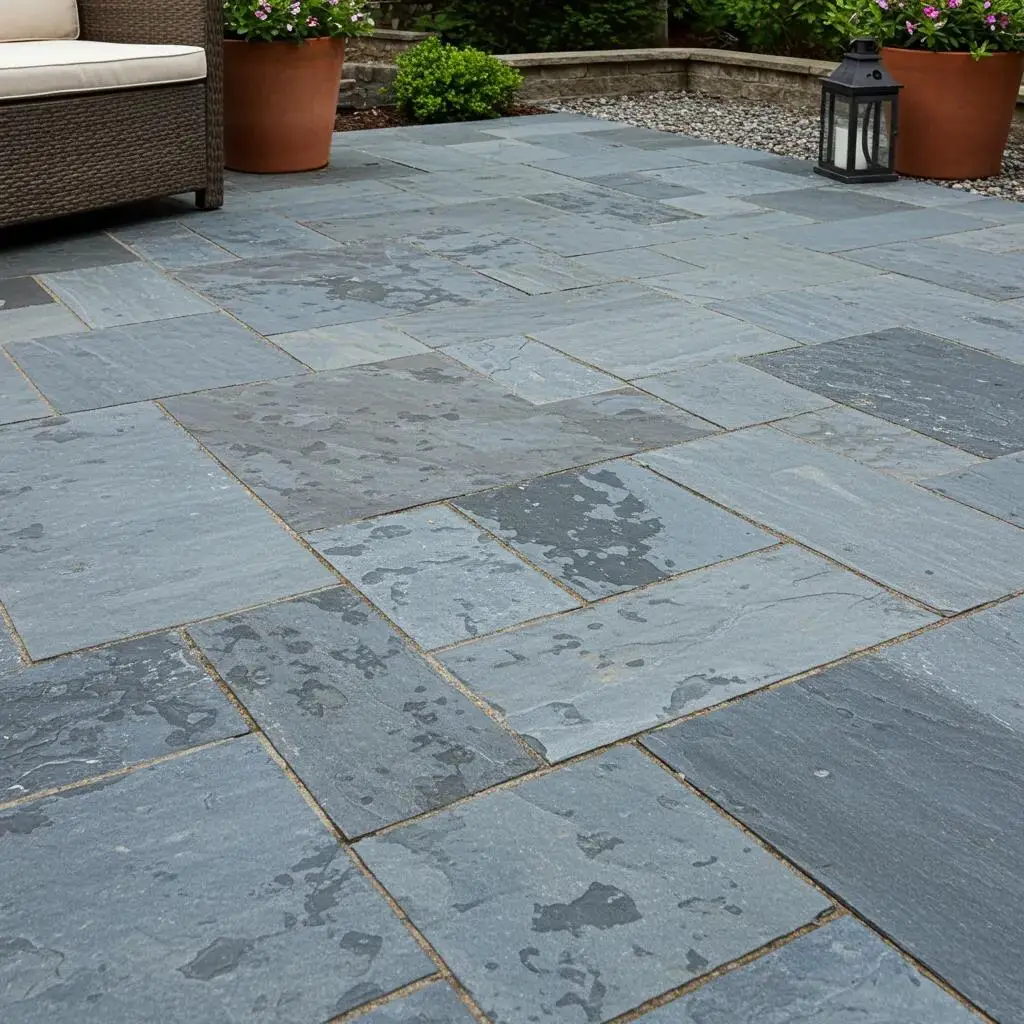
Bluestone is a dense, fine-grained sandstone or feldspathic rock that offers a refined, blue-gray palette and natural slip resistance when cleft or brushed. Its low porosity and durable mineral structure mean it resists wear and maintains color stability under strong sunlight, making bluestone suitable for poolside patios where surface temperature and traction matter. In Jacksonville’s humid climate, bluestone performs well provided joints and edges are detailed to avoid water pooling; a permeable joint or well-drained base reduces freeze-thaw and settlement risks. We often recommend textured finishes for pool areas and sealing strategies that preserve color without trapping moisture; these choices balance aesthetics and long-term performance.
Bluestone Steps for Patio Access: Design and Installation
At the base are staggered, tumbled bluestone steps providing indirect access to the patio.
Hardscaping: How to use structures, pathways, patios & ornaments in your garden, 2006
How Do Flagstone Patio Designs Add Rustic Charm and Safety?
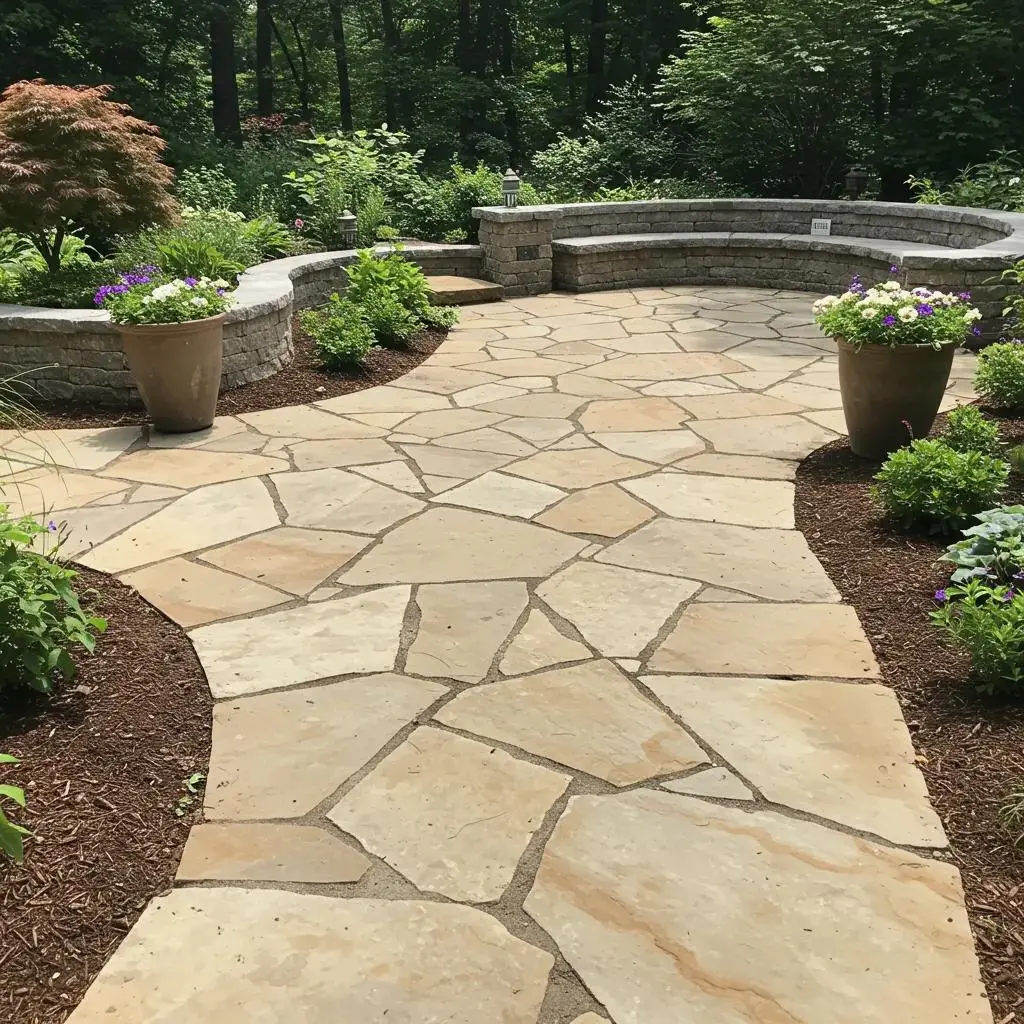
Flagstone is an irregular-slab natural stone commonly formed from sandstone, slate, or limestone that creates a random, organic surface ideal for casual, garden-integrated patios. The irregular shapes and inherent texture produce a natural non-slip surface, and the stone’s thickness and jointing approach (dry-laid or mortared) influence stability and maintenance. For Jacksonville, flagstone’s permeability through open joints can support better runoff when paired with permeable base layers, reducing surface water during heavy storms. We often use flagstone to soften transitions between lawn and living spaces and to create drainage solutions that hide minor settling without sacrificing safety or durability.
Why Choose Limestone Paver Options for Elegant Outdoor Spaces?
Limestone offers a soft, neutral palette and a smooth, honed finish that complements refined architectural styles and outdoor kitchens, where visual cohesion with countertops and appliances matters. Limestone’s composition makes it moderately porous, so sealing is important to protect against oil and acidic stains common in cooking areas; however, properly sealed limestone resists staining while keeping a comfortable surface underfoot. In Jacksonville, limestone’s relatively low heat absorption can keep outdoor seating areas more comfortable during summer, but we account for drainage and periodic resealing to preserve appearance. When paired with robust base preparation and appropriate edge restraints, limestone provides an elegant, durable terrace surface.
What Are the Benefits of Granite Patio Installation for High-Traffic Areas?
Granite is an igneous rock renowned for its hardness, low porosity, and exceptional abrasion resistance, making it ideal for driveways, commercial patios, and heavily used residential patios. The stone’s crystalline structure yields a range of finishes—flamed, honed, or polished—that trade off slip resistance and aesthetics; flamed or textured finishes improve traction while maintaining longevity. Granite’s resilience reduces long-term replacement cycles and maintenance costs, and its density resists staining and freeze-related cracking when properly installed over a compacted base. For Jacksonville projects that expect frequent use or require commercial durability, granite’s upfront cost often balances out through decades of service and low upkeep.
How Do Sandstone Paver Benefits Enhance Warmth and Versatility?
Sandstone brings warm earth tones and ease of cutting, which allows for custom shapes and intricate patterns that enhance patio character. Its layered sedimentary structure gives a pleasing texture and moderate slip resistance, but porosity varies by deposit—meaning some sandstones require sealing to prevent moisture absorption and staining. Sandstone’s workability makes it popular for bespoke layouts, integrated steps, and curved edges, allowing us to create patios that flow with landscaping. In Jacksonville, selecting a denser, less porous sandstone and combining it with proper base preparation reduces long-term maintenance while preserving the stone’s inviting appearance.
How Can You Design Stunning Natural Stone Patios with Creative Patterns and Styles?
Designing with natural stone involves choosing a pattern and palette that suit the home’s architecture, intended use, and scale while accounting for installation logistics and drainage. Patterns influence perceived space—large-format slabs open small yards, while broken-random flagstone creates intimate, rustic areas—and the right color palette ties the patio to exterior materials like stucco, brick, or pool tiles. Integration with landscaping, including grade transitions, planting pockets, and edge treatments, determines both aesthetics and water shed. Below are common patterns, their visual effect, and suggested stone pairings to guide design choices.
Popular natural stone patterns to consider:
- Random Ashlar: Mixed rectangular sizes create a classic, adaptable look suitable for bluestone or limestone.
- Broken-Random: Irregular flagstone arrangement offers organic charm and blends with natural plantings.
- Herringbone (large format): Strong directional pattern that suits cut sandstone or granite for a formal, durable surface.
- Large-Format Monolithic Panels: Few seams, minimal joints, ideal for contemporary patios using bluestone or limestone.
Selecting a pattern affects installation complexity and cost, so align pattern choice with budget and maintenance tolerance while planning transitions to planting beds and hardscape elements.
What Are Popular Natural Stone Paver Patterns for Patios?
Pattern selection balances visual impact with installation practicality; some patterns emphasize craftsmanship and others favor simplicity and economy. Random ashlar and broken-random patterns suit mixed-size stones and mask small movements, while herringbone or basketweave require precisely cut units and tighter joint tolerances. Large-format panels reduce joint maintenance and create a modern aesthetic but require heavier lifting and a rigid base to prevent cracking. For Jacksonville yards with shifting soils, patterns that tolerate minor settling—like broken-random—offer longevity with less visible movement, whereas precise geometric patterns work best over engineered bases.
How Do Warm Neutral Color Palettes Influence Patio Aesthetics?
Warm neutral palettes—soft beiges, greiges, and muted grays—create a cohesive backdrop that complements landscaping and pool finishes and reduces perceived glare under bright Florida sun. These color choices harmonize with Mediterranean, coastal, and contemporary home exteriors common in Jacksonville, making transitions between house and patio feel deliberate. Color selection also impacts temperature: lighter stones and finishes reflect heat, improving comfort on bare feet during summer. Coordinating grout/joint color and edging materials further refines the overall look and helps hide joint debris between maintenance cycles.
How Can Natural Stone Patios Integrate Seamlessly with Landscaping?
Seamless integration depends on edge treatments, planting choices, and grade management to control runoff and prevent water from pooling on the paved surface. Use edging that matches the stone or contrasts deliberately for a defined border, and design planting pockets for low-maintenance, salt- and heat-tolerant species that tolerate paver joints. Transition elements like a narrow gravel strip or a stepped retaining edge soften level changes and permit flexible drainage solutions. Proper integration requires early coordination between designer, installer, and any landscape contractor to align planting depths, root barriers, and irrigation systems with the patio’s drainage strategy.
What Is the Professional Process for Natural Stone Paver Patio Installation?
Professional installation follows a sequence of site evaluation, excavation, base preparation, paver setting, jointing, compaction, and finishing details to ensure long-term performance. Each stage performs a specific function: excavation removes unsuitable material, the base bears load and controls settlement, and jointing stabilizes units while allowing controlled drainage. Quality materials from reputable suppliers and correct compaction methods reduce future shifting and edge failure. Below is an EAV table mapping key installation phases to methods and outcomes so you understand the technical rationale behind each step.
| Phase | Method | Outcome |
|---|---|---|
| Site Evaluation | Grade survey and soil check | Identifies drainage needs and access constraints |
| Excavation | Remove topsoil to planned depth | Prepares stable subgrade and correct slope |
| Base Preparation | Crusher run / compacted aggregate | Creates load-bearing foundation and prevents settlement |
| Edge Restraint | Concrete or metal edging | Maintains pattern integrity and resists lateral movement |
| Jointing & Finish | Polymeric sand or mortar as specified | Locks units, resists erosion, and controls weeds |
Understanding these phases shows why professional base prep and drainage solutions are non-negotiable for Jacksonville’s variable soils and heavy rain events.
How Does Expert Base Preparation Ensure Long-Lasting Patios?
A layered base—subgrade, compacted aggregate, and bedding—creates the structural system that distributes loads and prevents differential settlement; this method is essential for durable patios. Compaction standards and material selection (well-graded crushed stone vs. loose sand) control permeability and strength; compacted aggregate layers bonded by interlock limit movement under foot and furniture loads. For Florida soils, which can include sandy or organic zones, adjusting base depth and using geotextile separation prevents contamination and maintains bearing capacity. Meticulous base work reduces future repairs and is the single best predictor of a patio’s lifespan, so allocate budget to this stage for long-term value.
What Are the Steps in ARC Excavation’s Paver Installation Process?
ARC Excavation Inc. follows a structured process that illustrates industry best practices: design consultation and site evaluation, precise excavation and base compaction, careful paver layout and cutting, jointing and compaction, and final sealing or finish as appropriate. This sequence ensures functional drainage, correct slope, and durable edge restraints while matching aesthetic goals discussed during design. ARC Excavation offers free, no-obligation quotes to evaluate site-specific needs and recommend materials and patterning that align with budget and climate considerations. You’ll benefit from transparent estimates and a clear timeline when selecting a contractor familiar with Jacksonville conditions and supplier options.
How Do Quality Materials from Belgard and Tremron Impact Patio Durability?
Materials from respected manufacturers deliver consistent unit sizes, predictable compressive strength, and design-grade finishes that reduce variability during installation and across replacement cycles. Branded materials often come with technical data that installers use to match structural specifications and warranty expectations, which improves long-term performance. Compatibility between supplier product tolerances and installation methods—especially for edge units, coping, and transition pieces—reduces on-site adaptation that can compromise durability. Selecting proven supplier products, combined with strict installation standards, increases the likelihood that a patio will meet both performance and aesthetic expectations.
Why Is Proper Drainage Critical for Florida’s Climate?
Jacksonville’s regular heavy rain events and seasonally high water tables make effective drainage essential to prevent standing water, frost heave in rare events, and subgrade weakening that leads to settlement. Permeable systems allow infiltration and reduce runoff, while non-permeable pavements require integrated drains, slopes, and catch basins to move water away safely. Designing drainage as part of the patio—integrating negative edges, swales, or hidden channel drains—protects adjacent structures and landscaping. Selecting systems that meet local stormwater considerations and scheduling maintenance to clear debris from drains ensures the patio remains functional through intense storms.
How Much Do Natural Stone Pavers Cost in Jacksonville? Understanding Investment and Value
Costs vary by material, labor, site complexity, drainage needs, and finishes; understanding these drivers helps you plan and compare proposals. Material costs depend on rarity, thickness, and finish, while labor reflects cutting, pattern complexity, and access. Site prep—especially excavation, base depth, and drainage—typically represents a substantial portion of the budget and directly affects longevity and future maintenance costs. The table below maps cost components, typical range drivers, and Jacksonville-specific notes so you can anticipate variables and prioritize investments that yield long-term value.
| Cost Component | What It Covers | Jacksonville Notes |
|---|---|---|
| Material Cost | Stone units, edging, bedding materials | Coastal availability affects some stone pricing |
| Labor | Excavation, cutting, laying, finishing | Skilled cutting and pattern work increases labor hours |
| Site Prep | Excavation, base materials, compaction | Soils and drainage needs can raise prep costs |
| Drainage | Drains, permeable base, channeling | Stormwater management often requires engineered solutions |
| Finishing | Sealing, jointing, cleanup | Sealing frequency affects lifecycle costs |
Understanding these components clarifies why higher initial investment in base and drainage often lowers lifetime costs through reduced repairs and replacements.
What Factors Influence the Cost of Natural Stone Paver Patios?
Major cost drivers include stone type, pattern complexity, site access, base depth required by soil conditions, and drainage or retaining structures needed to manage grade. Rare or imported stones and intricate layouts require more cutting and labor, raising the price. Limited access or slope increases equipment and time, and drainage solutions for low-lying yards or high runoff scenarios add engineered work. For Jacksonville homeowners, budget for resilient base work and drainage as priorities, because these elements protect the investment where heavy storms and variable soils are common.
How Does Long-Term Value Justify Natural Stone Patio Investment?
Natural stone’s longevity, resistance to UV fade, and potential to increase curb appeal deliver measurable long-term value when compared to short-lived surface options. Durable stones with proper base preparation reduce replacement cycles and maintenance costs, and well-designed patios enhance outdoor living utility and resale appeal. An example homeowner scenario: investing more in base and moderate-cost stone may extend useful life by decades, offsetting the initial premium through avoided repairs and greater property desirability. Prioritizing performance components like base, drainage, and reputable stone selection maximizes return on investment.
How Can You Get a Free Quote for Your Natural Stone Patio Project?
To get an accurate, site-specific estimate, prepare basic information: desired stone type or aesthetic, approximate patio size, any pattern or accessory features (steps, fire pit, outdoor kitchen), and access constraints for equipment. A visual site visit allows precise measurements, soil assessment, and a tailored recommendation for base depth and drainage; ARC Excavation Inc. offers free, no-obligation quotes and can schedule evaluations to produce a detailed estimate. For direct inquiries, you may call the company phone number provided to arrange a visit and receive personalized pricing based on local supplier options and project specifics.
At the end of formal cost analysis, you should request line-item estimates that separate material, labor, and drainage work so you can compare proposals transparently. ARC Excavation Inc. partners with quality suppliers and emphasizes professional base prep and drainage solutions, which helps protect the investment and reduce long-term costs.
How Do You Maintain Natural Stone Patios for Lasting Beauty and Performance?
Routine maintenance preserves appearance, prevents staining, and maintains slip resistance; a predictable schedule and appropriate products extend surface life. General practices include regular sweeping, seasonal pressure rinsing, timely joint care, and resealing where required. Maintenance frequency depends on stone porosity and site exposure, so tailor the plan by stone type and local conditions like salt spray near coastlines or heavy organic debris from trees. The checklist below outlines annual and seasonal tasks to keep patios functional and attractive in Jacksonville’s environment.
- Sweep and rinse: Remove debris weekly and rinse surfaces monthly to prevent grit accumulation.
- Joint inspection: Check and replenish polymeric sand or mortar annually to prevent weed growth and movement.
- Sealing schedule: Reapply penetrating or topical sealer according to stone porosity and manufacturer guidance.
- Stain treatment: Address oil, grease, and organic stains promptly with stone-appropriate cleaners.
Consistent maintenance reduces the need for costly repairs and preserves slip resistance and color longevity.
What Are General Maintenance Tips for All Natural Stone Pavers?
All stone types benefit from routine debris removal, controlled use of pressure washing, and attention to joint integrity to prevent plant growth and erosion. Use pH-neutral cleaners for periodic deep cleaning and avoid acidic cleaners on sensitive stones like limestone, which can etch surfaces. Reapply sealer based on manufacturer recommendations and stone porosity; incorrect sealers or infrequent application can trap moisture or allow staining. Regularly inspect edges, steps, and transitions—addressing small movement early prevents larger repairs and extends the patio’s functional life.
How Should You Care for Specific Stone Types Like Bluestone and Travertine?
Bluestone typically tolerates aggressive cleaning better than porous stones and benefits from periodic sealing to maintain color; textured finishes require careful debris removal to avoid trapped sediments. Travertine is more porous and needs more frequent sealing when used poolside to resist waterborne staining and etching; avoid acid cleaners that degrade calcium-rich stones. Limestone requires gentle, pH-neutral products and more attentive sealing for cooking areas to prevent oil penetration. Tailoring care to each stone’s mineralogy protects finish and structure while preserving safety characteristics.
Are Natural Stone Pavers Slippery When Wet and How to Improve Safety?
Slip risk varies by stone type and finish—polished surfaces increase slipperiness, whereas cleft or flamed textures provide better traction. Treatments include selecting textured finishes, maintaining clean joints to avoid algae buildup, and choosing anti-slip sealers or surface treatments that increase micro-roughness without harming appearance. Design choices such as slope, drainage, and shade affect wetness duration and hence safety; shading that keeps surfaces damp can increase algae growth, while full sun dries surfaces faster. Combining texture, proper drainage solutions, and regular cleaning minimizes slip hazards for family and guests.
What Eco-Friendly and Specialty Natural Stone Paver Options Are Available?
Eco-friendly paver strategies combine permeable systems, locally sourced materials, and designs that reduce impervious area and manage stormwater on-site. Permeable installations use open-graded base, gap-filled joints, or specific permeable units to allow infiltration that reduces runoff and supports local stormwater control goals. Specialty applications—outdoor kitchens and fire pits—require stones that tolerate heat and staining and we prioritize non-porous, dense options near cooking areas. ARC Excavation Inc. incorporates sustainable practices into projects by recommending permeable details and material sourcing that reduce environmental impact while meeting functional needs.
How Do Permeable Pavers Support Sustainable Water Management?
Permeable pavements allow water to infiltrate through joints and base layers, reducing surface runoff and peak flows during storms; this infiltration recharges local soils and reduces pressure on municipal storm systems. Mechanically, permeable systems rely on open-graded aggregate beds and filter layers that trap sediments while permitting flow; routine vacuuming or joint maintenance preserves permeability over time. In Jacksonville, where heavy storms are common, permeable patios help mitigate localized flooding and align with stormwater best practices. You’ll want to plan for occasional maintenance to remove fines that can clog infiltration pathways.
What Are the Best Natural Stone Choices for Outdoor Kitchens and Fire Pits?
Outdoor cooking and fire features require stones with heat resistance, low porosity, and stain tolerance—dense granites and certain limestones or engineered coping materials perform well for countertops and hearth surrounds. For flooring adjacent to cooking appliances, choose stones that handle thermal cycling and resist oil staining; honed finishes reduce glare while providing manageable traction. Safety clearances and non-combustible hearth bases are critical; design around required offsets, and place non-flammable materials in direct fire-facing zones. Combining durable stone choices with practical cleaning routines prolongs both safety and appearance.
How Does ARC Excavation Incorporate Sustainable Practices in Patio Projects?
ARC Excavation Inc. recommends and implements permeable base options, appropriate drainage strategies, and material choices that reduce environmental impact while ensuring performance under Jacksonville conditions. The company evaluates site runoff, suggests permeable layouts where feasible, and partners with suppliers to identify durable stones with minimal transport impacts when possible. If you’re seeking sustainable solutions, ARC Excavation provides project-specific recommendations during the free quote and site assessment process to balance ecological benefits with functional needs and budget constraints.
Why Choose ARC Excavation Inc. for Your Natural Stone Paver Patio in Jacksonville?
ARC Excavation Inc. focuses on delivering durable, well-drained, and attractive outdoor spaces by emphasizing professional base preparation, drainage design, and partnerships with quality suppliers that support long-term performance. Their local knowledge of Jacksonville and Central Florida conditions informs material recommendations and construction techniques that mitigate common regional issues like heavy rainfall and sandy soils. The company offers a full-service approach from design consultation to precise installation, and you can request a free, no-obligation quote to evaluate site-specific needs and see line-item pricing. Contacting a local installer early helps align design aspirations with technical requirements and long-term maintenance expectations.
What Sets ARC Excavation Apart in Quality and Customer Service?
ARC Excavation’s differentiators include a focus on professional base prep and drainage expertise, consistent use of quality materials from recognized suppliers, and responsive estimate and scheduling processes. These practices translate to patios that resist settlement, shed water correctly, and maintain appearance through Jacksonville’s seasonal weather. The company’s approach prioritizes clear communication about material choices and installation sequencing so you understand trade-offs and durability expectations. Viewing project examples and discussing specific reference installations helps prospective clients assess workmanship and fit for their own properties.
How Does ARC Excavation Tailor Patios to Jacksonville’s Climate and Style?
ARC Excavation tailors choices based on local climate realities—prioritizing drainage-first designs, stone selections that tolerate UV and humidity, and finishes that manage heat on pool decks. The company aligns material palettes with regional architectural styles and recommends patterns and edging that integrate with landscaping and neighboring structures. Practical decisions—such as specifying permeable joints near low-lying areas or choosing textured finishes for wet zones—help limit maintenance needs and increase safety. This climate-aware tailoring ensures patios remain both beautiful and functional across seasons.
Can You See Examples of ARC Excavation’s Natural Stone Patio Projects?
Prospective clients can request to view project galleries that showcase completed residential and commercial patios, pool decks, and integrated hardscape solutions to evaluate stone types, before-and-after scenarios, and drainage treatments. Project displays typically highlight stone selection, patterning, base detail, and any sustainable features like permeable installations to demonstrate real-world performance. Asking for specific project references or scheduling a site visit during the free quote helps you verify suitability for your circumstances and makes it easier to visualize material choices on a similar scale. To discuss a project or schedule an on-site evaluation, contact ARC Excavation Inc. by phone to arrange a free, no-obligation quote and tailored recommendation.
Frequently Asked Questions
What are the environmental benefits of using permeable natural stone pavers?
Permeable natural stone pavers allow water to infiltrate through their joints and base layers, which helps reduce surface runoff and peak flows during heavy rain. This infiltration recharges local groundwater and minimizes the burden on municipal stormwater systems. In Jacksonville, where heavy storms are common, permeable systems can mitigate localized flooding and support sustainable water management practices. Additionally, using locally sourced materials for these installations can further reduce environmental impact by minimizing transportation emissions.
How do I choose the right natural stone paver for my specific climate conditions?
When selecting natural stone pavers for your patio, consider factors such as porosity, heat resistance, and slip resistance, especially in Jacksonville’s humid climate. Stones like bluestone and granite are excellent for their durability and low porosity, making them suitable for high-traffic areas. Conversely, limestone may require more maintenance due to its moderate porosity. Always consult with a professional to assess your specific site conditions and choose a stone that will perform well under local weather patterns.
What maintenance practices are essential for preserving the beauty of natural stone patios?
To maintain the beauty and functionality of natural stone patios, regular maintenance is crucial. This includes sweeping and rinsing surfaces to remove debris, inspecting and replenishing joint materials to prevent weed growth, and resealing stones according to their porosity. Additionally, promptly addressing stains with appropriate cleaners can prevent long-term damage. Tailoring your maintenance routine to the specific stone type and local environmental conditions will help extend the life of your patio.
Can natural stone pavers be used in areas with heavy foot traffic?
Yes, certain types of natural stone pavers, such as granite and bluestone, are particularly well-suited for high-traffic areas due to their durability and low porosity. These stones can withstand significant wear and tear while maintaining their aesthetic appeal. However, proper installation, including a well-prepared base and appropriate jointing methods, is essential to ensure longevity and prevent shifting or settling over time. Consulting with a professional installer can help you choose the best stone for your specific needs.
What are the advantages of hiring a professional for natural stone patio installation?
Hiring a professional for natural stone patio installation ensures that the project is completed with expertise and attention to detail. Professionals understand the importance of proper base preparation, drainage solutions, and material selection tailored to local conditions. They can also help avoid common pitfalls that may lead to future issues, such as settling or water pooling. Additionally, a professional installer can provide valuable insights on design choices and maintenance practices, ultimately saving you time and money in the long run.
How do I ensure my natural stone patio is safe and slip-resistant?
To enhance safety and slip resistance on your natural stone patio, choose stones with textured finishes, such as cleft or flamed surfaces, which provide better traction. Regular cleaning to remove debris and algae buildup is also essential, as these can create slippery conditions. Additionally, consider incorporating drainage solutions to minimize water pooling on the surface. Consulting with a professional can help you select the right materials and design features to ensure a safe outdoor space for family and guests.
What are the best practices for integrating natural stone patios with landscaping?
Integrating natural stone patios with landscaping involves careful planning of edge treatments, planting choices, and grade management. Use edging that complements or contrasts with the stone to create a defined border, and design planting pockets for low-maintenance, heat-tolerant plants. Transition elements, such as gravel strips or retaining edges, can soften level changes and facilitate drainage. Early coordination between designers, installers, and landscape contractors is crucial to ensure that planting depths and irrigation systems align with the patio’s drainage strategy.
Conclusion
Choosing natural stone pavers for your patio not only enhances the aesthetic appeal of your outdoor space but also ensures durability and low maintenance in Jacksonville’s climate. With options like bluestone, flagstone, and granite, you can find the perfect match for your style and functional needs. By partnering with ARC Excavation Inc., you can benefit from expert installation and tailored solutions that prioritize long-term value. Contact us today to explore your options and receive a free, no-obligation quote for your natural stone patio project.