
How to Choose Eco-Friendly Hardscape Materials That Last
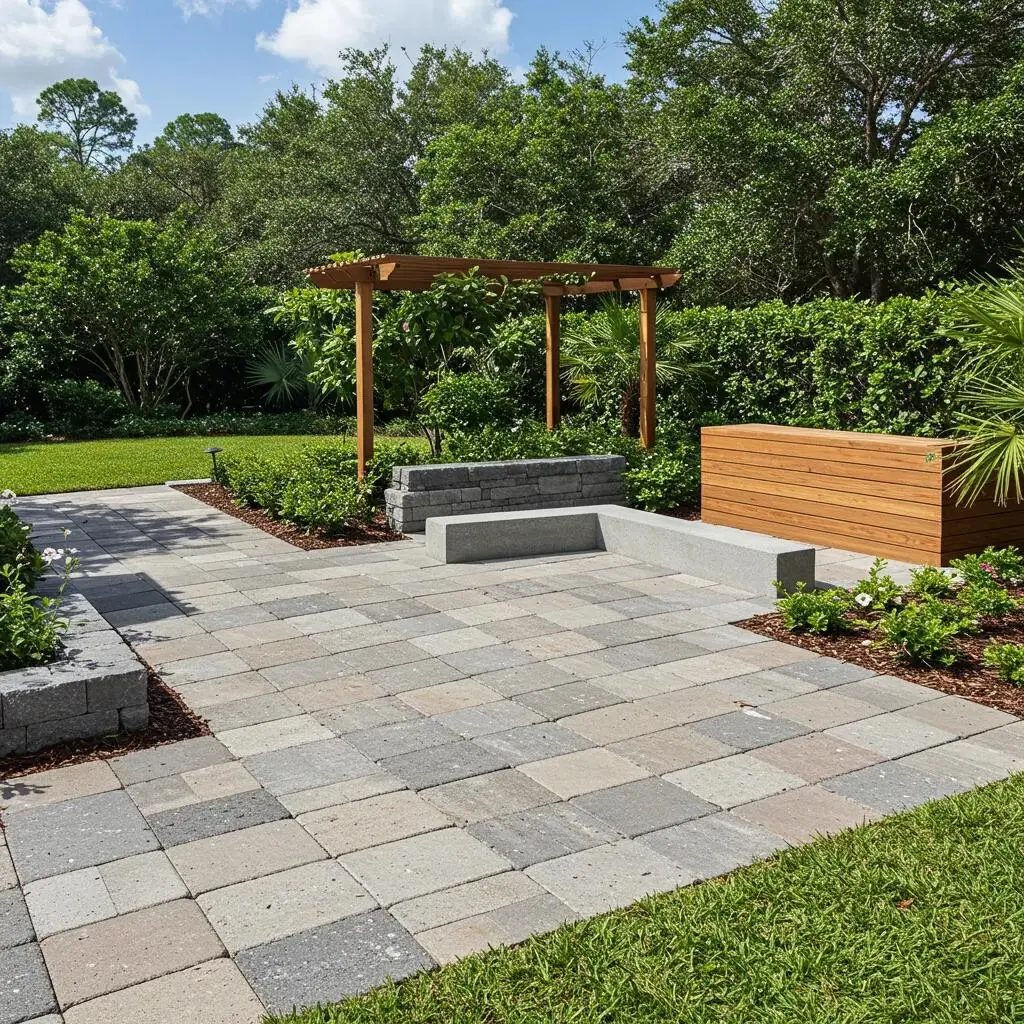
Selecting Sustainable Hardscape Materials: Green Options & Benefits
Eco-friendly hardscape materials give you durable, low‑impact surfaces that cut stormwater runoff, lower embodied carbon, and extend how long outdoor paving and walls last — all while improving curb appeal. This practical guide shows how those benefits happen in the real world: increasing permeability, using recycled content, and reflecting heat — three important strategies for Florida properties exposed to intense sun and frequent storms. For a comprehensive resource on sustainable options, discover eco-friendly hardscape materials for green designs. You’ll learn which materials work best for driveways, patios, pool decks, walkways and retaining walls; how to judge permeability, durability and installation needs; the maintenance and long‑term cost trade‑offs; and simple ways to pair hardscape with rain gardens and bioswales to improve stormwater handling. Choosing the right option means balancing environmental performance, site conditions, and installer quality so your project performs for decades. The sections below define sustainable hardscape criteria, compare common materials, offer an evaluation checklist and cost guidance, show water‑wise integration tactics, and explain how ARC Excavation Inc. helps deliver eco‑minded hardscaping across Jacksonville, Florida.
What Are Eco-Friendly Hardscape Materials and Why Do They Matter?
Eco‑friendly hardscape materials are building components chosen to cut environmental harm — by allowing water to infiltrate, using recycled inputs, or lowering lifecycle carbon. They matter because they reduce stormwater runoff, keep debris out of landfills, and make outdoor spaces more resilient. In practice that means less flooding, lower site temperatures, and fewer expensive drainage fixes — outcomes that are especially important in Florida’s sun and storm climate. Property owners see direct value through lower drainage costs, easier localized repairs, and longer service life compared with some conventional options. Below we define the criteria that determine whether a hardscape choice is truly sustainable and outline the benefits for both the environment and the owner.
What Defines Sustainable Hardscape Options?
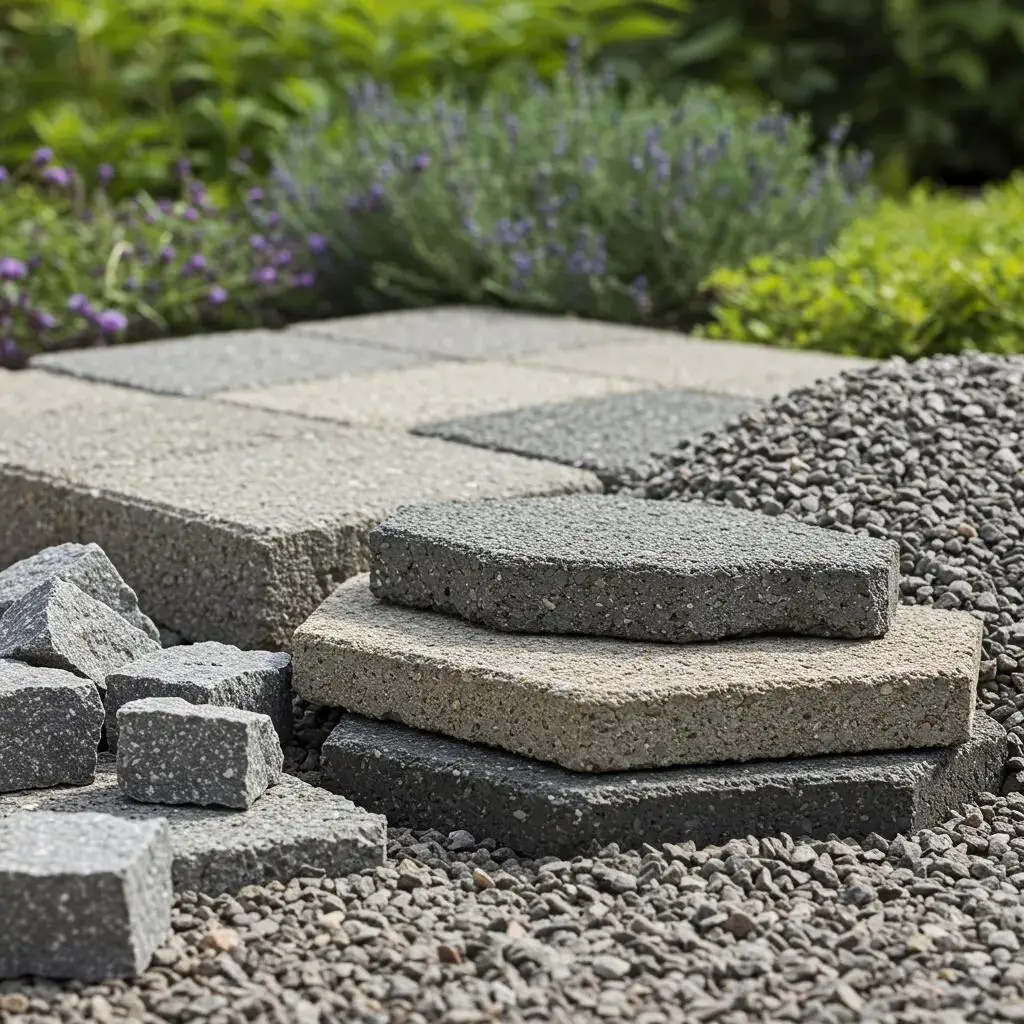
We judge sustainable hardscape by sourcing, lifecycle emissions, permeability, recyclability and in‑place durability — attributes that determine real performance in humid, sun‑exposed regions like northeast Florida. Materials made from reclaimed or recycled feedstocks usually carry less embodied carbon than newly quarried stone or fresh concrete. Permeable systems reduce surface runoff and help recharge groundwater. Durability and ease of repair matter, too: modular products such as pavers let you fix a small area instead of replacing an entire slab, cutting waste and long‑term cost. Reviewing these factors for your site helps prioritize options that balance climate resilience with the look you want. Below is a compact list of the selection basics we use on projects.
Eco‑friendly hardscape materials generally meet three practical selection criteria:
- Source and embodied impact: Materials using recycled aggregates or reclaimed stone lower embodied carbon compared with virgin alternatives.
- Hydrologic performance: Permeability or engineered infiltration reduces runoff and eases downstream stormwater loads.
- Durability and reparability: Modular systems and long‑life materials reduce replacement frequency and landfill waste.
These criteria guide how you evaluate candidate materials for a Florida landscape and set up the material comparisons that follow.
How Do Eco-Friendly Materials Benefit the Environment and Property Owners?
Choosing sustainable hardscape reduces runoff and pollutant transport, conserves resources through reuse, and helps moderate local heat with higher albedo or planted integrations. For homeowners, the payoffs are practical: fewer drainage retrofit costs, simpler repairs when components shift, and quicker recovery of outdoor spaces after heavy rain. In Jacksonville and similar coastal subtropical areas, encouraging infiltration reduces yard erosion and eases pressure on municipal storm systems. Knowing these outcomes helps you weigh the environmental and operational returns from investing in sustainable hardscape — and prepares you to compare common material types and their trade‑offs.
Recycled Construction and Demolition Waste for Sustainable Concrete Hardscaping
Research and field examples show crushed construction and demolition waste can be reused as aggregate in new concrete mixes. While recycled aggregate concrete (RAC) performs adequately in many applications, its adoption has been limited. Growing urban areas and infrastructure work present clear markets for RAC — from non‑structural hardscaping and pavements to certain structural uses. This study aimed to demonstrate the technical feasibility and economic sense of using recycled aggregates in concrete products.
Which Types of Eco-Friendly Hardscape Materials Are Best for Your Project?
The right material depends on the application — driveway load, patio comfort, pool deck safety — and on local exposure to UV, salt and storms. Choosing by performance metrics rather than appearance alone yields better long‑term results. Below are common eco‑friendly hardscape options with short descriptions so you can quickly match material properties to your project needs. After that we compare drainage and carbon considerations and then focus on permeable pavers and recycled/reclaimed options for Florida installations.
Common eco‑friendly hardscape materials and typical uses include:
- Permeable pavers: Interlocking units that let water pass through joints or cellular cores — ideal for driveways and patios when paired with a proper base.
- Recycled concrete aggregate (RCA): Crushed reclaimed concrete used for base layers or finished aggregate surfaces to keep materials in use.
- Reclaimed wood and natural stone: Salvaged materials that add character while avoiding new quarrying or milling, offering stunning patio options.
- Composite decking (recycled plastics): Low‑maintenance boards made from recycled polymers — good for wet, salt‑exposed areas.
These material types lead into a focused comparison of drainage solutions performance and carbon footprint to help prioritize selections for Jacksonville sites.
This table compares drainage performance and carbon‑reduction attributes of leading eco‑friendly materials to help you prioritize choices.
| Material | Drainage Performance | Carbon Footprint Reduction |
|---|---|---|
| Permeable interlocking pavers | High when installed with open joints and engineered infiltration base | Medium — manufactured pavers have embodied carbon but substantially reduce runoff impacts |
| Recycled concrete aggregate (RCA) | Medium when used as surface or base; strongest as base/sub‑base | High — repurposes demolition material and lowers new production |
| Reclaimed wood/stone | Low‑to‑medium depending on finish; often impermeable but reusable | High — avoids new quarrying and cuts embodied carbon |
This comparison shows permeable pavers lead on stormwater control while recycled materials deliver strong carbon benefits — a useful trade‑off when making design decisions.
What Are the Benefits and Uses of Permeable Pavers in Florida?
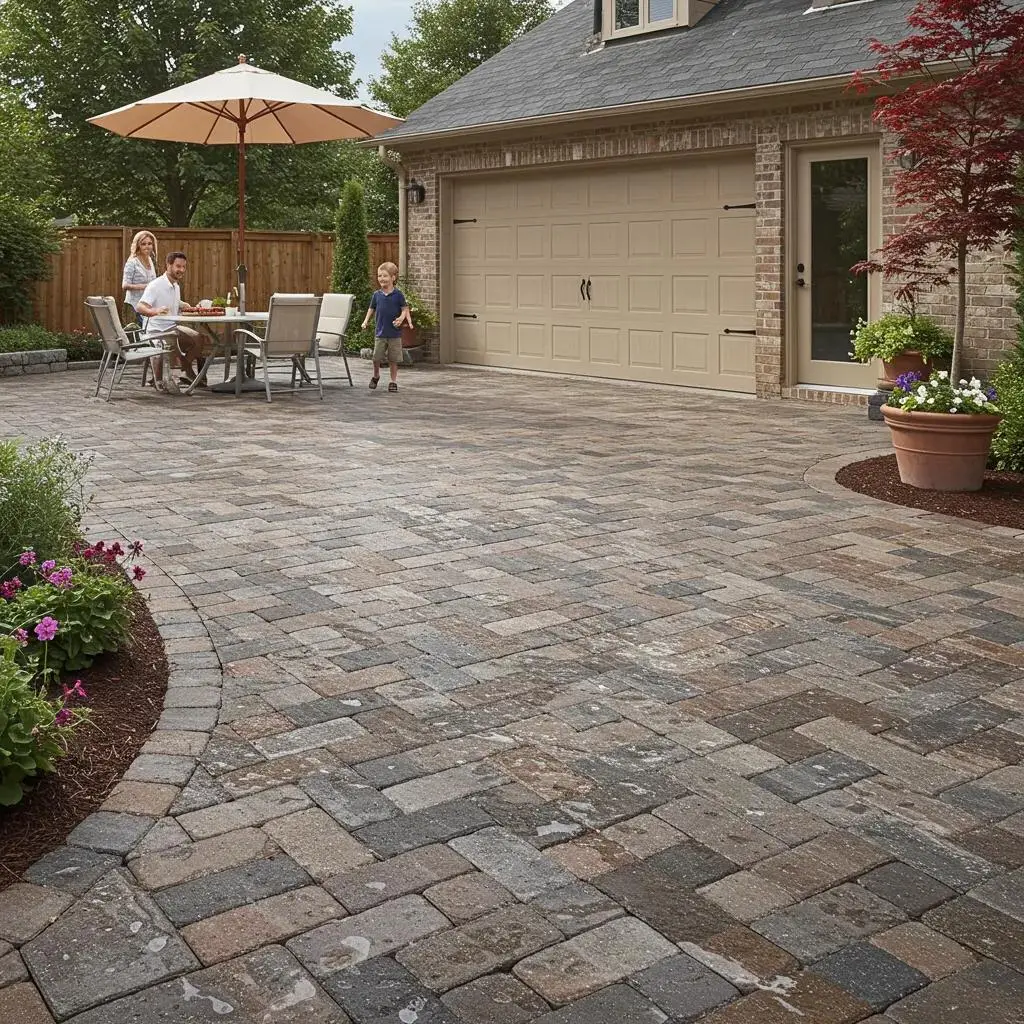
Permeable pavers let surface water pass through joints or cellular units into a layered base that stores and disperses runoff, reducing pooling and downstream flooding. In Florida, that means better post‑storm usability, less erosion near foundations, and more options for meeting local infiltration goals. A properly engineered base, geotextile separation and good joint detailing keep sediments from clogging the system and help maintain infiltration over time. Simple maintenance — joint vacuuming and occasional topdressing — preserves performance. Below we cover typical applications and how recycled materials work with these systems.
Common applications for permeable pavers:
- Driveways: When the base is sized for vehicle loads and designed to manage runoff.
- Patios and walkways: Slip‑resistant, comfortable surfaces that reduce standing water.
- Perimeter drainage integration: Placed next to bioswales and rain gardens to safely route runoff.
These uses show how permeable paving can be central to a water‑wise landscape, and they lead into how recycled and reclaimed materials support sustainability.
How Do Recycled and Reclaimed Materials Enhance Sustainable Hardscaping?
Recycled concrete, reclaimed brick and salvaged stone reduce demand for new raw materials and divert large volumes of construction debris from landfills while adding visual interest. Recycled concrete aggregate works well as a compacted base or as a finished aggregate surface and can be cost‑effective when engineered correctly. Reclaimed wood and stone bring a unique patina and history to patios and walls but need careful application in Florida’s humid climate to avoid biological decay. Placing reclaimed materials in appropriate, lower‑risk uses — decorative walls, pergolas, non‑load patios — captures sustainability benefits while limiting lifecycle risks.
Typical advantages of reclaimed and recycled materials:
- Waste reduction: Keeps material out of landfills and lowers embodied emissions.
- Cost‑effective sourcing: Often less expensive than new quarried materials.
- Aesthetic variety: Distinctive textures and colors that add character.
Sustainable Landscaping: Recycling Demolition Waste for Hardscape Elements
This study explores how demolition and construction waste can be repurposed in hardscape elements, including benches and concrete landscape features. It highlights the profitable reuse of waste streams — crushed ceramics, recycled aggregates and other materials — and advocates policy, technology and design practices to expand recycling markets for sustainable landscape projects.
Knowing where reclaimed and recycled materials perform best helps you integrate them into stormwater‑sensitive designs, which we discuss next when evaluating installation and performance metrics.
How to Evaluate Eco-Friendly Pavers and Sustainable Patio Materials?
Evaluating eco‑friendly pavers and patio materials means checking design compatibility, durability standards, permeability metrics and installation details — because proper assembly is what delivers the environmental benefits. Look at load ratings, edge restraints, UV and salt resistance, and warranty terms; these predict lifespan and maintenance needs. Professional installation is critical: correct base depth, compaction, grading and drainage connections make sure permeability and structural integrity are achieved. The table below summarizes installation requirements, typical lifespan and permeability for common options so you can compare quickly.
Use this side‑by‑side view to understand trade‑offs and which installation dependencies drive long‑term performance.
| Material | Installation Requirement | Lifespan | Drainage/Permeability Rating |
|---|---|---|---|
| Permeable interlocking concrete pavers (PICP) | Engineered infiltration base, geotextile separation, reliable edge restraint | 25–50 years with regular maintenance | High |
| Porous asphalt | Specialized mix and sub‑base, scheduled surface maintenance | 10–20 years | Medium‑High |
| Composite decking (recycled plastics) | Standard framed substructure with ventilation and secure fixings | 20–30 years | Low (impermeable) |
The table shows PICP delivers high permeability and long life when installed correctly. The checklist below outlines the core questions to ask before you commit to a material or contractor.
A short evaluation checklist to prioritize decisions during selection and contracting:
- Confirm hydraulic performance metrics: Verify manufacturer or contractor infiltration rates and recommended base depth for your soil type.
- Assess structural needs: Match load rating to driveway versus pedestrian use and confirm edge restraint details.
- Inspect material provenance: Ask about recycled content, manufacturer disclosures, and finish/color stability in sun and salt.
- Request installation specifications: Get base design, compaction targets and drainage tie‑in plans in writing from the contractor.
This checklist helps you compare proposals fairly and explains why local, experienced installers matter — which we cover next.
ARC Excavation Inc. pairs paver know‑how with engineered drainage to maximize permeability and service life for sustainable installations. Our local approach emphasizes proper base preparation, precision cutting and integrated drainage so common failure modes like settlement or clogged infiltration layers are minimized. When evaluating installers, request detailed base specs and a post‑installation maintenance plan to ensure the promised permeability and warranty expectations are realistic. Understanding these installation needs makes contractor selection and cost planning much clearer.
How Can You Integrate Water-Wise and Green Hardscaping Solutions?
Pairing hardscape with water‑wise elements — rain gardens, bioswales and permeable surfaces — reduces runoff and treats pollutants by combining engineered infiltration with vegetated filtration. The idea is simple: hard surfaces direct concentrated flows into planted areas that slow water, allow infiltration and help filter common urban pollutants. Design strategies include grading for sheet flow into bioswales, sizing rain gardens to capture a portion of impervious runoff, and using native plant palettes that tolerate Jacksonville’s wet‑dry cycles. The guidance below covers siting for rain gardens and how materials and planting choices reduce heat impacts on the property.
Practical siting and design rules for water‑wise features:
- Locate rain gardens downslope of major roof and pavement drains and keep them outside foundation drainage zones.
- Size features to manage a design storm or capture a defined percentage of impervious area.
- Choose native, low‑maintenance plants that tolerate occasional inundation and support pollinators.
These rules help homeowners design resilient systems. The next subsection lists plant choices and basic maintenance tips for Florida‑friendly rain gardens.
What Role Do Rain Gardens and Stormwater Management Play in Eco-Friendly Hardscapes?
Rain gardens and bioswales act as on‑site stormwater treatment: they lower peak flows, trap sediments and nutrients, and let cleaner water percolate instead of immediately reaching municipal drains. The sequence — capture, detention, infiltration and uptake by vegetation — reduces erosion and pollutant transport to nearby waterways, which is especially important in coastal watersheds. Sizing depends on soil infiltration rates and the impervious area being treated; a practical rule is to size the footprint to capture runoff from a specified roof or pavement area for a typical local storm. Low‑maintenance native species — grasses, sedges and wet‑tolerant shrubs — maintain filtration services with modest seasonal care.
Planting and maintenance tips:
- Choose native species adapted to wet‑dry cycles and local pests.
- Use mulch to limit erosion and support microbial filtration.
- Inspect inlets and outlets seasonally to ensure free flow and avoid clogging.
These simple practices help rain gardens function reliably and lead into how material choices affect heat‑island impacts.
How Do Eco-Friendly Materials Help Reduce Urban Heat Island Effects?
Eco‑minded materials reduce urban heat by using higher‑albedo surfaces, permitting evaporative cooling in permeable systems, and integrating vegetation for shade and transpiration cooling. Light‑colored pavers or aggregates lower surface temperatures, while permeable bases that retain moisture can moderate heat compared with dense, impervious concrete. Adding shade trees and shaded seating near permeable paving further reduces heat exposure for people and surfaces on hot Florida afternoons. Thoughtful material and planting choices combine to create measurable cooling benefits at the property and neighborhood scale.
Key strategies to mitigate heat:
- Pick lighter‑colored, high‑albedo paving where appropriate.
- Combine permeable surfaces with landscape shading to boost cooling.
- Design infiltration layers to retain some moisture and support evaporative cooling.
These decisions influence long‑term cost and maintenance, which we cover next.
What Are the Cost and Maintenance Considerations for Eco-Friendly Hardscape Materials?
Compare initial installation costs with projected maintenance and replacement expenses to understand total cost of ownership. Eco‑friendly options often demand more upfront design and base work but can save money over time through reduced drainage repairs and longer service intervals. Long‑term savings come from lower downstream infrastructure needs, easier modular repairs, and fewer full replacements. Typical maintenance for permeable systems includes periodic joint vacuuming or brushing, topdressing with clean aggregate, and monitoring infiltration. The table below summarizes typical upfront costs, maintenance profiles and 10‑year cost expectations to help you weigh investment trade‑offs.
This cost comparison clarifies upfront versus lifecycle expenses.
| Material | Initial Cost Range | Typical Maintenance | 10-year Estimated Cost |
|---|---|---|---|
| Permeable interlocking pavers | Moderate to High | Joint vacuuming every 1–3 years; occasional re‑sanding or topdressing | Moderate — lower drainage repair costs often offset higher installation expense |
| Recycled concrete patio | Low to Moderate | Occasional surface regrading and patching | Low — modest long‑term expense when base is correct |
| Conventional concrete slab | Low to Moderate | Crack repairs and sealing; likely earlier replacement | High — replacement risk can raise lifecycle cost |
The table shows permeable pavers may cost more up front but often compare favorably over time when drainage and drainage solutions and repair savings are considered. The sections that follow explain long‑term savings and routine maintenance in practical terms.
How Do Long-Term Savings Compare to Initial Investment?
Long‑term savings come from avoided stormwater mitigation, fewer large repairs and the modular repairability of many sustainable systems — in short, good engineering up front avoids costly fixes later. For example, a well‑built permeable driveway installation can prevent expensive curb cuts or retention work and may lower municipal stormwater fees in some areas, producing a net benefit over 10–20 years. Commercial sites with heavy vehicle loads sometimes choose engineered porous asphalt for cost control, while homeowners often find permeable pavers balance looks and longevity. Local estimates are essential: soil infiltration, flood risk and permitting all affect payback timelines and contractor proposals.
Ask contractors for measured infiltration data and modeled payback examples to refine your decision — that background links directly to routine maintenance expectations described next.
What Maintenance Is Required for Permeable and Recycled Materials?
Permeable and recycled materials need predictable upkeep: clear surface debris, vacuum joints, replenish jointing aggregate, and inspect sub‑surface drains to preserve infiltration and structural performance. Seasonal checks after storms or heavy leaf drop prevent organic buildup that reduces permeability. Periodic professional inspections catch early settlement or base issues. Annual maintenance time and costs are often modest compared with the cost of replacing a poorly drained concrete slab, and timely professional intervention for deep cleaning or base rehabilitation preserves long‑term performance. Following a simple maintenance schedule prevents sudden, expensive repairs — which is why experienced local installers usually include maintenance guidance in proposals.
A homeowner maintenance checklist:
- Inspect and clear surface debris quarterly to avoid clogging.
- Schedule joint vacuuming or power sweeping every 1–3 years, depending on debris load.
- Top‑dress or replace joint aggregate when infiltration noticeably slows.
Sticking to this schedule reduces permeability loss and keeps repair needs predictable — which brings us to how ARC Excavation applies local experience to control costs and maximize durability.
How Does ARC Excavation Inc. Support Eco-Friendly Hardscaping in Jacksonville, FL?
ARC Excavation Inc. offers excavation, drainage and hardscaping services focused on paver installation for driveways, patios, pool decks and walkways, plus retaining walls that help manage erosion and route stormwater. Our work emphasizes proven installation practices — engineered base preparation, precision cutting and integrated drainage — so designed permeability and longevity are achieved. ARC’s local knowledge of Jacksonville soils, sun exposure and storm patterns guides material selection and base design, while our range of paver colors and patterns helps match your home’s style. Homeowners can request a quote to compare performance‑driven proposals by lifecycle cost and maintenance expectations.
What Eco-Friendly Hardscaping Services Does ARC Excavation Provide?
Our eco‑focused services include permeable paver systems, drainage solutions that route runoff to bioswales and rain gardens, sourcing recycled materials for base and surface uses, and retaining wall construction that controls erosion and directs stormwater. We prioritize technical quality — compaction to spec, secure edge restraints, and clear drainage tie‑in plans — to protect permeability and structural performance over time. These services support sustainability goals by reducing runoff, reusing materials when appropriate, and enabling targeted repairs instead of full replacements. For homeowners comparing bids, ARC provides clear estimates that list installation details and expected maintenance tasks.
How Can Local Expertise Improve Your Sustainable Hardscape Project?
Local expertise matters because Jacksonville’s coastal soils, strong UV and storm dynamics require tailored material choices, base depths and drainage details to ensure long‑term performance. Contractors with local supplier networks can find suitable recycled aggregates and drought‑ or flood‑tolerant plants for rain gardens, speeding timelines and improving cost‑effectiveness. Familiarity with local permitting and municipal expectations reduces redesigns and delays. By coordinating sequencing, drainage tie‑ins and post‑installation inspections, a local team turns sustainable design ideas into dependable, low‑maintenance results.
ARC Excavation’s regional focus delivers faster response times and practical maintenance advice, helping homeowners protect their investment while maximizing environmental benefit.
Frequently Asked Questions
What are the key factors to consider when selecting eco-friendly hardscape materials?
Focus on the material’s source, embodied carbon, permeability and durability. Favor products with recycled or reclaimed content to reduce environmental impact. Check how well the material lets water infiltrate to limit runoff and support groundwater recharge. Also weigh longevity and reparability — materials that are easy to maintain or repair will generate less waste and lower lifetime costs.
How do eco-friendly hardscape materials impact local wildlife?
Sustainable hardscape can support local biodiversity by allowing water to soak into the ground and by routing runoff into planted features. Permeable surfaces and rain gardens encourage plant growth, which provides habitat and food for insects and small animals. Thoughtful design — using native plants and avoiding large, continuous impermeable areas — helps create corridors and pockets that benefit local wildlife.
What maintenance practices are essential for eco-friendly hardscape materials?
Routine inspection and targeted cleaning keep systems working. For permeable pavers, vacuuming joints periodically prevents debris from clogging infiltration paths; top‑dressing with clean aggregate restores joint function when needed. Watch for erosion, settling or vegetation growth in joints and address issues early to preserve structural integrity. A simple maintenance routine extends the life of these materials and reduces unexpected repair costs.
Can eco-friendly hardscape materials be used in all climates?
Many sustainable hardscape hardscape services work across climates, but performance varies. Materials that handle Florida’s humidity and UV exposure may not suit arid or freeze‑thaw regions without modification. Consider local temperature swings, rainfall patterns and soil types, and consult a local expert to select materials and details that match your climate.
What are the long-term cost benefits of using eco-friendly hardscape materials?
Although some sustainable options carry higher upfront costs, they often cost less over time because they reduce drainage work, allow targeted repairs and tend to last longer. Lower stormwater management costs and stronger curb appeal can also add value. Reviewing lifecycle costs and asking contractors for payback examples helps quantify expected savings.
How do eco-friendly hardscape materials contribute to stormwater management?
These materials reduce runoff by facilitating on‑site infiltration and by directing water into vegetated treatment areas. Permeable pavements let water pass into a storage and infiltration base, while bioswales and rain gardens slow and filter flows. Together, these elements reduce peak runoff, trap sediments and pollutants, and ease the load on municipal drainage systems — protecting nearby waterways and improving landscape resilience to heavy rain.
Conclusion
Selecting eco‑friendly hardscape materials improves your outdoor space visually and functionally while lowering environmental impact. By understanding options like permeable pavers and recycled aggregates, you can make choices that deliver long‑term savings and better site performance. Working with local experts such as ARC Excavation Inc. ensures your project is specified and installed to meet both aesthetic and sustainability goals. Contact us to explore solutions and start turning your outdoor area into a more resilient, sustainable space.