
Transform Your Landscape: Top Eco-Friendly Hardscape Options

Eco-Friendly Hardscape Solutions for Modern Sustainable Landscapes
Eco-friendly hardscape covers patios, walkways, driveways and other structural landscape elements designed to lower environmental impact through smarter material choices, permeability, and integrated water-management. This detailed guide breaks down the sustainable materials and design strategies that cut stormwater runoff, reduce embodied carbon, and extend lifespan without sacrificing a modern look. Homeowners and designers will get clear comparisons of permeable pavers, recycled aggregates, reclaimed stone, porous asphalt and alternative paver units—looking at permeability, upkeep, cost and best applications. We also explain engineered drainage options—bioswales, infiltration trenches and underdrains—that protect properties in humid coastal climates and sandy soils, plus practical patio and green-driveway ideas. A simple checklist at the end helps you gather the details contractors need for accurate quotes. Relevant search terms like permeable pavers, recycled hardscape materials and sustainable landscape design remain woven through the guide for easy, local application.
ARC Excavation Inc. brings local installation know‑how to eco-friendly hardscaping projects, providing professional base preparation, precision cutting and engineered drainage that match sustainable material choices. As a Jacksonville-based resource for excavation and hardscaping, we install permeable pavers and recycled-material builds and welcome homeowners to request a free quote to discuss feasibility and design. This brief business note supports the technical guidance below while keeping the focus on practical, research-backed hardscape choices.
Which Eco-Friendly Hardscape Materials Work Best for Modern Landscapes?

To learn How to Choose Eco-Friendly Hardscape Materials That Last, we pick eco-friendly hardscape materials for permeability, recycled content, low embodied energy, durability and minimal upkeep. The right choice depends on expected loads, desired infiltration, visual preferences and lifecycle cost—most successful options balance good infiltration with sufficient strength for patios and driveways. Below we list top materials, explain where each performs best, and offer a compact comparison to help you decide. The emphasis is on materials that reduce runoff while holding up over time in coastal, humid conditions.
Permeability, recycled content and embodied-energy considerations guide selection: permeable pavers are modular and highly infiltrative; reclaimed stone has low embodied energy and a classic look; porous asphalt fits larger areas where periodic sealing is acceptable. ARC Excavation Inc. regularly installs permeable paver systems and recycled-material hardscapes, pairing professional base work and drainage details to protect long-term permeability and stability. Good installation practice addresses sub-base design and jointing so the performance you expect is the performance you get.
Top eco-friendly hardscape materials — quick benefit summary:
- Permeable pavers — high infiltration and easy modular repair for patios and driveways.
- Recycled concrete pavers — lower embodied carbon with durable, load-bearing performance.
- Reclaimed stone — reduced lifecycle impact and classic, long-lasting aesthetics for paths.
- Porous asphalt — allows large-area permeability using familiar paving methods.
- Rubber pavers — repurpose tires into shock‑absorbing, permeable surfacing for light use.
Each option involves tradeoffs between permeability, cost and upkeep; the table below summarizes key attributes for quick comparison.
Materials differ in permeability, durability, cost and maintenance needs.
| Material | Permeability | Durability | Typical Cost Range | Maintenance | Best Use Cases |
|---|---|---|---|---|---|
| Permeable pavers | High | High | $$–$$$ | Periodic vacuuming and joint topping | Patios, driveways, walkways |
| Recycled concrete pavers | Medium | High | $$ | Occasional joint repair | Driveways, utility areas |
| Reclaimed stone | Low–Medium | Very high | $$–$$$ | Weed control and occasional resetting | Walkways, patios, accents. For Best Natural Stone Paver Options, reclaimed stone is a top choice. |
| Porous asphalt | Medium–High | Medium | $–$$ | Periodic sealing and surface upkeep | Large driveways and parking areas |
| Rubber pavers | Medium | Medium | $$ | Surface cleaning and joint maintenance | Play areas and light-traffic paths |
This snapshot makes the tradeoffs clear so you can choose materials that match your site constraints and performance expectations.
How Permeable Pavers Help Create Sustainable Outdoor Spaces
Permeable pavers channel surface water through joints or open voids into a designed aggregate base where water can infiltrate, be temporarily stored or slowly conveyed away. The system relies on paver units, bedding material, base aggregate and geotextile fabric to build a structural yet porous pavement that reduces runoff volume and peak flow. For homeowners the main benefits are on-site stormwater retention, reduced load on municipal drains and improved groundwater recharge—especially valuable in heavy-rain coastal areas. Proper performance depends on engineered grading, a compacted aggregate base and routine maintenance (vacuuming joints and replenishing joint material) to keep infiltration rates healthy. Those practical installation and maintenance steps are covered in the checklist that follows.
Permeable Pavement Systems for Sustainable Stormwater Management in Small Island Developing States
A review finds permeable pavement systems offer a sustainable option for managing stormwater in small island contexts by increasing on-site infiltration and reducing surface runoff and flood risk—an important consideration where extreme weather and sea-level rise create high vulnerability.
Technological review of permeable pavement systems for applications in small island developing states, J Monrose, 2018
Why Recycled Hardscape Materials Are a Smart Choice
Recycled hardscape materials—like crushed recycled concrete, repurposed pavers and rubber products—cut embodied carbon and keep construction debris out of landfills while still delivering dependable durability. Recycled concrete often meets or exceeds the compressive strength needed for driveable surfaces and can be processed to perform well as base aggregate, so it’s both an environmental and technical asset. Reclaimed stone and salvaged units add varied colors and textures—character many homeowners appreciate. Sourcing recycled materials locally reduces transport emissions and supports circular supply chains; contractors who prioritize local recycled sources help close the loop. Pairing recycled materials with permeable systems maximizes environmental benefit on site.
How Eco-Friendly Hardscaping Improves Water Management and Drainage
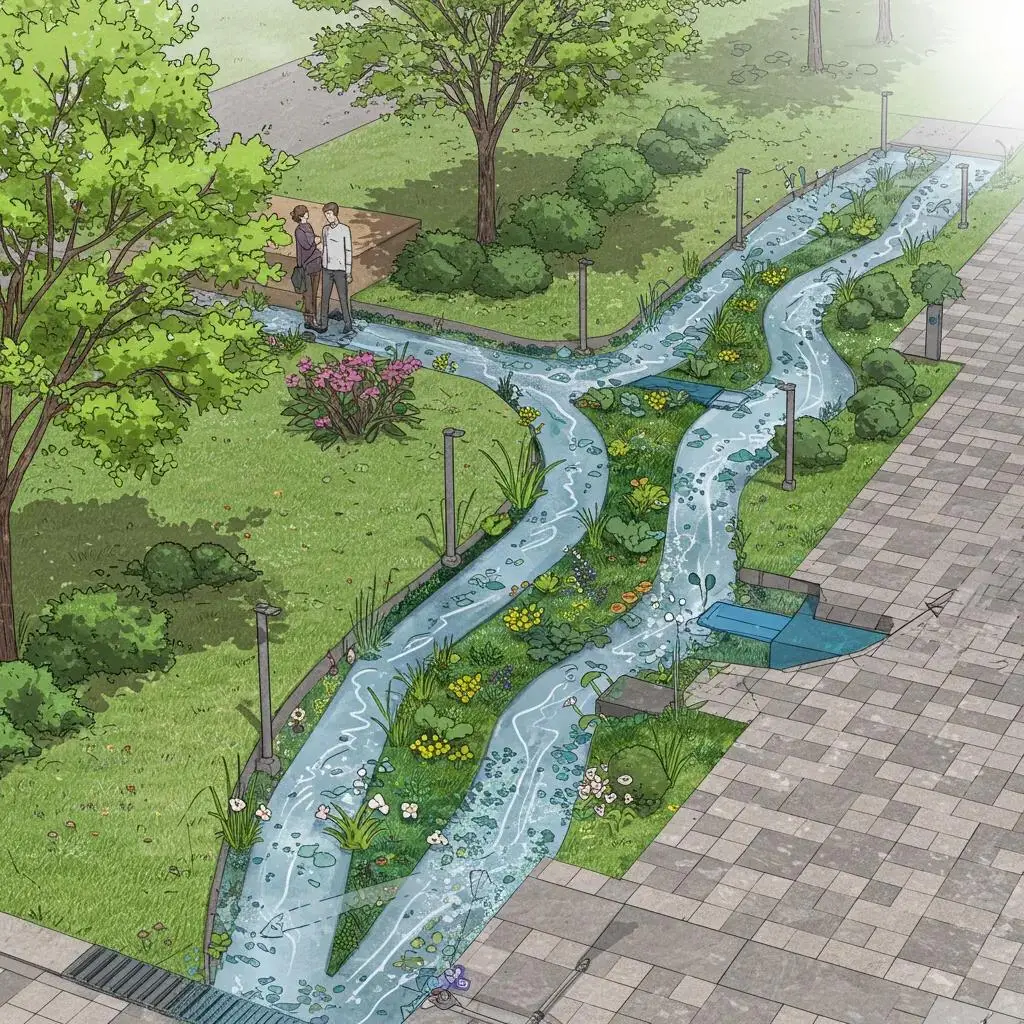
Eco-friendly hardscaping improves water management by combining permeable surfaces, engineered sub-bases and landscape-scale features—bioswales and infiltration trenches—that slow, capture and infiltrate runoff. The core idea is to lower runoff intensity and volume using permeability and temporary storage, which reduces erosion, cuts pollutant transport and protects foundations and curbside drains. The right approach depends on infiltration rate, slope, soil type and expected loading; underdrains or overflow connections are often needed where soils drain poorly. Below we compare common drainage strategies and explain when each makes sense, and why drainage solutions and sub-base design are critical for durability.
Common methods for handling runoff in hardscape projects:
- Permeable surfaces that allow on-site infiltration and reduce peak flows.
- Bioswales and rain gardens that detain and filter runoff with plants and engineered soils.
- Infiltration trenches that store water and slowly return it to the ground.
- Underdrain systems that carry excess water to a safe outlet where infiltration isn’t adequate.
These tactics work together as a layered stormwater strategy; the best mix depends on soil percolation, available space and how much maintenance you can manage.
| Drainage Solution | Infiltration Rate | Installation Complexity | Maintenance Needs | Best Use Case |
|---|---|---|---|---|
| Permeable paving systems | High–Medium | Moderate | Regular cleaning and vacuuming | Driveways and patios |
| Bioswales | Medium | Moderate | Vegetation care and occasional sediment removal | Linear landscape buffers |
| Infiltration trenches | High (if native soil allows) | Moderate–High | Sediment removal and periodic cleanouts | Roof runoff and parking edges |
| Underdrain systems | Low (conveyance-focused) | High | Inspection and outlet maintenance | Areas with low site permeability |
Pairing permeable paving with drainage solutions or underdrains builds redundancy and keeps systems working when soil or maintenance limits infiltration—this leads naturally into design ideas for patios and driveways.
How Permeable Surfaces Reduce Runoff
Permeable surfaces cut runoff by letting rain pass through the top layer into an engineered aggregate reservoir where water either soaks into native soil or is held for slow release. The benefits are smaller runoff volumes, lower peak flows, fewer pollutants reaching waterways and less erosion near foundations. Performance is tracked by infiltration rate and percent runoff reduction; well-designed permeable systems can handle most typical storm events on site in many temperate and coastal climates. Keeping joints clear of fines and organic debris is essential to preserve infiltration capacity and protect downstream infrastructure. Next we cover how drainage design strengthens system longevity.
Urban Stormwater Management: Adaptation to Climate Change and Urbanization
Research shows urbanization and climate change change precipitation and runoff patterns, increasing flood risk and pollutant loads in stormwater. Effective drainage and stormwater strategies must adapt to these shifts to limit flooding and water-quality impacts in urban areas.
Urban stormwater management–new technologies, E Hadžić, 2019
How Expert Drainage Design Boosts Eco-Friendly Hardscape Durability
Good drainage design makes sure the engineered base, finish grading and overflow paths work together to avoid pooling, freeze‑thaw damage and sub-base washout. Experienced installers assess slope, soil percolation and expected loads to set base depth, geotextile placement and underdrain tie‑ins that protect the structure. Warning signs—settling, rutting or persistent wet spots—usually point to sub-base issues or missing conveyance and should be addressed early to avoid costly fixes. Contractors who factor drainage solutions into the quote and design stage cut long‑term costs and reduce failure risk. Correct grading and reliable underdrain connections are what keep permeable systems performing year after year.
Sustainable Design Ideas That Upgrade Modern Patios and Driveways
Sustainable hardscape design balances function and curb appeal by combining mixed materials, native plant buffers, shading and integrated water-management to lower environmental impact while keeping a contemporary look. Design choices affect heat‑island effects, biodiversity and permeability; for example, pairing permeable paver fields with planted joints or native borders adds habitat and boosts infiltration. The ideas below are practical, modern approaches for patios and driveways that prioritize sustainability without sacrificing style. Each note includes material tips, maintenance expectations and expected benefits so homeowners can picture implementation.
Popular sustainable design approaches:
- Mixed-material patios: permeable pavers with reclaimed stone accents to add contrast and reduce runoff.
- Driveway-edge bioswales to capture and filter runoff while supporting native plantings.
- Alternating paver-and-turf strips to lower impermeable area and soften the surface visually.
- Shaded patio layouts with permeable decking options to reduce surface temperatures and improve comfort.
- Gravel or recycled-aggregate paths with geotextile stabilization for an affordable, permeable option.
These concepts show how layering permeability, planting and reclaimed materials creates beautiful, functional outdoor spaces—next we give specific patio and driveway examples.
Popular Eco-Friendly Patio Ideas Using Sustainable Materials
Eco-friendly patios prioritize porous surfaces, reclaimed accents and integrated planting to limit runoff and build durable outdoor living spaces. Ideas include permeable paver patios framed by reclaimed-stone seating walls, modular rubber-paver lounge areas over stabilized aggregate, and mixed-material layouts that use gravel bands to break up impermeable fields. Choosing materials with the right durability and maintenance profile—like pavers with engineered joint systems—helps patios perform in heavy-rain climates. Adding native plant beds and adjacent rain gardens creates extra infiltration and supports local biodiversity. These practical examples show how materials and micro-drainage details combine to make long-lived, sustainable patios.
How Green Driveway Solutions Lower Environmental Impact
Green driveway strategies balance load-bearing needs with permeability and lifecycle concerns to cut runoff and embodied carbon. Options range from full permeable paver systems capable of carrying vehicle loads to hybrid designs that alternate load-bearing pavers with vegetated or gravel strips to reduce impervious area. For heavier vehicles, recycled concrete pavers on a well-compacted engineered base give strength while retaining some permeability; porous asphalt can serve larger drives when regular maintenance is planned. Long-term upsides include reduced stormwater fees, less erosion and lower downstream sedimentation—making green driveways both practical and resilient. Driveway choices naturally lead into driveway installation considerations where slopes and stability matter.
How Eco-Friendly Retaining Walls Benefit Landscape Projects
Eco-friendly retaining walls combine structural stability with sustainable materials and integrated drainage to control erosion, create usable terraces and support native-plant habitats. Walls stabilize slopes while preserving infiltration and reducing runoff speed; choosing materials with recycled content or lower embodied energy improves environmental performance. Proper drainage behind walls—drainage pipes, weep channels and free‑draining backfill—prevents hydrostatic pressure that can compromise stability. Below we compare common wall materials and offer practical recommendations for wet soils, heavy loads or steep sites so you can pick a durable, sustainable solution.
Retaining wall materials — sustainability versus performance.
| Retaining Wall Material | Sustainability Rating | Durability | Cost | Drainage Integration |
|---|---|---|---|---|
| Engineered modular block | Medium | High | $$–$$$ | Options for integrated drainage channels and geogrid |
| Recycled concrete block | High | High | $$ | Performs well with engineered backfill and weep paths |
| Gabion with recycled stone | High | High | $$ | Excellent passive drainage and crevices for habitat |
| Timber alternatives (engineered wood) | Medium | Medium | $–$$ | Needs careful drainage and rot protection |
This comparison helps you decide when modular block, gabion or recycled options are the right fit based on drainage and load requirements, and it links naturally to planting and soil strategies that extend wall life.
Best Sustainable Materials for Retaining Wall Construction
Selecting a retaining-wall material means balancing longevity, environmental impact and drainage performance. Engineered modular block and gabion systems rate highly for predictable behavior and drainage friendliness. Engineered blocks give precise lines, easy leveling and compatibility with geogrid for high-load situations; gabions made from recycled stone offer passive drainage and habitat features but usually need more footprint for battering. Recycled concrete blocks lower embodied carbon and perform well with proper backfill, while timber alternatives suit low-height uses if treated or engineered to resist decay. Match material choice to soil mechanics and drainage to achieve both sustainability and structural stability.
How Eco-Conscious Retaining Walls Support Long-Term Stability
Eco-conscious retaining walls combine correct compaction, geogrid reinforcement where required, free-draining backfill and vegetation to limit surface erosion and help manage moisture. Drainage pipes and weep holes stop hydrostatic pressure from building up, while native, deep-rooted plants stabilize topsoil and add biodiversity behind terraces. These structural and ecological measures reduce repair needs and lengthen wall life, showing that sustainable choices often pay off financially over time. Understanding how drainage solutions, materials and planting interact leads to resilient slope solutions.
Why Hire Local Experts for Eco-Friendly Hardscape Installation in Jacksonville, Florida?
Local experts know regional climate patterns, soil behavior and permitting nuances that affect the success of eco-friendly hardscapes around Jacksonville. Coastal humidity, sandy soils and intense storms call for site-specific grading, base design and drainage measures that local contractors can specify and install correctly. These local insights also help Discover Jacksonville’s Top Landscape Design Trends. ARC Excavation Inc. brings practical advantages for sustainable hardscapes: professional base preparation and precision cutting, aesthetic versatility in colors and patterns, durable paver systems that resist cracking under heavy loads, eco-friendly options like permeable pavers and recycled materials, Jacksonville-area service and free quotes to start planning. Those local strengths reduce retrofit risk and align technical design with municipal expectations.
Hiring a nearby contractor also speeds site response, leverages local supplier networks and lowers transport emissions. Local teams provide warranty work and maintenance advice tuned to humid coastal conditions, helping keep infiltration rates and drainage components working. Ask focused questions when choosing a contractor—about base thickness, drainage provisions, material sourcing and past local projects—to confirm competence and alignment with your sustainability goals. That prepares you for the installation practices ARC uses to deliver lasting eco-friendly results.
How ARC Excavation Inc. Delivers Expert Installation for Sustainable Hardscapes
At ARC Excavation Inc. we focus on professional base preparation, precise cutting and engineered drainage—essentials for keeping permeability and structural performance intact in sustainable hardscapes. Our process specifies sub-base aggregate, geotextile placement and underdrain tie-ins where site conditions require conveyed discharge, which protects paver performance and prevents settlement. We also offer design flexibility through patterning and color choices and provide eco-friendly materials like permeable pavers and recycled aggregates to lower lifecycle impact. Our Jacksonville focus helps with permitting and site-specific adjustments for coastal soils—contact us for a free quote to review scope and design options.
Integrated Urban Design and Stormwater Management for Public Hardscapes
This thesis explores how urban design and stormwater management can be integrated when designing public hardscapes, examining material choices and methods that reduce environmental impact while supporting functional public spaces.
Urban Design and Stormwater Management: An Integrated Approach to Public Hardscape Design, 2011
Benefits of Hiring Local Contractors for Eco-Friendly Projects
Choosing local contractors reduces uncertainty because they know permitting, inspections and local vendor networks that supply regionally appropriate materials and recycled aggregates. Local experience informs decisions about how materials perform in sandy or clay-influenced soils and optimizes drainage details for the seasonal heavy rain common to Jacksonville. Nearby contractors can provide prompt warranty work, routine maintenance guidance and follow-up inspections to keep permeability and structural performance in check. Homeowners gain lower logistics costs and smoother coordination among trades, which supports timely delivery and durable eco-friendly results.
How Homeowners Request Quotes and Start an Eco-Friendly Hardscape Project
A clear, structured quoting process helps homeowners set sustainability goals, compare lifecycle tradeoffs and secure engineered drainage plans that avoid costly retrofits. Providing accurate information upfront speeds quoting and improves design accuracy, producing more reliable bids and fewer change orders. The checklist below lists essential items to gather and shows the usual flow from inquiry to installation scheduling; ARC Excavation Inc. offers free quotes as part of initial scoping for Jacksonville-area projects.
Steps to request and evaluate an eco-friendly hardscape quote:
- Gather recent site photos showing slopes, existing drainage issues and property access points.
- Measure the project area roughly and note load needs or vehicle traffic expectations.
- Record soil conditions, known drainage problems and any nearby utilities or encroachments.
- Specify preferred materials, performance priorities (permeability vs. appearance), budget and timeline.
- Request a site visit so a professional can verify conditions, run percolation checks if needed and prepare a scoped proposal.
Collecting these items reduces estimate uncertainty and speeds precise scope development, leading to better sustainable outcomes and a realistic schedule.
What Information Contractors Need for an Accurate Eco-Friendly Hardscape Quote
Accurate quotes need photos that show slope and site limits, measured project dimensions, descriptions of drainage or erosion issues and clear material or budget preferences. Site access details—gate widths, parking and staging areas—affect mobilization costs and should be shared in advance. If you have geotechnical or percolation test results, include them so contractors can size base depths and infiltration measures correctly. This level of detail lets contractors propose appropriate permeable systems, underdrain setups and realistic timelines, reducing later changes and protecting sustainability goals.
How the Quote Process Helps Deliver Sustainable Landscape Outcomes
A thorough quoting process aligns design intent, material selection and drainage engineering early, which cuts lifecycle costs and avoids retrofits that undermine sustainability. Talking through tradeoffs—like higher upfront cost for permeable pavers versus lower long‑term maintenance—clarifies value and lifecycle impact. Site visits reveal opportunities for bioswales or reclaimed materials and show when underdrains or overflow ties are required to protect structures. Clear scoping and specifications at quote stage turn sustainability goals into construction-ready documents so the installed hardscape performs as intended.
This guide gives the technical context, material comparisons and design ideas you need to choose eco-friendly hardscape options and prepare for professional work. Homeowners in Jacksonville seeking installation or a free project quote can contact ARC Excavation Inc. for installation expertise, drainage engineering and sustainable-material options that turn design into durable, low‑impact landscapes.
Frequently Asked Questions
What is the lifespan of eco-friendly hardscape materials?
Lifespan varies by material quality and site conditions. Permeable pavers commonly last 20–30 years with proper care; reclaimed stone can last longer due to its durability; recycled concrete pavers often reach 25 years or more. Regular maintenance—cleaning, joint repairs and drainage checks—extends service life and keeps these choices sustainable over the long term.
How do eco-friendly hardscapes support biodiversity?
Eco-friendly hardscapes support biodiversity by incorporating native plants and creating habitat features. Bioswales and rain gardens both manage stormwater and provide food and shelter for local wildlife. Permeable surfaces help maintain healthy soil systems by allowing water to reach root zones and soil organisms. Plant diversity attracts pollinators and beneficial insects, helping build a balanced outdoor ecosystem.
Can eco-friendly hardscapes reduce energy costs?
Yes. Eco-friendly hardscapes can help lower energy use by reducing the urban heat island effect. Permeable surfaces, vegetated driveways and shaded areas cool surrounding spaces by improving water retention and providing shade. Cooler outdoor temperatures can reduce home cooling loads and increase comfort—especially in hot climates—leading to energy savings over time.
What maintenance do eco-friendly hardscapes require?
Maintenance typically includes routine cleaning, inspections and occasional repairs. Permeable pavers need periodic vacuuming to keep joints clear; reclaimed materials may require weed management and resetting; bioswales and underdrains need monitoring for sediment buildup and occasional cleanouts. Proactive maintenance preserves function and appearance.
Do eco-friendly hardscapes affect property value?
Investing in sustainable hardscapes can boost curb appeal and attract buyers who value efficiency and low-impact design. Well-executed, durable landscapes often command higher interest and can improve resale prospects. Long-term savings from reduced maintenance and stormwater impacts make these features attractive to many buyers.
What are best practices for installing eco-friendly hardscapes?
Best practices include thorough site assessment, selecting materials that match use and climate, and designing effective drainage. Evaluate soil, slope and existing water patterns before construction. Use local materials when possible to lower transport emissions. Hire experienced professionals to ensure installation meets sustainability and performance goals, and plan for regular maintenance.
Are there financial incentives for choosing eco-friendly hardscapes?
Many areas offer incentives—rebates, tax credits or grants—for sustainable landscaping that reduces runoff or uses recycled materials. Check local government programs and environmental organizations for opportunities. Long-term savings in water and maintenance costs also help offset initial investment.
Conclusion
Choosing eco-friendly hardscapes improves the look and function of your outdoor space while delivering real environmental benefits—better water management, lower embodied carbon and longer service life. Materials like permeable pavers and recycled aggregates give durable, low‑impact results when paired with correct base work and drainage. Working with local experts ensures your project follows best practices for installation and maintenance, so the investment performs as intended. Ready to start? Request a free quote from ARC Excavation Inc. to explore sustainable options for your property.